Fix Lingering Table Pain with Targeted Arm Wrestling Rehabilitation
Understanding Table Trauma: Bone Fractures vs. Soft-Tissue Strains
Effective arm wrestling injury recovery and resolving lingering table pain requires combining acute joint protection, low-load blood flow restriction training, and progressive isometric loading before returning to full table torque. For soft-tissue strains, that often means a short period of strategic immobilization followed by controlled movement and gradual tendon loading; for humeral shaft fractures, it means protecting the bone until clinical union and then rebuilding strength in phases.
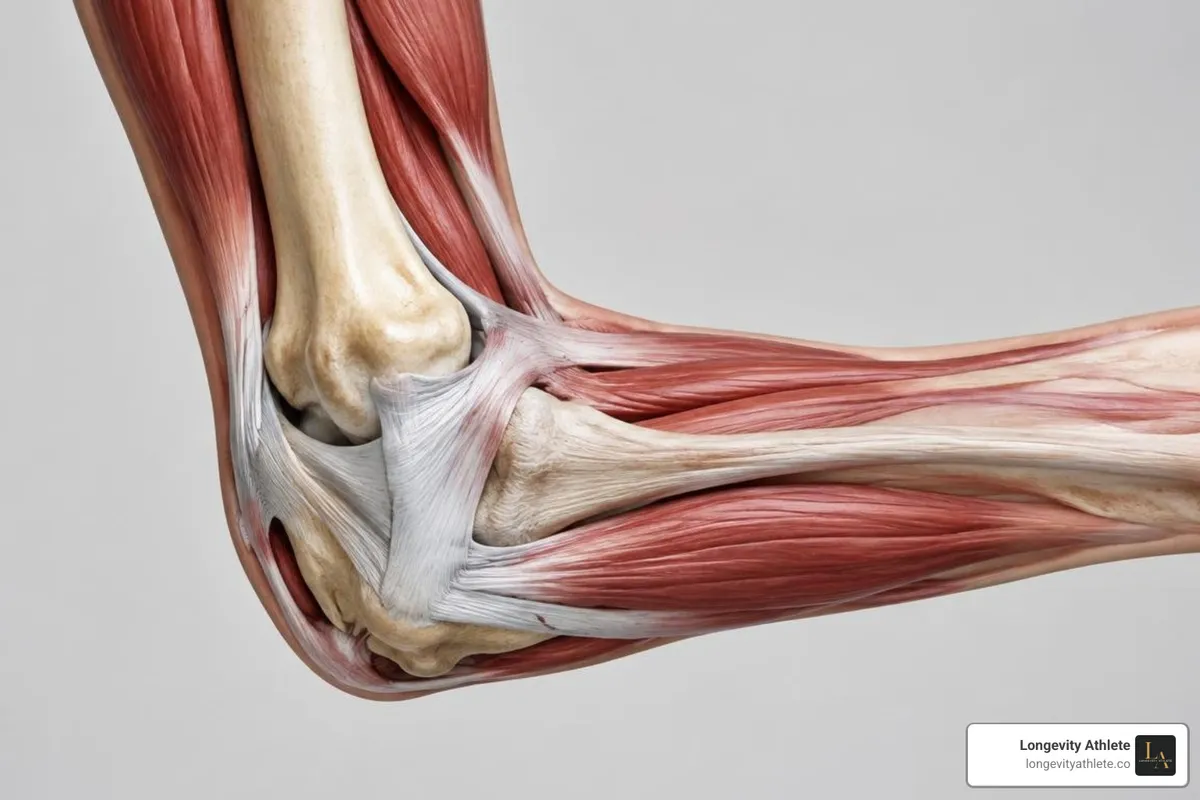
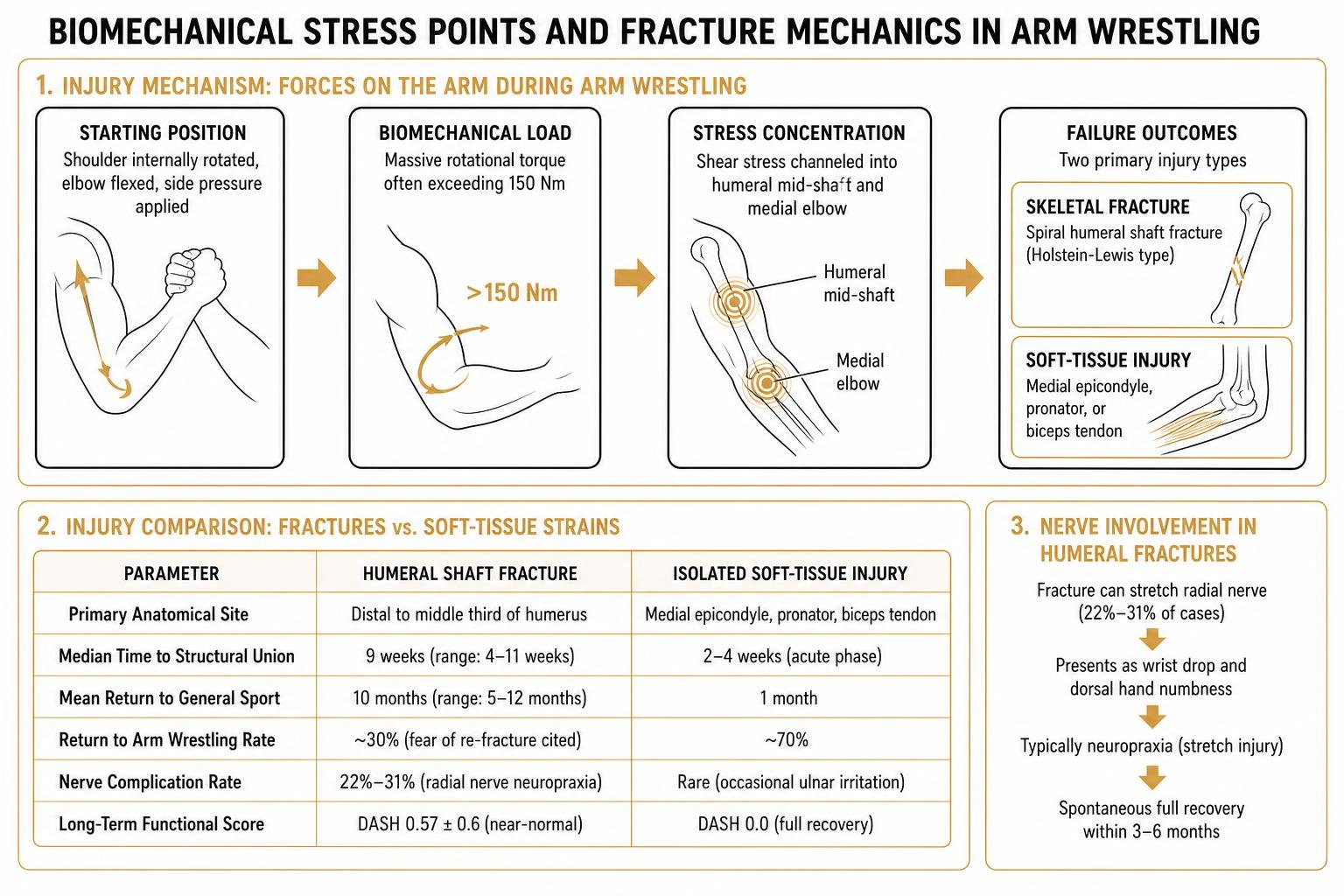
Arm wrestling is unique in the strength world because it generates massive rotational torque—often exceeding 150 Nm—while the shoulder is internally rotated, the elbow is flexed, and maximum side pressure is applied. These biomechanical vectors channel immense shear stress directly into the mid-shaft of the humerus and the medial compartment of the elbow.
Clinical data shows that trauma on the table falls into two primary categories: skeletal fractures and isolated soft-tissue damage. In a landmark study analyzing clinical outcomes of arm wrestling injuries, 82% of injured pullers were male with an average age of 20, and 86% sustained their injury in their dominant arm. Skeletal and soft-tissue injuries present entirely different recovery profiles and functional demands:
Metric / Parameter | Humeral Shaft Fracture | Isolated Soft-Tissue Injury |
|---|---|---|
Primary Anatomical Site | Distal to middle third of humerus | Medial epicondyle, pronator, biceps tendon |
Median Time to Structural Union | 9 weeks (range: 4–11 weeks) | 2–4 weeks (acute phase) |
Mean Return to General Sport | 10 months (range: 5–12 months) | 1 month |
Return to Arm Wrestling Rate | ~30% (fear of re-fracture cited) | ~70% |
Nerve Complication Rate | 22%–31% (radial nerve neuropraxia) | Rare (occasional ulnar irritation) |
Long-Term Functional Score | DASH 0.57 ± 0.6 (near-normal) | DASH 0.0 (full recovery) |
Humeral Shaft Fractures and Nerve Involvement
When an arm wrestler's defensive position fails against sudden side pressure, the humerus acts as a torsion spring until it snaps. This creates a classic spiral fracture pattern, often termed a Holstein-Lewis type fracture when occurring in the distal third of the bone.
The good news from clinical literature is that conservative management is highly successful. Roughly 70% of table-induced humeral fractures achieve union without surgery using temporary hanging casts followed by functional Sarmiento bracing. Median bone union occurs in 9 weeks (spanning 4 to 11 weeks), with zero non-union cases reported in modern case series. Open reduction and internal fixation (ORIF) with plates and screws is reserved for unstable, severely displaced breaks or open wounds.
Secondary radial nerve palsy occurs in 22% to 31% of these fractures, presenting as wrist drop and dorsal hand numbness. While alarming, this is typically a stretch injury (neuropraxia). Clinical follow-ups show spontaneous, complete nerve recovery within 3 to 6 months without surgical exploration.
Overcoming the Vascularity Gap in Arm Wrestling Injury Recovery
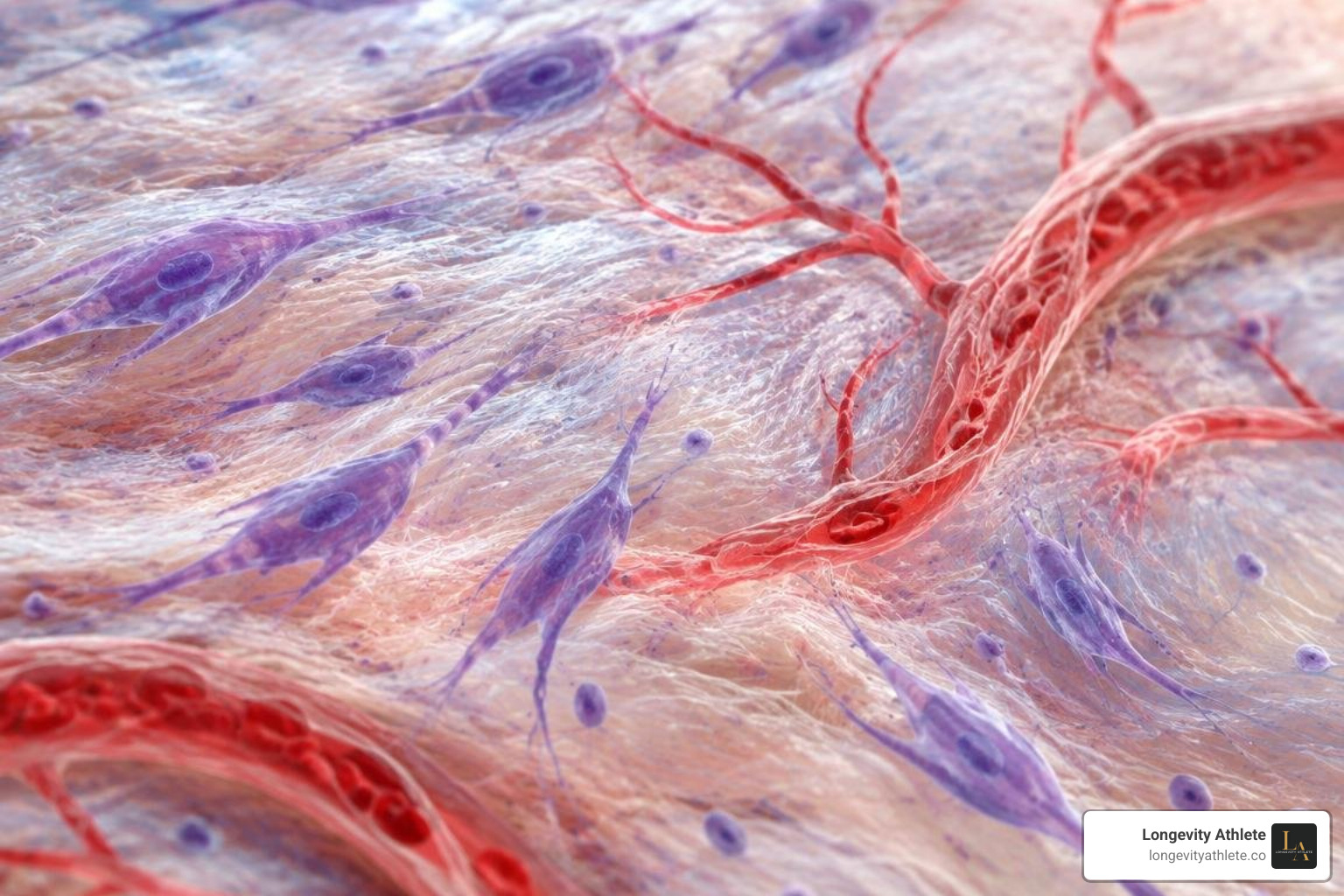
While bones heal predictably due to rich vascular marrow, the connective tissues of the elbow operate under an anatomical handicap: the vascularity gap.
Tendons and ligaments are dense "white tissues." At critical stress junctions—the enthesis (where tendon inserts into bone) and the musculotendinous junction (where tendon blends into muscle)—blood supply is minimal. When pulling generates micro-tears across the medial epicondyle (Golfer's elbow), pronator teres, or distal biceps tendon, oxygen and nutrient diffusion is sluggish.
Without targeted rehabilitation, healing stalls. Disorganized type-III collagen replaces aligned type-I fibers, setting up chronic tendinopathy, persistent joint stiffness, and permanent loss of pulling power.
Step-by-Step Rehabilitation and Joint Remodeling Protocols
Rehabilitating an arm wrestling injury requires respecting tissue biology while progressively re-introducing tensile load. You can explore our broader collection of educational injury guides for deeper insights into joint biomechanics and recovery management.
Acute Phase Management and Conservative Bracing
During the first 7 to 14 days following acute soft-tissue trauma:
Immobilize Strategically: Use a short-arm splint or arm sling to prevent rotational torque while allowing gentle, pain-free active wrist and finger movement.
Modulate Inflammatory Cytokines: Avoid heavy chronic NSAID use, which blunts long-term tendon repair and chondrocyte mitochondrial signaling. Instead, rely on light movement snacks, targeted compression, and anti-inflammatory lifestyle support.
Protect the Motion Window: Move the elbow through its pain-free active range of motion twice daily to prevent joint capsule adhesions.
Progressive Loading and Blood Flow Restriction
Once resting pain resolves, connective tissue requires mechanical tension to stimulate collagen synthesis and parallel fiber alignment. Blood Flow Restriction (BFR) training provides a breakthrough solution: by using 20% to 30% of your 1-rep maximum (1RM) with a pneumatic cuff set to 40%–70% arterial occlusion, you generate substantial metabolic stress, lactate accumulation, and high-threshold motor unit recruitment without stressing damaged ligaments.
Incorporate these low-load rehabilitation exercises 2 to 3 times per week:
BFR Forearm Pronator Rolls: 30 reps, followed by 3 sets of 15 reps with 30 seconds rest, reinforcing the pronator teres and medial epicondyle.
BFR Light Dumbbell Wrist Flexion: High-repetition wrist curls to drive nutrient-rich blood into the flexor tendon origin.
Isometric Brachioradialis & Biceps Hammer Holds: Holding a light dumbbell at a 90-degree elbow angle for 30–45 seconds, building tendon stiffness and joint stability.
Eccentric Wrist Extension/Flexion: Slow, 4-second lowering phases to stimulate collagen cross-linking and realign tensile fibers.
Advanced Healing Considerations for Arm Wrestling Injuries
Because table sports concentrate massive force on avascular tendons, researchers and strength athletes frequently explore regenerative pathways designed to bypass the vascularity gap.
Experimental Regenerative Approaches and Evidence Considerations
In athletic circles, targeted peptides like BPC-157 (a pentadecapeptide derived from human gastric juice) and TB-500 (a synthetic fraction of Thymosin Beta-4) have earned the moniker the "Wolverine Stack."
Biologically, these compounds are studied for their complementary cellular actions:
Angiogenesis (BPC-157): BPC-157 stimulates the upregulation of Vascular Endothelial Growth Factor (VEGF) and early growth response protein-1 (Egr-1). By building new capillary micro-vessels directly into avascular tendon entheses ("the road builder"), it delivers vital oxygen and nutrients to previously isolated tissues.
Cell Migration and Remodeling (TB-500): TB-500 upregulates actin, facilitating rapid cellular migration to injured sites ("the foreman"). It also modulates collagen deposition, helping prevent the dense fibrotic scar tissue responsible for the permanent "stiff arm" contractures seen in veteran pullers.
In research discussions, acute protocols often evaluate localized subcutaneous administration near the injured tendon (e.g., 250–500 mcg of BPC-157 twice daily) alongside systemic dosing of TB-500 (2–5 mg weekly for 4–6 weeks). While these mechanisms show remarkable promise in preclinical models, any peptide intervention should be medically supervised and integrated with proper biomechanical loading.
Mitigating Risks, Quality Control, and the False Confidence Trap
Athletes must navigate substantial risks when exploring peptide therapies:
The False Confidence Trap: BPC-157 possesses potent local analgesic and anti-inflammatory properties. Pullers often experience complete pain relief within 7 to 10 days—long before newly formed collagen fibers have cross-linked into mature, load-bearing tissue. Jumping back on the table prematurely invites catastrophic tendon rupture.
Quality Control & Research Chemicals: Peptides sourced from unregulated online vendors often suffer from heavy-metal contamination, incorrect sequence synthesis, or underdosed vials.
Angiogenic Contraindications: Because BPC-157 accelerates blood vessel growth, it carries theoretical risks of exacerbating underlying proliferative disorders or undiagnosed malignancies.
Objective recovery should never be based on subjective pain reduction alone. Leveraging precision biomarker services allows athletes to track systemic inflammation, hormonal balance, and tissue turnover with quantitative rigor.
Comprehensive Protocols for Arm Wrestling Injury Recovery
Returning safely to competitive pulling requires bridging the gap between clinical rehabilitation and sport-specific table torque.
Overcoming Psychological Fear and Safely Returning to the Table
Clinical data reveals that while 70% of soft-tissue injury patients resume arm wrestling, only 30% of fracture patients ever pull competitively again (Şahbat et al., 2023). This low return rate is largely psychological: the memory of a humeral snap creates profound kinesiophobia (fear of re-injury), even when bone density and DASH scores show 100% functional recovery (Şahbat et al., 2023).
To systematically overcome this psychological and physical hurdle, use a phased return-to-table protocol:
Isometric Strap Pulls (Weeks 1–4 of Table Return): Fasten a strap to a stationary table post and apply progressive isometric pressure at 30%, 50%, and 80% maximum effort across specific angles.
Controlled Partner Flow-Pulling (Weeks 5–8): Practice with an experienced partner who provides smooth, predictable resistance without explosive hits or sudden defensive transitions.
Live Sparring Clearance (Week 9+): Resume full-intensity matches only after achieving symmetrical grip, pronation, and side-pressure strength markers compared to your uninjured arm. If you are navigating complex recovery hurdles, you can schedule an athlete consultation with our team for individualized protocol design.
Connective Tissue Periodization for Enhanced Pullers
For athletes utilizing performance-enhancing compounds (such as anabolic-androgenic steroids), muscle strength and torque capacity often surge by 20% to 40% within weeks. Tendon collagen synthesis, however, requires months to adapt.
This mechanical mismatch creates a dangerous failure point at the enthesis. Enhanced pullers must practice deliberate connective tissue periodization—incorporating mandatory deload weeks, high-volume eccentric training, and strict monitoring of joint tenderness—to ensure tendon remodeling keeps pace with muscular horsepower.
Frequently Asked Questions about Arm Wrestling Rehabilitation
How long does recovery take for a humeral shaft fracture versus tendonitis?
Bone fractures from arm wrestling achieve clinical union in a median of 9 weeks, with a full return to general sports taking roughly 10 months (Şahbat et al., 2023). In contrast, isolated soft-tissue strains and mild tendinopathies generally permit a return to light activity within 3 to 4 weeks (Şahbat et al., 2023).
Can conservative management heal an arm wrestling bone fracture without surgery?
Yes. Clinical studies demonstrate that approximately 70% of table-induced humeral shaft fractures heal successfully using conservative immobilization (splints, hanging casts, and Sarmiento functional braces) without requiring surgical hardware (Şahbat et al., 2023).
Why do elbow tendons take so much longer to heal than forearm muscles?
Muscles possess a dense capillary network that delivers immediate oxygen and reparative nutrients. Elbow tendons and ligaments are predominantly avascular "white tissue" with limited blood flow, severely restricting the rate of cellular repair and collagen remodeling.
Conclusion
Lingering table pain does not have to end your arm wrestling career. By respecting tissue biology, utilizing low-load progressive loading like blood flow restriction, and establishing objective functional milestones, you can rebuild bulletproof elbows and shoulders.
At Longevity Athlete, we provide precision-performance wellness consulting for disciplined athletes. We move beyond generic rehabilitation plans by utilizing personalized biomarker testing, joint integrity tracking, and data-driven protocols to optimize your athletic longevity. Our Signature Plan is a self-guided group program designed for athletes building a solid recovery foundation, while our Gold and Platinum Plans create individualized lifestyle protocols tailored specifically to your physiology. Explore our data-driven performance protocols to take command of your recovery and return to the table stronger than ever.
References
Şahbat Y, Kütük E, Çat G, Ünsalan O, Kart H, Topkar OM, Baysal Ö, Erol B. "An unusual injury pattern: arm wrestling injury, treatment modalities, clinical outcomes, and return to sport.." Ulusal travma ve acil cerrahi dergisi = Turkish journal of trauma & emergency surgery : TJTES, 2023. PMCID PMC10315927.