Revitalize Your Pitching Arm with Evidence-Based Post-Game Care
The Evidence-Based Approach to Baseball Sore Arm Recovery
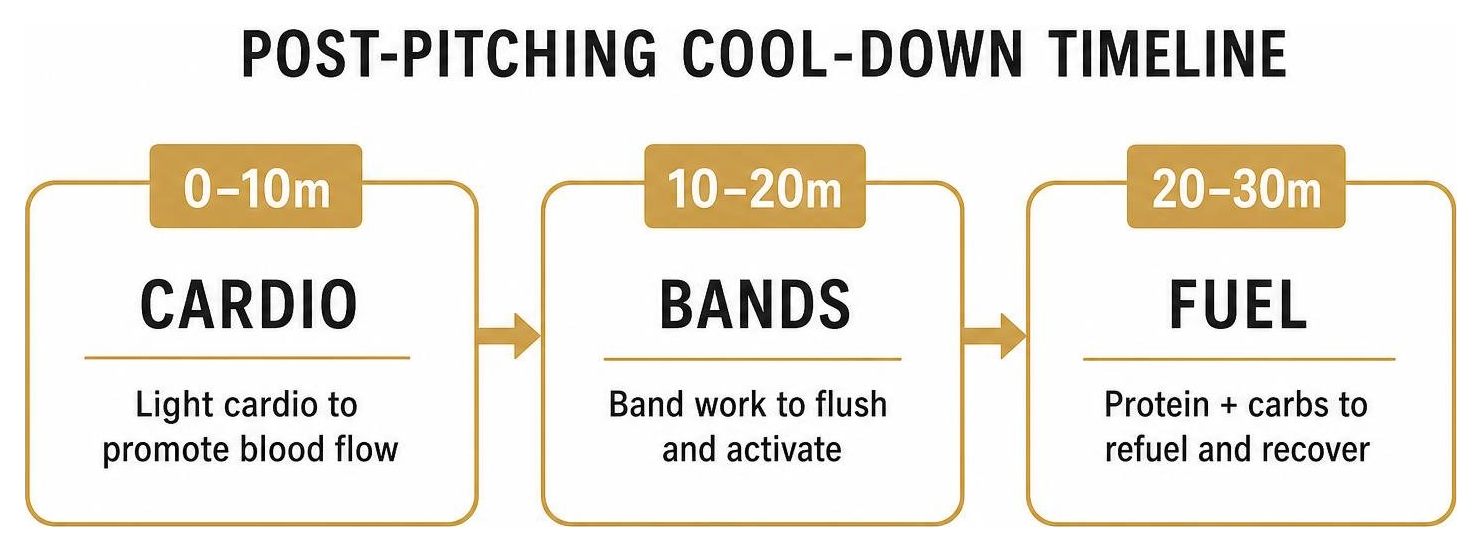
Effective baseball sore arm recovery starts within the first 30 minutes after you leave the mound. Begin with 8 to 10 minutes of light cardiovascular movement to promote systemic blood flow, then perform high-rep, low-resistance band flushes for the shoulder and forearm. Follow this with 20 to 30 grams of protein paired with 40 to 60 grams of carbohydrates to support muscle repair. Prioritize active movement and nutrition over passive icing, which can delay tissue healing.
Every time you throw a baseball off a mound, your upper body undergoes violent physical forces. During maximal external rotation, the throwing shoulder rotates internally at speeds exceeding 7,000 degrees per second—making it the fastest human motion recorded in sports. At the same instant, your medial elbow experiences peak valgus torque between 45 and 120 Nm. Considering that cadaveric studies place the ulnar collateral ligament (UCL) ultimate tensile failure limit around 34 to 35 Nm, your surrounding muscles (specifically the flexor-pronator mass) must absorb massive amounts of dynamic stress to protect the ligament.
This extreme load produces structural micro-tears across muscle fibers, local inflammation, and metabolic waste accumulation. When you finish an outing, your body initiates a natural biological repair process. The goal of modern post-throwing care is not to shut down this response, but to support vascular perfusion, optimize lymphatic drainage, and restore normal joint mechanics. Following a structured arm care recovery routine after you throw provides the tissues with the circulation needed to remodel properly.
Why Traditional Icing Is Outdated for Throwers
For decades, the standard post-game ritual was simple: tape a heavy bag of crushed ice tightly around a pitcher's shoulder and elbow. This practice stemmed from the RICE protocol (Rest, Ice, Compression, Elevation), introduced in 1978. However, even the original author of RICE, Dr. Gabe Mirkin, officially revised his position after scientific literature demonstrated that routine cryotherapy can actually impair tissue regeneration.
When you apply ice to a sore throwing arm:
Severe Vasoconstriction: Cold temperatures cause local blood vessels to constrict dramatically, cutting off arterial blood flow that delivers oxygen, amino acids, and repair nutrients.
Macrophage and IGF-1 Inhibition: The body uses controlled inflammation to heal. Macrophages (specialized immune cells) release Insulin-Like Growth Factor-1 (IGF-1) to repair micro-damaged fibers. Extreme cold inhibits macrophage migration, stalling natural healing.
Lymphatic Vessel Shutdown: The lymphatic system relies on passive fluid movement and light muscle contractions to pump out cellular debris. Cold applications close off lymphatic pores, trapping metabolic waste within the shoulder capsule and posterior rotator cuff.
Modern sports medicine has evolved toward contemporary frameworks like PEACE & LOVE (Protect, Elevate, Avoid Anti-inflammatories, Compress, Educate & Load, Optimism, Vascularization, Exercise). Unless an athlete suffers acute impact trauma or severe, uncontrolled swelling, blanket icing should be replaced by gentle, movement-driven strategies.
Active Movement vs. Passive Rest
Passive rest—sitting on the couch or immobilizing an arm in a sling—creates cellular stagnation. Tissues become stiff, muscle spindles become hyperactive, and the joint loses its natural positioning.
Active recovery uses low-intensity muscle contractions to generate a mechanical "muscle pump." This action:
Enhances soft tissue perfusion without adding fatigue.
Increases local nitric oxide production to dilate microvasculature.
Promotes joint centration by activating stabilizing rotator cuff muscles (supraspinatus, infraspinatus, teres minor, and subscapularis).
Restores normal resting length to the posterior shoulder capsule, which naturally tightens into internal rotation deficit following high-volume deceleration.
Instead of shutting the arm down, throwers benefit most from structured, low-load movement immediately following an appearance.
The Complete Post-Pitching Active Recovery Protocol
A truly effective recovery plan begins while your core body temperature is still elevated. The initial 30 minutes following an outing dictate the speed of neuromuscular restoration and metabolic clearance over the next 48 hours.
Step-by-Step Baseball Sore Arm Recovery in the First 30 Minutes
Follow this sequence immediately after your final inning or high-output throwing session:
Light Systemic Flush (8–10 Minutes): Hop on a stationary bike, take a brisk walk, or perform light dynamic movements. Keep your heart rate in Zone 1 (around 100–120 bpm) to promote systemic venous return and clear lactic byproducts without exhausting your legs.
Easy Recovery Tosses (Optional, 10–15 Throws): If space permits, perform 10 to 15 extremely light arc throws from 45 to 60 feet at less than 40% perceived effort. This gently takes the shoulder through an unforced throwing motion, helping the central nervous system down-regulate muscle tone.
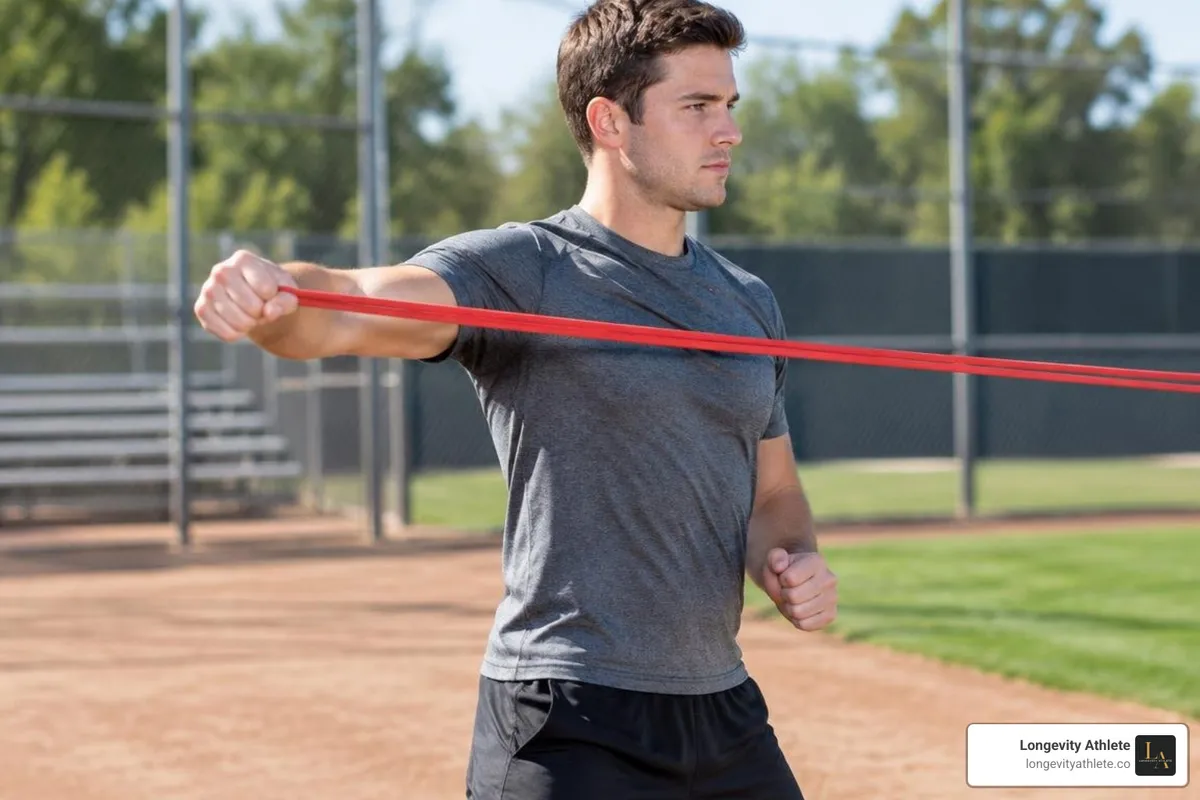
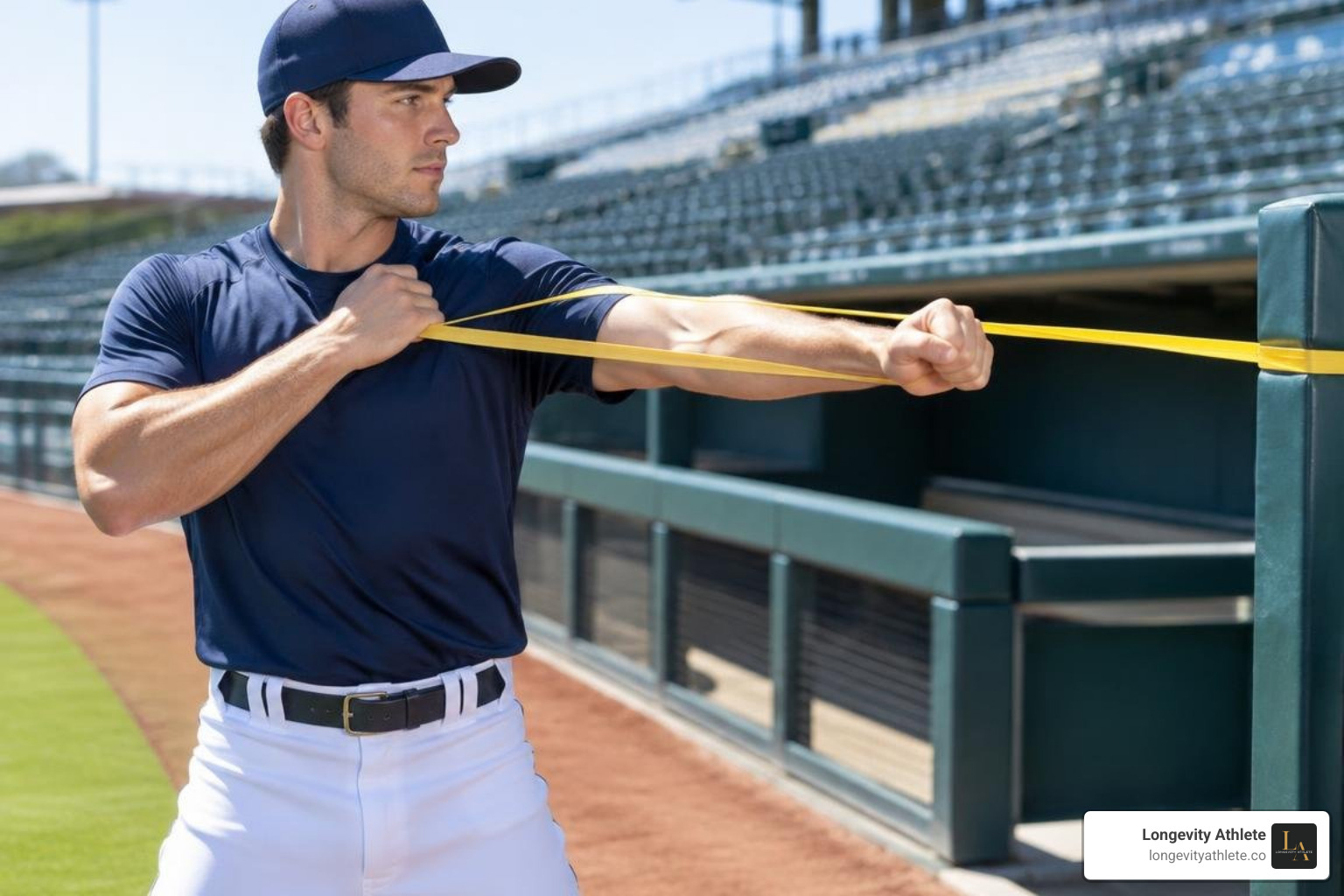
Deceleration & Band Flush (5 Minutes): Hook up light-resistance bands. Rather than working toward muscular failure, focus on high-rep, rhythmic contractions:
Band pull-aparts: 2 sets of 15 reps
Band "No Money" drills (external rotation with elbows pinned): 2 sets of 12 reps
Reverse throw plyometric tosses with a light 1–2 lb ball: 2 sets of 8 reps to re-educate the posterior decelerators.
Forearm and Wrist Reset (3 Minutes): The flexor-pronator mass takes the brunt of valgus force at the elbow. Perform gentle wrist flexion and extension stretches, along with active pronation/supination rotations holding a light implement.
Post-Throw Fuel Window: Consume 20 to 30 grams of high-quality protein paired with 40 to 60 grams of easily digestible carbohydrates to spark glycogen resynthesis and stem muscle protein breakdown.
Restoring Scapular Stability and Rotator Cuff Function
After addressing initial blood flow, spend 10 to 15 minutes targeting the scapular stabilizers and hip rotators. When scapulothoracic rhythm is compromised, the humeral head shifts upward and forward in the glenoid socket, drastically increasing shoulder impingement and distal elbow strain.
Integrating a daily arm care routine ensures these functional stabilizers maintain endurance throughout a long season:
Prone or Wall Y-T-W-L Series: 1 to 2 sets of 8 repetitions per letter. Focus on initiating the movement from the lower trapezius, rhomboids, and serratus anterior rather than the upper neck muscles.
Half-Kneeling Shoulder CARs (Controlled Articular Rotations): 3 slow rotations forward and backward per side. This drives synovial fluid across the glenohumeral joint, improving articular lubrication without joint shear.
6-Way Kettlebell Carries: Carry a light-to-moderate kettlebell in suitcase, front-rack, and overhead positions for 30 yards per variation. Carries train reflexive rotator cuff co-contraction and dynamic trunk-to-scapular stability.
Lead Hip Flow Circuit: The lead hip absorbs immense deceleration forces upon landing. Dedicate 3 to 5 minutes to 90/90 hip switches and half-kneeling adductor rocks to prevent pelvic tilt from altering your upper-body mechanics in subsequent sessions.
Advanced Modalities, Workload Periodization, and Daily Arm Care
For athletes managing heavy pitch volumes, modern technology can accelerate tissue restoration. However, high-tech tools work best as multipliers on top of sound training habits.
Recovery Modality | Primary Physiological Mechanism | Best Application Time | Recommended Protocol |
|---|---|---|---|
Electrical Muscle Stimulation (EMS) | Non-fatiguing muscle twitches; nitric oxide release; venous clearance | 1–3 hours post-pitching or the evening of a start | 20–45 minutes on shoulder decelerators and forearm flexors |
Blood Flow Restriction (BFR) | Localized hypoxia triggering growth hormone release and low-load hypertrophy | Off-days / Day 2 post-start during strength sessions | 20–30% 1RM load with occlusion cuff; 30-15-15-15 rep scheme |
Pneumatic Compression | Intermittent mechanical pressure enhancing lymphatic fluid return | Immediately post-game or after heavy travel | 20–30 minutes at moderate pressure settings |
IASTM & Soft-Tissue Work | Fascial shear, mechanoreceptor stimulation, down-regulation of hypertonic tissue | Day 1 or Day 2 between starts | 5–10 minutes light scraping or targeted lacrosse ball rolling |
In the modern game where the average fastball velocity rose from 91.3 mph in 2008 to 94.2 mph in 2024, utilizing a structured, velocity-era arm care routine is essential for staying resilient against extreme joint torque.
Structuring the 5-Day Pitching Recovery Ladder
Whether you are an amateur starter or competing at an elite level, structuring your days between mound appearances provides the necessary balance between tissue deloading and progressive loading. Committing to a comprehensive, year-round baseball arm care program prevents the spikes in chronic workload that trigger breakdowns.
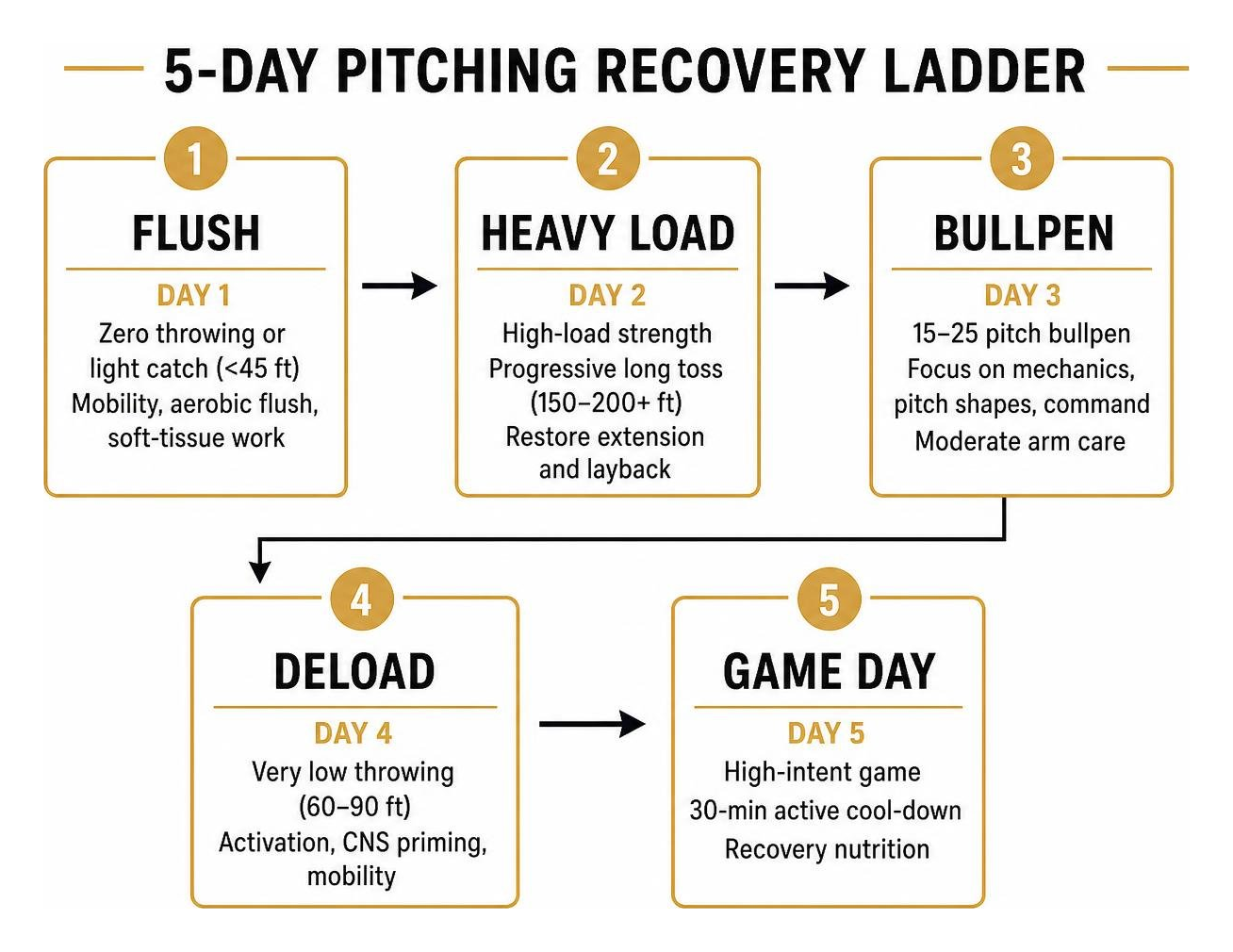
Day 0 (Game Day): High-intent competitive outing, followed immediately by the 30-minute active cool-down and recovery nutrition protocol.
Day 1 (Flush & Mobility): Zero throwing or very short, low-intent catch play (under 45 feet). Full-body mobility, aerobic vascular flush, and light soft-tissue therapy.
Day 2 (Strength & Long Toss): High-load strength session (lower body and upper pull). Progressive throwing session extending to moderate long toss (150–200+ feet depending on individual capacity) to restore full shoulder extension and layback.
Day 3 (Touch / Bullpen Session): Moderate-intensity mound work (15–25 pitches) focusing on mechanics, pitch shapes, and command. Moderate arm care circuit following the session.
Day 4 (Taper & Deload): Very low throwing volume (flat ground only, 60–90 feet), dynamic band activation, central nervous system priming, and mobility.
Day 5 (Game Day): Repeat starting sequence.
Sleep, Fuel, and Systemic Repair
You cannot out-train or out-rehab a poor lifestyle. Up to 95% of daily human growth hormone (HGH) secretion occurs during Stage 3 and Stage 4 slow-wave non-REM deep sleep. When pitchers average under 6 hours of sleep per night, their injury risk nearly doubles compared to those who consistently achieve 8 or more hours.
Keep the bedroom cool (65–68°F), eliminate blue light 60 minutes prior to bed, and maintain consistent circadian rhythms. Pair sleep with a daily baseline of 0.8 to 1.0 grams of protein per pound of body weight and maintain adequate hydration. Pitchers can lose 2 to 4 pounds of fluid through sweat during a single summer appearance; replacing lost water alongside essential electrolytes (sodium, potassium, magnesium) maintains muscular elasticity and cellular conductivity.
Monitoring Arm Health: Soreness vs. Potential Injury
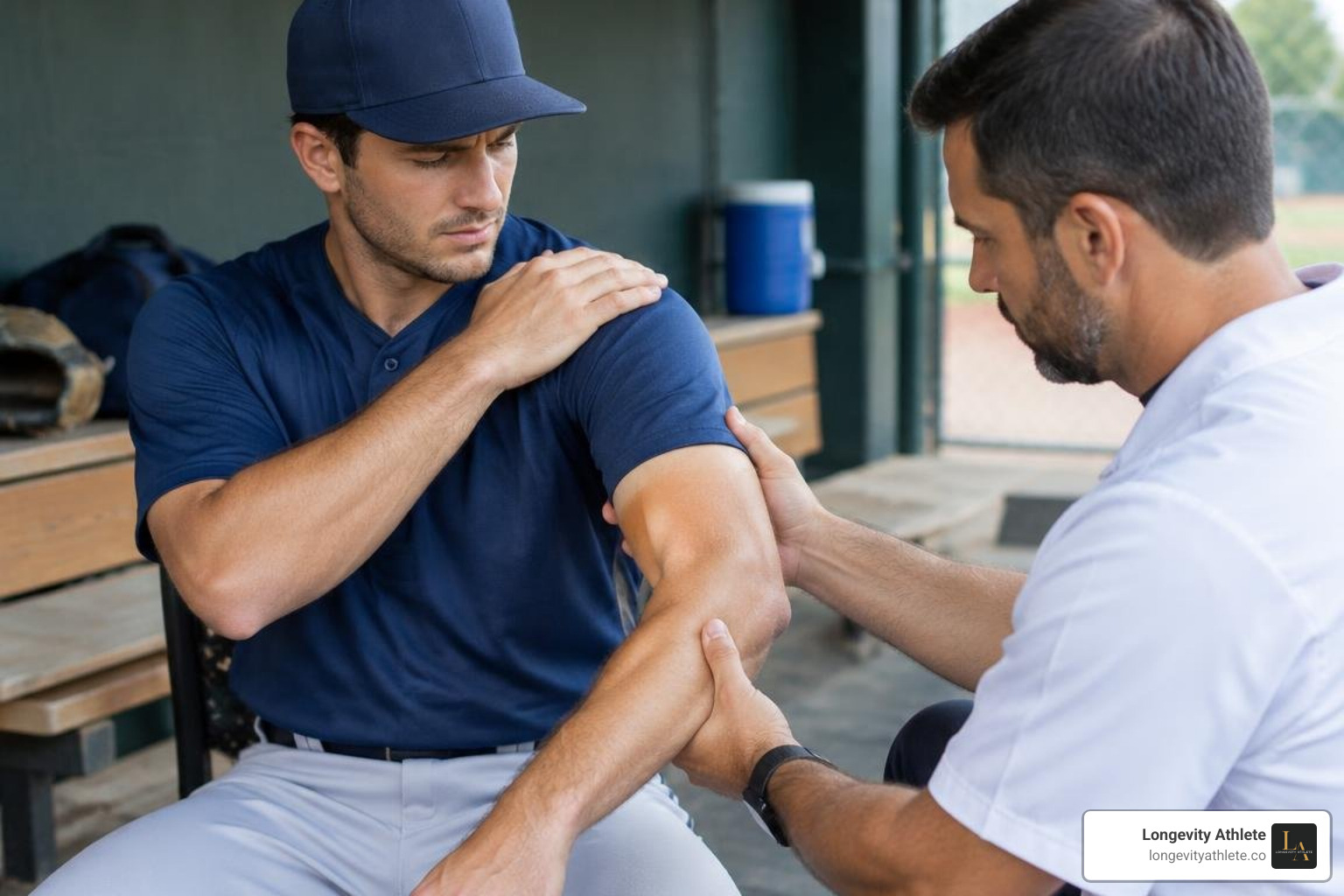
Adolescent and high school pitchers are at historically high risk for arm breakdown: 57% of all Tommy John surgeries occur in athletes between 15 and 19 years old, with that figure growing at roughly 9.8% each year. Learning to evaluate arm signals early is crucial for long-term health.
Differentiating Normal Soreness from Injury During Baseball Sore Arm Recovery
Understanding how to read your body protects against catastrophic structural failures.
A core diagnostic baseline is the 48-Hour Rule: generalized muscle fatigue should substantially subside within two days of throwing. If acute, localized discomfort remains after 48 to 72 hours, cease all throwing activities and seek an evaluation from a sports physical therapist or orthopedic specialist.
Youth and High School Workload Considerations
Young throwers face unique vulnerabilities because their skeletal systems are still maturing. In developing athletes, the growth plates (such as the medial epicondyle apophysis in the elbow) are softer than the stabilizing ligaments. Extreme torque often results in traction apophysitis (Little League Elbow) before an adult-style ligament tear occurs. Following a targeted youth arm care routine for young pitchers establishes fundamental movement patterns and guards open growth plates against overuse.
Adhere strictly to standard workload guidelines:
Pitch Counts & Rest: Never exceed single-game caps (e.g., 75 pitches for ages 9–10; 85 for ages 11–12; 95 for ages 13–16). Enforce mandatory rest days based on total pitches thrown.
Avoid Overlapping Teams: Participating on multiple travel teams simultaneously creates unmonitored throwing volume that sharply spikes overuse injury risks.
Pitch Selection: Master fastball and change-up command before introducing high-stress breaking balls like sweepers and hard curveballs, generally around ages 13–14.
Mandatory Annual Shutdown: Schedule 2 to 3 consecutive months completely away from competitive overhead throwing each year to allow connective tissues and growth plates to remodel fully.
For high-school and elite amateur throwers pursuing higher levels, adopting an MLB-style baseball arm care routine balances intense training demands with professional-level physical preparation.
Frequently Asked Questions About Pitcher Arm Recovery
How soon after throwing should active recovery start?
Active recovery should begin within 10 to 15 minutes after finishing your throwing session, while your muscles and connective tissues are still warm. Starting with light cardiovascular movement and gentle band work accelerates circulation, optimizes lymphatic clearing, and prevents the severe stiffness that sets in once your body cools down completely.
What is the 48-hour rule for pitching soreness?
The 48-hour rule states that normal post-throwing muscular fatigue should steadily decrease and largely resolve within 48 hours. If sharp pain, joint stiffness, pinpoint elbow tenderness, or functional movement limitations persist beyond this 48-to-72-hour window, it indicates potential tissue damage rather than typical microtrauma, warranting medical assessment.
Can Blood Flow Restriction (BFR) help a sore pitching arm?
Yes. BFR utilizes a specialized pneumatic cuff to partially restrict arterial inflow and fully occlude venous return during low-load exercises (typically 20–30% of your 1-rep max). This creates localized cellular swelling and metabolic stress, triggering muscle hypertrophy and growth hormone release without subjecting the healing joints and tendons to the destructive shear forces of heavy weightlifting.
Conclusion
Maximizing your longevity on the mound requires moving beyond outdated, passive recovery myths. True arm health is built upon consistent active circulation, structured scapular stability, disciplined workload periodization, and foundational lifestyle habits like restorative sleep and balanced nutrition. When you treat your arm with deliberate, evidence-based systems, you dramatically lower your injury risk while building sustainable velocity season after season.
At Longevity Athlete, we believe every competitor deserves an elite, data-backed approach to physical longevity. We provide precision-performance wellness consulting for disciplined athletes, using personalized biomarker testing and ongoing protocol refinement to help you perform at your absolute peak. The Signature Plan is a self-guided group program. The Gold and Platinum Plans create individualized lifestyle protocols tailored specifically to your unique physiology and athletic goals. Explore our precision performance longevity consulting to elevate your recovery and extend your athletic career today.