Measure Your Inflammatory Markers from Home with the Best At-Home CRP Test Kits
Understanding CRP vs. High-Sensitivity CRP (hs-CRP)
The best at-home CRP test options depend on your specific health goals: CLIA-certified mail-in hs-CRP blood spot panels provide the highest clinical precision for evaluating baseline cardiovascular and metabolic longevity, while rapid lateral flow finger-prick cassettes offer immediate 5- to 10-minute results for detecting acute infection, injury, or overtraining flare-ups.
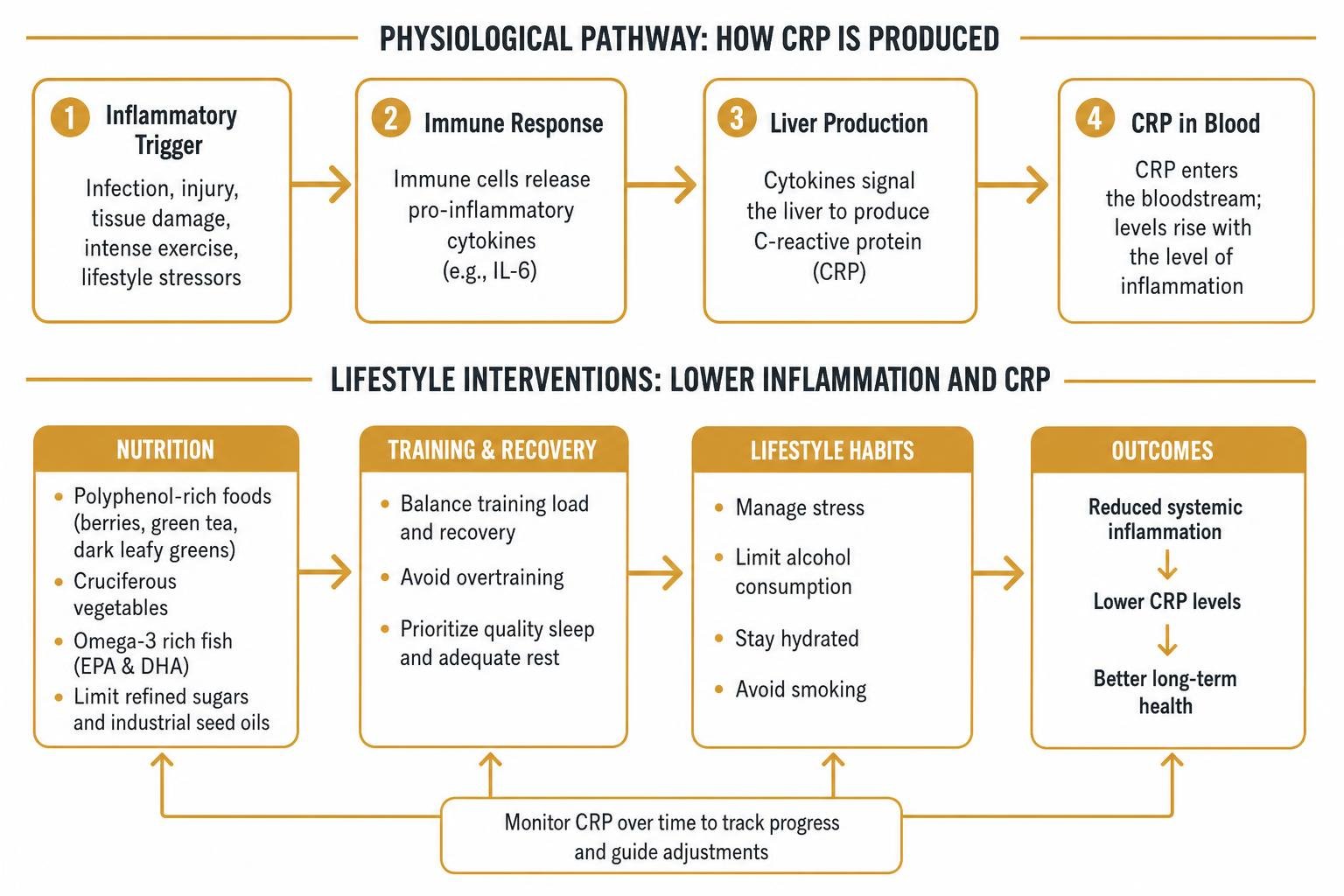
When your body encounters tissue injury, infection, or chronic physiological stress, your liver releases an acute-phase protein known as C-reactive protein (CRP). In clinical medicine and athletic performance, CRP serves as a general thermometer for systemic inflammation. However, not all tests measure this protein at the same resolution.
Understanding the distinction between a standard CRP test and a high-sensitivity CRP (hs-CRP) assay is essential when selecting the right home kit.
Standard CRP Tests: These assays measure CRP across a broader, higher concentration spectrum (typically 8 mg/L to over 100 mg/L). They are primarily used to evaluate acute inflammation, active bacterial or viral infections, surgical recovery, or major autoimmune flare-ups. In fact, high levels of CRP are associated with acute infection roughly 90% of the time.
High-Sensitivity CRP (hs-CRP) Tests: These clinical assays measure minute basal concentrations of the protein in the blood (from 0.1 mg/L to 10 mg/L). By detecting sub-clinical, low-grade chronic inflammation, hs-CRP serves as a critical biomarker for long-term cardiovascular assessment, metabolic health, and systemic recovery status.
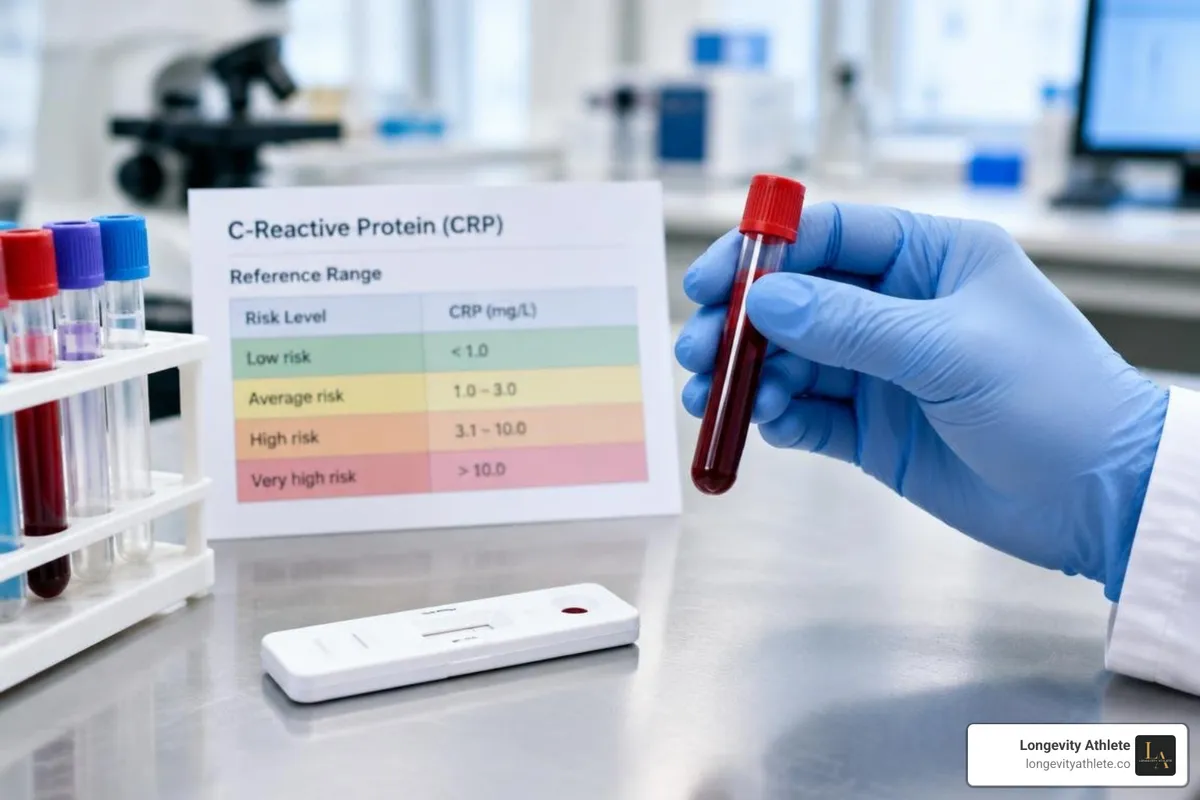
According to a benchmark study published by the American Heart Association, individuals with elevated basal CRP levels face a two- to three-fold higher risk of experiencing a heart attack compared to those with lower baseline concentrations. The AHA stratifies cardiovascular risk using the following hs-CRP thresholds:
Low Risk: Less than 1.0 mg/L
Average Risk: 1.0 to 3.0 mg/L
High Risk: Greater than 3.0 mg/L (with levels $\ge 2.0$ mg/L often prompting more intensive preventive interventions)
When exploring foundational inflammation blood markers, knowing which assay type you are ordering ensures you receive data that matches your specific health or performance objective.
Types of Home Inflammation Kits: Rapid Tests vs. Mail-In Lab Panels
Modern at-home diagnostic testing gives you access to several formats depending on whether you prioritize immediate feedback, high analytical precision, or pain-free sample collection.
Mail-In Blood Spot Kits: The Best At-Home CRP Test for Clinical Precision
If your primary goal is to establish an accurate baseline for cardiovascular longevity or deep metabolic tracking, a mail-in blood kit processed by an accredited laboratory remains the gold standard.
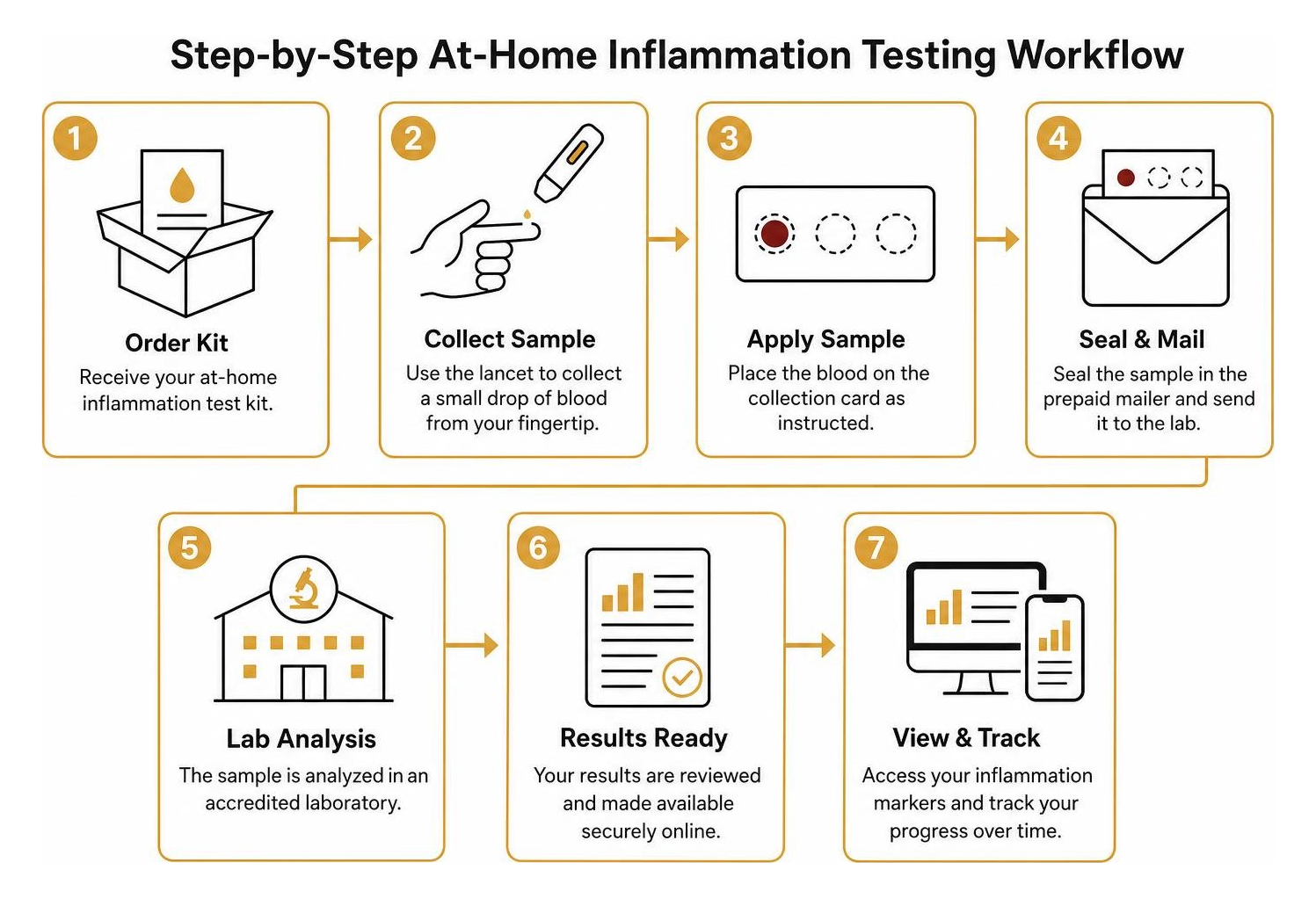
These kits use a spring-loaded lancet to collect capillary blood from your fingertip, either onto a specialized dried blood spot (DBS) card or into a microcollection tube. You then seal the sample and post it to a certified facility (such as CLIA-certified labs in the US or UKAS/ISO 15189-accredited facilities in the UK).
Comprehensive mail-in tests provide rapid turnarounds alongside clinical review. For a complete breakdown of sampling protocols, review our detailed guide on how to test for inflammation at home.
Rapid Lateral Flow Finger-Prick Cassettes
When you need an answer in minutes rather than days, rapid lateral flow cassettes function similarly to home antigen tests. You apply a single drop of capillary blood mixed with a buffer solution directly onto the testing cassette. The sample migrates across a membrane embedded with gold-conjugated antibodies that bind specifically to human CRP.
Within 5 to 10 minutes, distinct colored bands appear that indicate semi-quantitative concentration brackets (for instance: $<10$ mg/L, 10–40 mg/L, 40–80 mg/L, and $>80$ mg/L).
Feature | Mail-In Lab Panels | Rapid Lateral Flow Cassettes | Saliva-Based Screening |
|---|---|---|---|
Sample Type | Capillary blood (microtube/DBS) | Capillary blood (single drop) | Oral fluid (saliva) |
Turnaround Time | 24 to 72 hours post-lab receipt | 5 to 10 minutes | 10 to 15 minutes |
Result Metric | Quantitative numerical hs-CRP (mg/L) | Semi-quantitative brackets (mg/L) | Relative wellness trend score |
Primary Use Case | Cardiovascular risk, baseline tracking | Acute illness, injury, post-op flare-ups | Frequent, needle-free wellness tracking |
Clinical Resolution | High ($0.1$ to $10.0+$ mg/L) | Moderate ($<10$, $10\text{--}40$, $>80$ mg/L) | Trend-based (not diagnostic) |
Saliva-Based Screening Technologies
The newest category of at-home testing eliminates finger-pricks altogether by measuring salivary CRP concentrations. These systems use lateral flow strips combined with proprietary smartphone image analysis algorithms.
By analyzing the visual density of the test strip under your phone's camera, the companion app generates a normalized wellness score (often from 0 to 100). While salivary CRP correlates with systemic inflammatory activity, it is subject to oral microbiome variables and local gum conditions. As a result, saliva testing serves as a frequent trend tracker rather than a direct replacement for clinical blood serum values.
How to Choose the Best At-Home CRP Test for Your Health Goals
Selecting the ideal testing strategy requires aligning the test's capabilities with your specific health, training, and budgetary context.

For Cardiovascular Risk and Annual Longevity Baselines: Choose a laboratory-analyzed mail-in hs-CRP panel. Having a precise quantitative number down to decimal points is vital for establishing whether your baseline vascular inflammation is sub-1.0 mg/L.
For Acute Infection, Overtraining, or Injury Screening: Choose a rapid finger-prick cassette. If you wake up with systemic joint achiness or unusual fatigue, a 10-minute test can quickly tell you if your CRP is surging above 10 or 40 mg/L, helping you make informed training decisions.
For Weekly Habit and Lifestyle Trend Tracking: Choose a saliva-based digital scanner or low-cost multi-pack rapid test. Testing every Sunday morning under identical fasting conditions lets you see how variables like alcohol consumption, travel, poor sleep, or intense training blocks impact your recovery.
When integrating biomarker diagnostics into your health regimen, exploring broader inflammation testing methodologies gives you the context needed to interpret systemic patterns over time.
Interpreting Your Results and Taking Action on Inflammation
A test result is only as valuable as the actions you take afterward. Because chronic and inflammatory diseases remain the leading cause of death globally according to the World Health Organization (World Health Organization (WHO)), maintaining low systemic baseline inflammation is a cornerstone of proactive health.
What CRP Ranges Mean for Your Health
When reviewing your results, reference ranges typically break down into the following categories:
Normal / Optimal ($<1.0$ to $<3.0$ mg/L on hs-CRP; $<8\text{--}10$ mg/L on standard assays): Indicates low systemic basal inflammation.
Mild to Moderate Elevation ($3.0\text{--}10.0$ mg/L): Often reflects lifestyle-induced stressors, intense recent physical training, localized minor injuries, chronic metabolic stress, or systemic low-grade inflammation.
Significant Acute Elevation ($10.0\text{--}40.0$ mg/L): Common in acute viral or bacterial infections, significant physical trauma, or active autoimmune flare-ups. A sustained CRP level above 10 mg/L has been associated in long-term observational studies with a 4% 10-year risk of fatal cardiovascular disease.
Severe Elevation ($>40.0\text{--}80.0+$ mg/L): Indicates severe acute bacterial infection, major tissue damage, or severe systemic inflammatory conditions. Clinical literature indicates that a raised CRP level is associated with an 8.67% increase in mortality rates among hospitalized patients, underscoring its diagnostic weight in acute medicine.
Optimizing Biomarkers Through Lifestyle and Nutrition
If your at-home test reveals elevated baseline inflammation outside of acute illness, deliberate lifestyle and nutritional interventions can help restore balance:
Anti-Inflammatory Nutrition: Emphasize polyphenol-rich foods, dark leafy greens, cruciferous vegetables, and wild-caught cold-water fish rich in EPA and DHA omega-3 fatty acids. Structuring an elimination trial to remove refined sugars, industrial seed oils, or dietary triggers (such as excess lectins or gluten in sensitive individuals) can notably reduce digestive and systemic inflammation.
Targeted Micronutrients: Research shows that certain trace minerals, such as boron supplementation (3 to 10 mg daily), can meaningfully reduce inflammatory markers like CRP while supporting balanced free hormone levels. Ensuring adequate Vitamin D3, Vitamin C, and magnesium intake further supports immune regulation.
Sleep and Circadian Alignment: Chronic sleep restriction directly triggers low-grade liver inflammatory cascades. Prioritizing 7 to 9 hours of quality sleep in a dark, cool environment helps down-regulate nocturnal inflammatory cytokines.
Training Load Periodization: Acute, intense exercise naturally causes a temporary spike in CRP as your body initiates muscular repair. Differentiating between a healthy post-workout adaptive spike and chronic systemic overtraining requires tracking your scores alongside objective metrics like Heart Rate Variability (HRV) and resting heart rate.
To dive deeper into the latest recovery protocols, evidence-based nutrition guides, and performance science, explore our Longevity Athlete blog.
Frequently Asked Questions About Home CRP Testing
What Makes the Best At-Home CRP Test Accurate and Reliable?
Analytical reliability depends on rigorous laboratory standards and proper sample handling. Mail-in tests processed in facilities holding CLIA certification or ISO 15189 accreditation adhere to stringent quality control guidelines identical to clinical hospital testing.
For rapid lateral flow cassettes, reliability relies on high antibody specificity and adherence to strict timing windows (such as reading the result precisely between 5 and 6 minutes, as late reads can lead to false interpretations). Always warm your hands under warm water before a finger-prick to promote blood flow without excessive squeezing, which can dilute the capillary sample with interstitial fluid.
How often should you test your CRP levels at home?
For general health maintenance and cardiovascular longevity, testing your hs-CRP levels once or twice per year provides a dependable baseline.
If you are an athlete actively adjusting training volume, diet, or recovery protocols, testing monthly or using weekly wellness screenings can help you monitor trends. Always aim to test under identical conditions—ideally first thing in the morning in a rested, fasted state.
When should you consult a doctor regarding elevated CRP results?
At-home CRP kits are valuable screening and tracking tools, but they do not provide a medical diagnosis. If a home test reveals a standard CRP level exceeding 10 mg/L without an obvious cause, or if an elevated score persists across repeat tests over several weeks, schedule a comprehensive clinical evaluation.
Immediate medical attention is warranted if high CRP readings accompany red-flag symptoms such as high fever, sudden shortness of breath, unexplained weight loss, severe localized abdominal pain, or acute joint swelling.
Conclusion
Measuring your inflammatory baseline from the comfort of home is one of the most effective ways to take control of your long-term health and athletic longevity. Rather than waiting for symptoms to appear, tracking your CRP levels provides an objective, data-driven window into how your body responds to training, nutrition, sleep, and recovery protocols.
At Longevity Athlete, we specialize in translating complex biomarker data into actionable, high-performance routines. The Signature Plan is a self-guided group program. The Gold and Platinum Plans create individualized lifestyle protocols tailored to your unique biology, training demands, and longevity goals.
Ready to eliminate the guesswork and optimize your recovery from the inside out? Explore how our data-driven coaching can elevate your health span and performance at Longevity Athlete.