
The Real Impact of Blood Glucose on Athletic Performance
The Physiology of Blood Glucose in Athletic Performance
Maintaining stable blood glucose directly sustains athletic performance by supplying immediate fuel to contracting skeletal muscles and preserving central nervous system drive. When circulating glucose drops, the brain downregulates motor unit recruitment to protect against neuroglycopenia, causing sudden physical fatigue and a sharp decline in power output. Balancing substrate availability through liver glycogen, gluconeogenesis, and targeted fueling ensures optimal energy delivery across both endurance and high-intensity training.
Circulating glucose is the primary immediate carbohydrate fuel in the bloodstream. At any given moment, a healthy adult has roughly 4 to 5 grams of glucose circulating in their entire blood volume—just about one teaspoon. Because contracting skeletal muscle can consume glucose at up to ten times the resting rate, the body must balance substrate availability against muscle uptake.
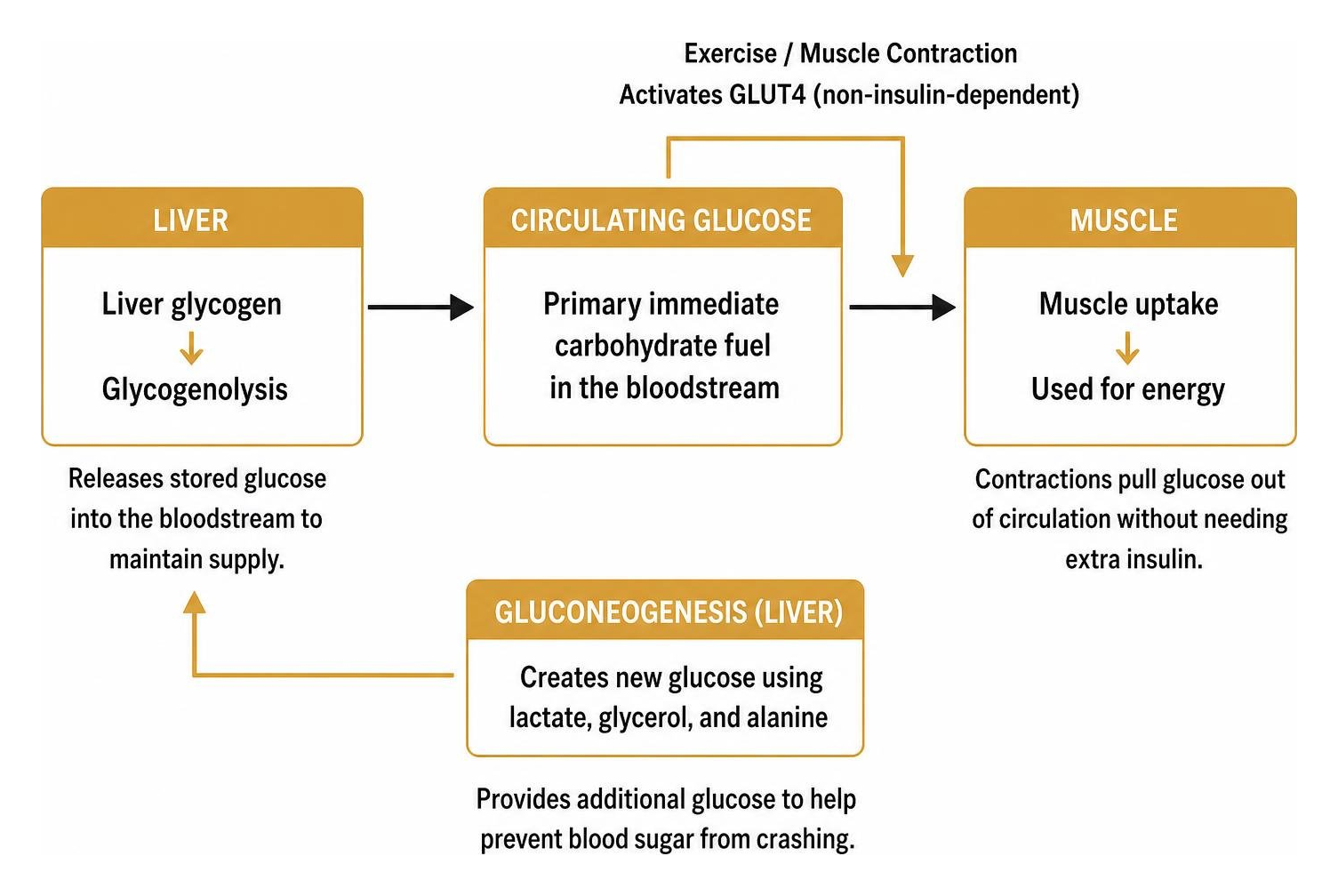
During prolonged exercise, muscle contractions activate non-insulin-dependent GLUT4 translocation, allowing muscle cells to pull glucose out of circulation without needing extra insulin. To help lower the risk of blood sugar from crashing, the liver releases stored glucose through glycogenolysis and creates new glucose via hepatic gluconeogenesis using precursors like lactate, glycerol, and alanine.
Tracking performance biomarkers gives athletes clear visibility into how efficiently these metabolic pathways run under real-world physical strain.
Liver vs. Muscle Glycogen: Storage Capacity and Metabolic Limits
The body stores carbohydrate reserves primarily across two distinct biological reservoirs: the liver and skeletal muscle.
Liver Glycogen: A healthy adult liver holds roughly 100 grams of glycogen, translating to approximately 400 calories of available energy. In a well-conditioned athlete, hepatic storage adaptations allow the liver to hold up to 8% of its total weight in glycogen. Liver glycogen serves a single central purpose: releasing glucose into the systemic bloodstream to maintain euglycemia and fuel the central nervous system.
Muscle Glycogen: Skeletal muscles store up to 2% of their total mass as glycogen. Across an entire athletic physique, this amounts to roughly 350 to 500 grams of stored carbohydrate, representing approximately 1,400 to 2,000 calories. Unlike the liver, muscle tissue lacks the enzyme glucose-6-phosphatase. Once glucose enters a muscle fiber, it is locked inside for local energy production.
Traditional carbohydrate loading aims to supercompensate these reservoirs before major competitions. However, there are physiological ceilings. Once hepatic and intramuscular stores hit peak saturation (roughly 500–600 grams total across the body), any surplus dietary carbohydrate is diverted to lipid synthesis or excreted.
Excessive carbohydrate loading often leads to intracellular water retention—each gram of stored glycogen binds roughly 3 grams of water—which can cause athletes to feel heavy and sluggish on race morning.
The Endocrine Pancreas: Insulin, Glucagon, and Exercise-Induced Hypoglycemia
The endocrine pancreas orchestrates systemic fuel delivery through the balanced actions of its alpha and beta cells. Under resting conditions, rising blood sugar triggers beta-cell insulin secretion to shuttle glucose into storage. Conversely, dropping blood sugar stimulates alpha-cell glucagon secretion to mobilize liver glycogen.
During sustained physical exertion, sympathetic nervous system drive suppresses pancreatic insulin release while elevating glucagon and catecholamines (epinephrine and norepinephrine). This hormonal shift ensures the liver accelerates glucose output to match peripheral muscular demands.
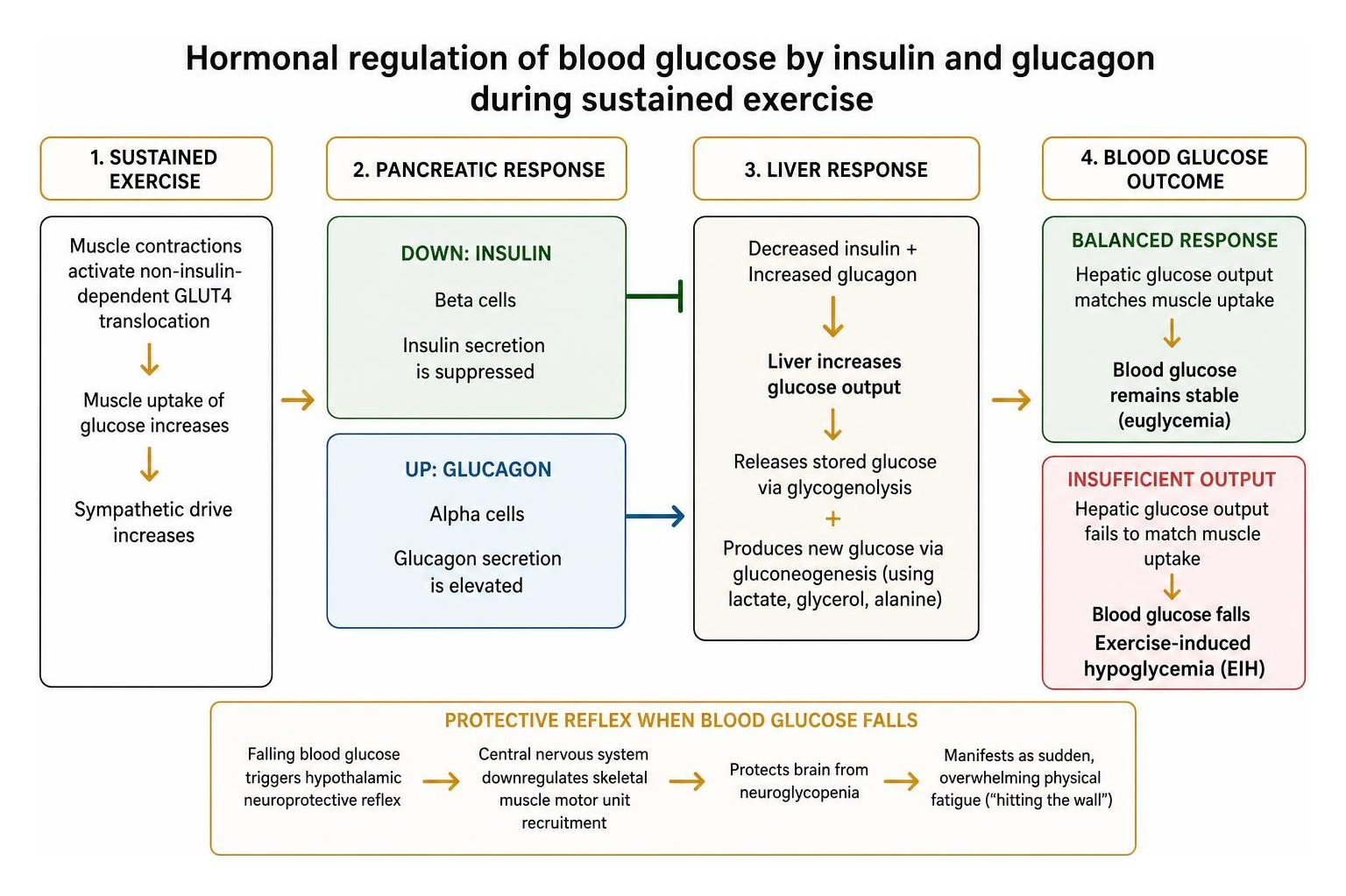
When hepatic output fails to match skeletal muscle uptake, blood sugar drops, resulting in exercise-induced hypoglycemia (EIH). Mechanistic evidence detailed in scientific research on carbohydrate ingestion and exercise metabolism shows that falling blood glucose triggers a hypothalamic neuroprotective reflex.
To protect the brain against fatal neuroglycopenia, the central nervous system downregulates skeletal muscle motor unit recruitment. This protective down-regulation manifests subjectively as sudden, overwhelming physical fatigue—commonly referred to as "hitting the wall."
Fuel Utilization and Metabolic Crossover in Training
Metabolic flexibility represents the muscle cell's capacity to switch between lipid oxidation and carbohydrate glycolysis based on exercise intensity, duration, and systemic fuel availability.
Building an aerobic base expands the zone where fat acts as the primary fuel, preserving precious hepatic glycogen for high-intensity surges.
Athletes looking to fine-tune their metabolic zones can build an individualized framework using our biomarker training plan guide.
Fuel Switching: Optimizing Blood Glucose for Athletic Performance Across Intensities
The metabolic crossover concept explains how the body shifts fuel selection across an intensity continuum. At low-to-moderate intensities (Zone 2 aerobic work), muscle cells rely predominantly on intramuscular triglycerides and circulating free fatty acids, maintaining a low Respiratory Exchange Ratio (RER ~0.70 to 0.82).
As intensity climbs toward the lactate threshold, the rate of adenosine triphosphate (ATP) production from fat oxidation becomes too slow to sustain muscular power demands. Glycolysis takes over, rapidly increasing the combustion of glucose and raising the RER toward 1.0.
High-fat, low-carbohydrate training adaptations can increase maximal fat oxidation rates (often exceeding 1.2 to 1.5 g/min in elite endurance competitors). However, high-intensity anaerobic efforts, hill climbs, and sprint finishes remain obligatorily reliant on rapid carbohydrate flux.
Gender Differences and Individual Insulin Sensitivity in Substrate Oxidation
Substrate utilization varies across biological sex and individual metabolic phenotypes:
Sex Differences: Female athletes naturally exhibit greater relative rates of lipid oxidation and lower rates of carbohydrate oxidation at matching relative submaximal intensities compared to males. Elevated estrogen levels promote glycogen sparing during steady-state aerobic efforts, though exogenous carbohydrate needs remain critical during prolonged, threshold-level work.
Insulin Secretory Profiles: Individual baseline insulin sensitivity and beta-cell secretory dynamics vary widely. Research on pre-exercise glucose response across individual phenotypes indicates that athletes with lower baseline insulin secretory responses maintain higher, more stable blood glucose during exercise without experiencing rebound hypoglycemia.
Conversely, individuals with hyperinsulinemic tendencies may experience rapid early drops in blood sugar if high-glycemic carbohydrates are consumed shortly before training.
Carbohydrate Supplementation: Acute Anaerobic vs. Endurance Demands
Supplementing carbohydrates during workouts is standard practice across sports, but its ergogenic value depends directly on the duration, intensity, and metabolic profile of the specific discipline.
Tailoring nutrition to unique blood parameters helps athletes avoid guesswork. Learn how to structure your intake using our guide to biomarker-based nutrition plans.
Pre-Workout Carbohydrates: Do Blood Glucose Spikes Improve Anaerobic Athletic Performance?
A common practice among strength and power athletes is consuming high-glycemic carbohydrates immediately before lifting sessions or short sprints. However, clinical testing challenges the assumption that acute pre-workout glucose spikes enhance short-duration, high-intensity output.
A rigorous, double-blind randomized crossover study evaluated the acute effects of pre-exercise glucose, fructose, and mixed carbohydrates against a non-caloric placebo in resistance and anaerobic testing (Eckstein et al., 2022). The investigation demonstrated that pre-workout carbohydrate supplementation provided no significant ergogenic advantage over placebo:
Cycling Time to Exhaustion (High-Intensity Anaerobic): 449 ± 163 seconds (glucose), 443 ± 156 seconds (fructose), 429 ± 160 seconds (glucose/fructose blend), and 466 ± 162 seconds (placebo) ($p = 0.48$).
Chest-Press Time to Failure: 180 ± 95 seconds (glucose), 180 ± 92 seconds (fructose), 172 ± 78 seconds (glucose/fructose), and 162 ± 66 seconds (placebo) ($p = 0.25$).
Leg-Press Time to Failure: 339 ± 220 seconds (glucose), 385 ± 246 seconds (fructose), 365 ± 242 seconds (glucose/fructose), and 384 ± 318 seconds (placebo) ($p = 0.41$).
For activities lasting under 30 to 45 minutes, baseline resting muscle glycogen stores are more than adequate. Elevating circulating blood sugar right before a short, high-intensity session does not improve performance metrics like peak force, total repetitions, or anaerobic time to failure (Eckstein et al., 2022).
Intra-Workout Fueling for Endurance: Dosing, Transporters, and Galactose vs. Glucose
When an endurance event extends past 60 to 90 minutes, intra-workout carbohydrate ingestion becomes an effective way to help lower the risk of exercise-induced hypoglycemia and sustain performance.
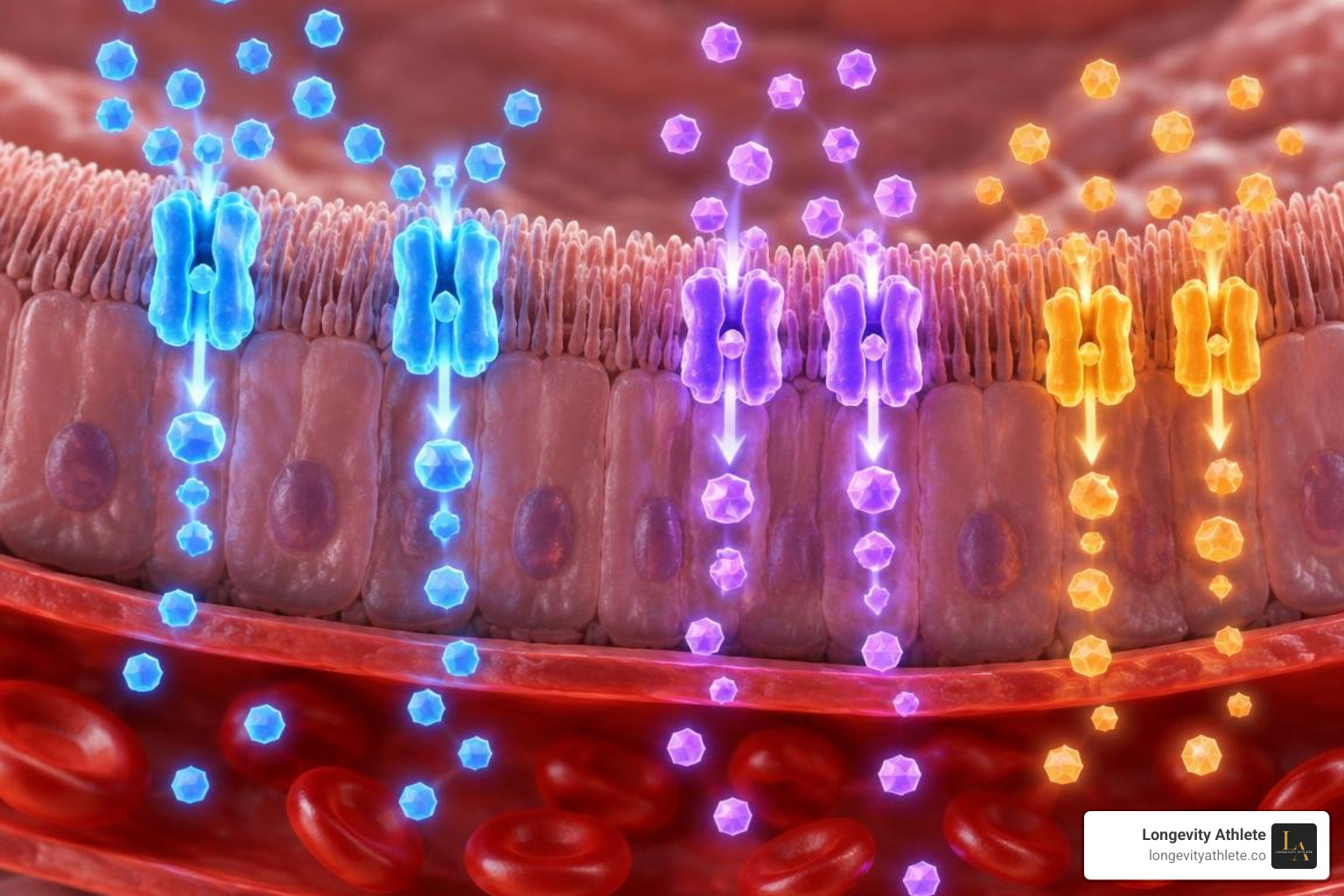
The human intestine relies on specific transport proteins to absorb simple sugars:
SGLT1 (Sodium-Glucose Cotransporter 1): Transports glucose and galactose across the intestinal brush border. This pathway saturates at approximately 60 grams per hour.
GLUT5 (Glucose Transporter 5): An independent, non-sodium-dependent transporter dedicated to fructose.
By combining glucose and fructose in a 2:1 or 1:0.8 ratio, athletes can bypass SGLT1 saturation, pushing exogenous carbohydrate oxidation rates up to 90 to 120 grams per hour.
Interestingly, clinical reviews demonstrate that a low-dose threshold of just 10 to 15 grams per hour is often sufficient to maintain euglycemia and help lower the risk of hypothalamic central fatigue during prolonged submaximal exercise. Higher doses (60–90+ g/h) are primarily required when maximal exogenous carbohydrate oxidation is needed to support high-intensity race paces.
For athletes who experience rapid glucose crashes, carbohydrate selection matters. A clinical study on pre-exercise galactose and glucose ingestion found that pre-exercise galactose produced a steady, modest glucose rise with a significantly blunted insulin response (peak serum insulin 12.5 ± 6.2 µU/mL for galactose vs. 29.6 ± 15.2 µU/mL for glucose). This allowed trained cyclists to sustain longer endurance output (68.7 ± 10.2 min for galactose vs. 58.5 ± 24.9 min for glucose) without experiencing early-bout hypoglycemia.
During shorter, high-intensity multisport events, high intra-session carbohydrate ingestion may not always yield an acute advantage. A trial on glucose-fructose intake during high-intensity triathlon sectors observed that a 45-gram carbohydrate beverage provided no significant performance improvement in a 25-minute super-sprint triathlon compared to placebo, while transiently increasing perceived exertion during the swim sector.
Carbohydrate Source | Primary Transporter | Peak Oxidation Rate | GI Distress Risk | Best Use Case |
|---|---|---|---|---|
Pure Glucose / Dextrose | SGLT1 | ~60 g/hr | Moderate (high osmolarity) | Fast blood sugar elevation; short endurance bursts |
Fructose | GLUT5 | ~30–40 g/hr | High (if ingested alone) | Co-ingestion with glucose to maximize total oxidation |
Glucose-Fructose (2:1) | SGLT1 + GLUT5 | ~90–120 g/hr | Low-to-Moderate (balanced) | Endurance events lasting over 2 hours |
Galactose | SGLT1 | ~30–45 g/hr | Low | Pre-exercise fueling to minimize insulin spikes |
Maltodextrin | SGLT1 | ~60 g/hr | Low (low osmolarity) | Baseline endurance fueling in liquid or gel formats |
The Risks of Pure Glucose Tablets: Rebound Hypoglycemia and Gastrointestinal Distress
Pure glucose chewables and tablets carry a Glycemic Index (GI) of 100. While they are useful for rapid medical management of hypoglycemia, using them as a primary fueling strategy during training carries distinct physiological risks:
Rebound Hypoglycemia: Ingesting a large bolus of pure glucose 15 to 45 minutes prior to exercise can provoke an acute insulin surge. When physical activity begins, contraction-mediated glucose uptake acts alongside this high circulating insulin, causing blood glucose levels to drop rapidly during the first 15 to 30 minutes of a session.
Gastrointestinal Distress: Concentrated pure glucose creates a high-osmolarity solution inside the stomach. This draws water out of systemic circulation and into the intestinal lumen, causing bloating, nausea, cramping, and osmotic diarrhea.
Metabolic Stress: Consuming frequent, large doses of simple sugars without balancing nutrients can place repetitive functional demands on pancreatic beta cells and drive transient systemic inflammation over time.
Monitoring and Biomarker Strategies for Glucose Regulation
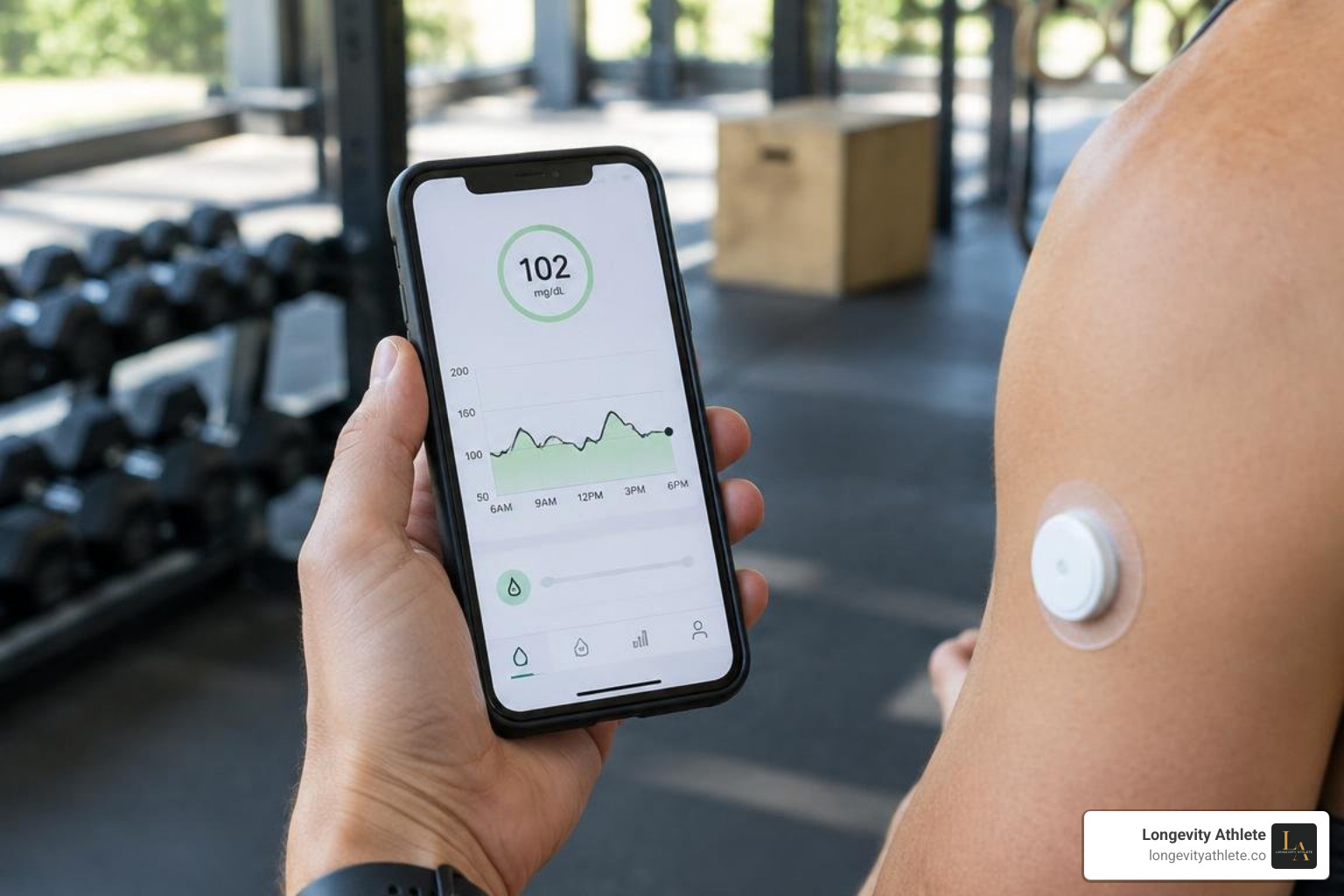
Athletes are increasingly adopting Continuous Glucose Monitors (CGMs) to track real-time interstitial glucose fluctuations throughout training and recovery cycles.
When reviewing CGM data, look beyond single-point spikes and evaluate broader systemic patterns:
Glycemic Variability: Large swings between hyperglycemia and rapid crashes often signal excessive reliance on simple sugars or mismatched fueling relative to workout intensity.
Post-Prandial Glycemic Excursions: Excessive glucose spikes following standard daily meals can reveal underlying insulin resistance or poor recovery states.
Sleep and Stress Biomarkers: A single night of fragmented or shortened sleep can reduce acute insulin sensitivity by up to 16%, altering normal glucose handling the following morning.
Monitoring wider internal metrics provides helpful context for understanding glucose responses. Athletes can evaluate systemic recovery using inflammation blood markers, explore convenient options with how to test for inflammation at home, or assess comprehensive panels via inflammation testing.
Tracking muscle breakdown through a creatine kinase blood test also clarifies whether acute glucose fluctuations correlate with muscular damage and training-induced fatigue.
Frequently Asked Questions About Blood Glucose and Exercise
How often should athletes monitor blood glucose around training sessions?
Athletes testing capillary blood glucose or utilizing CGMs should establish a structured pre- and post-workout plan:
Pre-Exercise (60 Minutes Prior): Take a baseline reading to verify metabolic stability (target: ~90–120 mg/dL).
Pre-Exercise (15–30 Minutes Prior): Check for sudden downward trends if pre-workout nutrition was ingested. If glucose reads below 80 mg/dL, consume a small, balanced snack before starting.
During Exercise: Check at 30-to-45-minute intervals during endurance sessions lasting longer than 90 minutes.
Post-Exercise Recovery: Continue monitoring for 6 to 12 hours after intense training bouts. This post-exercise window carries the highest risk for delayed exercise-induced hypoglycemia as muscles pull glucose from the blood to rebuild depleted glycogen reserves.
Can low-dose carbohydrate intake help lower the risk of exercise-induced fatigue as effectively as high doses?
Yes, depending on exercise intensity. Clinical research highlights that maintaining blood glucose stability—not necessarily maximizing glycogen synthesis during exercise—is the key driver in helping lower the risk of central fatigue.
Consuming as little as 10 to 15 grams of carbohydrate per hour can help lower the risk of exercise-induced hypoglycemia and support continuous motor unit recruitment during steady-state aerobic efforts.
Higher intakes (60 to 90+ g/h) remain beneficial for athletes competing at threshold paces where maximal exogenous carbohydrate oxidation directly spares muscle glycogen and optimizes speed.
What is rebound hypoglycemia and how can athletes avoid it?
Rebound (or reactive) hypoglycemia occurs when high-glycemic carbohydrates are consumed 15 to 45 minutes prior to exercise. The resulting insulin spike, combined with the onset of muscle contractions, rapidly clears glucose from the bloodstream, causing a mid-workout crash characterized by shakiness, lightheadedness, and sudden power loss.
Athletes can avoid rebound hypoglycemia through three primary strategies:
Adjust Fueling Timing: Consume pre-exercise meals 2 to 3 hours before training to allow insulin and glucose levels to normalize.
Select Lower-Glycemic Carbohydrates: Choose complex starches, low-GI carbohydrates like galactose, or pair carbohydrates with fiber and protein.
Fuel Right at the Start: If fast-acting carbohydrates are needed, consume them within the final 5 minutes before exercise begins or during the warm-up, when sympathetic nervous system activation suppresses insulin secretion.
Conclusion
Managing blood glucose is about keeping systemic energy steady, supporting cognitive focus, and avoiding unnecessary gastrointestinal stress. By matching carbohydrate timing, source, and dosage to the physiological demands of your sport, you can fuel hard efforts without running into energy crashes or digestive issues.
At Longevity Athlete, we believe high performance and long-term health go hand in hand. Explore our specialized services to see how objective biomarker tracking can take the guesswork out of your athletic routine. If you prefer a structured, team-oriented approach, our Signature Plan offers a clear roadmap to dial in your training, recovery, and daily nutrition. The Signature Plan is a self-guided group program, while the Gold and Platinum Plans create individualized lifestyle plans for athletes who want a more personalized approach.
Take control of your metabolic health, refine your fueling strategies, and build a high-performing foundation with Longevity Athlete.
References
Eckstein ML, Erlmann MP, Aberer F, Haupt S, Zimmermann P, Wachsmuth NB, Schierbauer J, Zimmer RT, Herz D, Obermayer-Pietsch B, Moser O. "Glucose and Fructose Supplementation and Their Acute Effects on Anaerobic Endurance and Resistance Exercise Performance in Healthy Individuals: A Double-Blind Randomized Placebo-Controlled Crossover Trial.." Nutrients, 2022. PMCID PMC9736485.
Coyle, E. F., Coggan, A. R., Hemmert, M. K., & Ivy, J. L. (1986). Muscle glycogen utilization during prolonged strenuous exercise when fed carbohydrate. Journal of Applied Physiology, 61(1), 165-172.
Hargreaves, M., & Spriet, L. L. (2020). Skeletal muscle energy metabolism during exercise. Nature Metabolism, 2(9), 817-828.
Jeukendrup, A. E. (2014). A step towards personalized sports nutrition: carbohydrate intake during exercise. Sports Medicine, 44(Suppl 1), S25-S33.
Thomas, D. T., Erdman, K. A., & Burke, L. M. (2016). American College of Sports Medicine Joint Position Statement: Nutrition and Athletic Performance. Medicine & Science in Sports & Exercise, 48(3), 543-568.