
Why High Creatine Kinase Blood Test Results Worry Athletes
Understanding the Creatine Kinase Blood Test: What It Measures
High creatine kinase (CK) blood test results worry athletes because elevated CK indicates muscle membrane breakdown and enzyme leakage into the bloodstream. This can range from normal training soreness, such as delayed onset muscle soreness (DOMS), to potentially dangerous rhabdomyolysis. To interpret your lab results accurately, you first need to know what this enzyme actually does inside your muscle fibers. Creatine kinase (CK), formerly referred to as creatine phosphokinase (CPK), is a vital biocatalyst found predominantly in your skeletal muscle, cardiac muscle, and brain tissue.
Its primary physiological role is to manage cellular energy. During high-intensity physical exertion, your cells demand immediate adenosine triphosphate (ATP). Creatine kinase facilitates this rapid response by transferring a high-energy phosphate group from phosphocreatine to adenosine diphosphate (ADP), instantly regenerating ATP without waiting for slower metabolic pathways to ramp up. For a complete scientific breakdown, you can review this overview of creatine kinase function.
Under resting conditions, muscle cell membranes (sarcolemmas) remain intact, keeping most of this enzyme locked inside the cell. Only a small, steady amount leaks into your bloodstream during routine cellular turnover. However, when muscle tissue experiences mechanical tension, energy depletion, metabolic stress, or physical trauma, membrane permeability increases. As a result, creatine kinase spills directly into your interstitial fluid and bloodstream.
A standard blood draw measures this catalytic activity in units per liter (U/L). A high number indicates that cellular leakage has occurred somewhere in the body.
Total CK vs. CK Isoenzymes
A standard lab order measures "Total CK," which represents the combined activity of all creatine kinase floating in your circulation. However, CK is a dimeric protein made of two distinct catalytic subunits: M (muscle type) and B (brain type). These subunits pair up into three distinct tissue-specific isoenzymes:
CK-MM (CK-3): Comprises roughly 97% to 100% of circulating CK in healthy individuals. It originates primarily from skeletal muscle.
CK-MB (CK-2): Found mainly in cardiac tissue (making up about 15% to 20% of heart muscle CK, with the remainder being CK-MM). It normally accounts for less than 3% to 5% of total circulating CK.
CK-BB (CK-1): Predominant in the brain, gastrointestinal tract, and smooth muscle. It rarely enters the bloodstream in detectable amounts unless there is severe central nervous system injury or blood-brain barrier disruption.
When total CK is unexpectedly elevated without an obvious muscular injury, laboratories utilize agarose gel electrophoresis with densitometry or immunochemiluminometric assays to separate these fractions. This analysis helps clinicians determine whether an elevation stems from intense lifting, a cardiac event, or atypical complexes. For example, clinical utility of CK total and isoenzymes profiles provide insight into whether non-pathological protein variants—known as Macro CK—are skewing the results.
Macro CK Type 1 involves CK bound to circulating immunoglobulins (frequently IgG), which occurs more often in women and individuals over 70 years of age. Macro CK Type 2 is an oligomeric mitochondrial complex occasionally linked to severe systemic illness. Both macro forms clear from the blood slowly, causing persistent total CK elevations that do not reflect active muscle damage.
Normal Reference Ranges and Demographic Variations
Reference intervals for total CK vary across laboratories based on testing methodologies and population demographics. Because CK reflects baseline muscle mass and daily turnover, standard reference ranges are significantly higher for biological males than biological females.
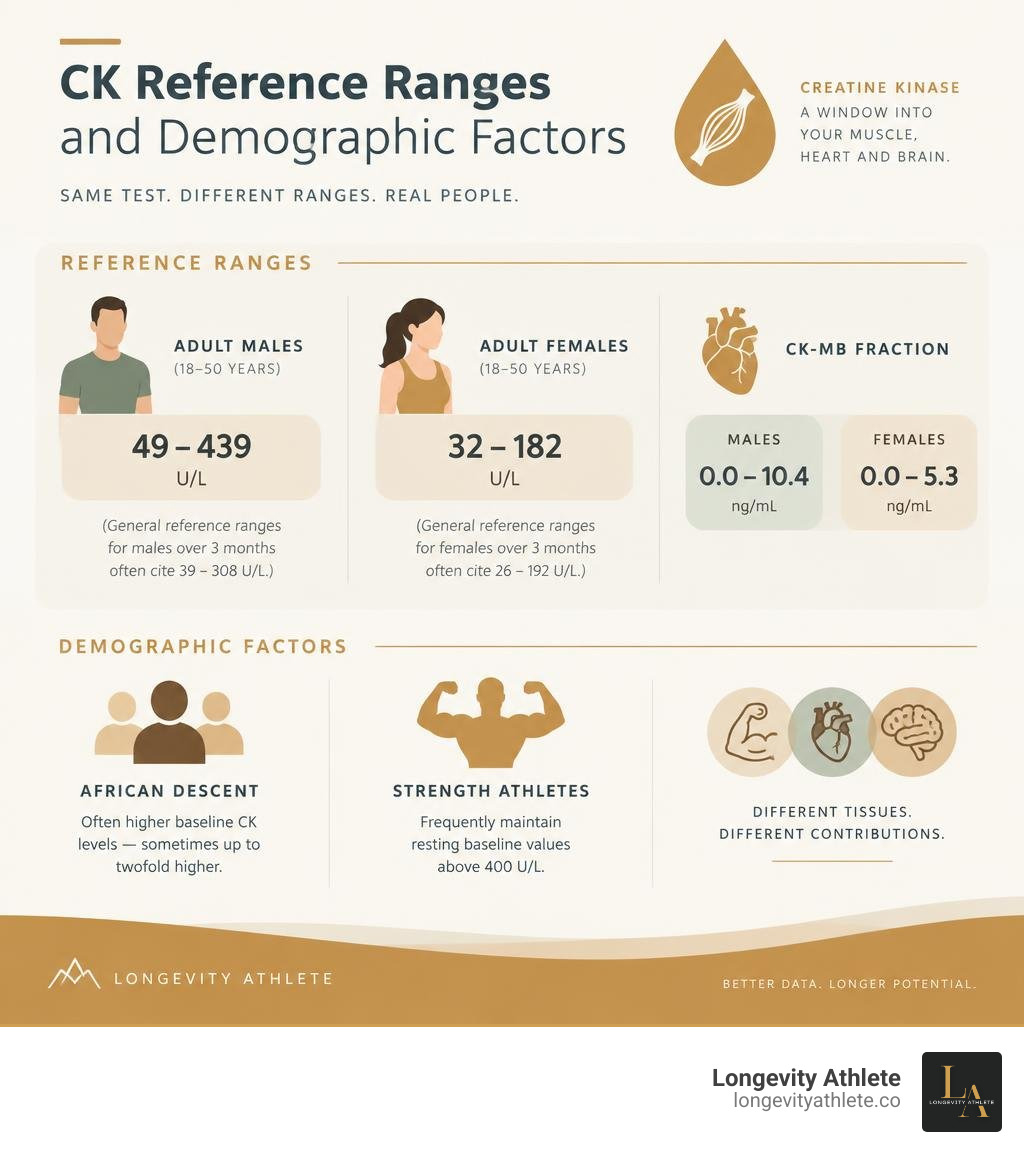
Adult Males (18–50 years): 49 to 439 U/L (general reference ranges for males over 3 months often cite 39 to 308 U/L).
Adult Females (18–50 years): 32 to 182 U/L (general reference ranges for females over 3 months cite 26 to 192 U/L).
CK-MB Fraction: Typically 0.0 to 10.4 ng/mL for males and 0.0 to 5.3 ng/mL for females.
Demographic factors play a noticeable role in baseline values. Individuals of African descent typically exhibit higher constitutional baseline CK levels—sometimes up to twofold higher—due to differences in muscle fiber composition and enzyme activity. Similarly, heavily muscled strength athletes and powerlifters frequently maintain resting baseline values above 400 U/L without any underlying muscle disease.
Demographic Group | Typical Reference Range (Total CK) | Primary Physiological Driver |
|---|---|---|
Adult Males (18–50 yrs) | 49 – 439 U/L | Higher baseline muscle mass |
Adult Females (18–50 yrs) | 32 – 182 U/L | Lower average muscle mass, estrogenic membrane protection |
Strength / Power Athletes | 300 – 800+ U/L (Resting Baseline) | Enhanced muscular bulk, chronic training adaptations |
Individuals of African Descent | Higher relative baseline across sexes | Genetic and muscle fiber structural variations |
Infants (< 3 months) | Elevated relative to adults | Rapid neonatal tissue growth and turnover |
Why Athletes Face Elevated CK Levels: Benign Strain vs. Rhabdomyolysis
Athletes experience post-workout CK elevations more frequently than the general public. Heavy resistance training, downhill running, and plyometrics force muscle fibers to lengthen under tension. This eccentric load causes micro-tears in the muscle's contractile architecture (the Z-discs), triggering transient inflammation, cellular repair, and localized enzyme leakage into the blood.
This exercise-induced hyperCKemia is a normal consequence of delayed onset muscle soreness (DOMS). However, because values can jump significantly after strenuous efforts, it is important to distinguish between normal adaptation and serious injury. For further context on standard clinical evaluations, consult this guide to clinical creatine kinase testing.
Exercise Dynamics and Natural Peak Timelines
Creatine kinase does not spike the second you drop your weights or cross a finish line. Because the enzyme must travel from the damaged interstitial tissue into the lymphatic system before entering venous circulation, blood levels take time to climb.
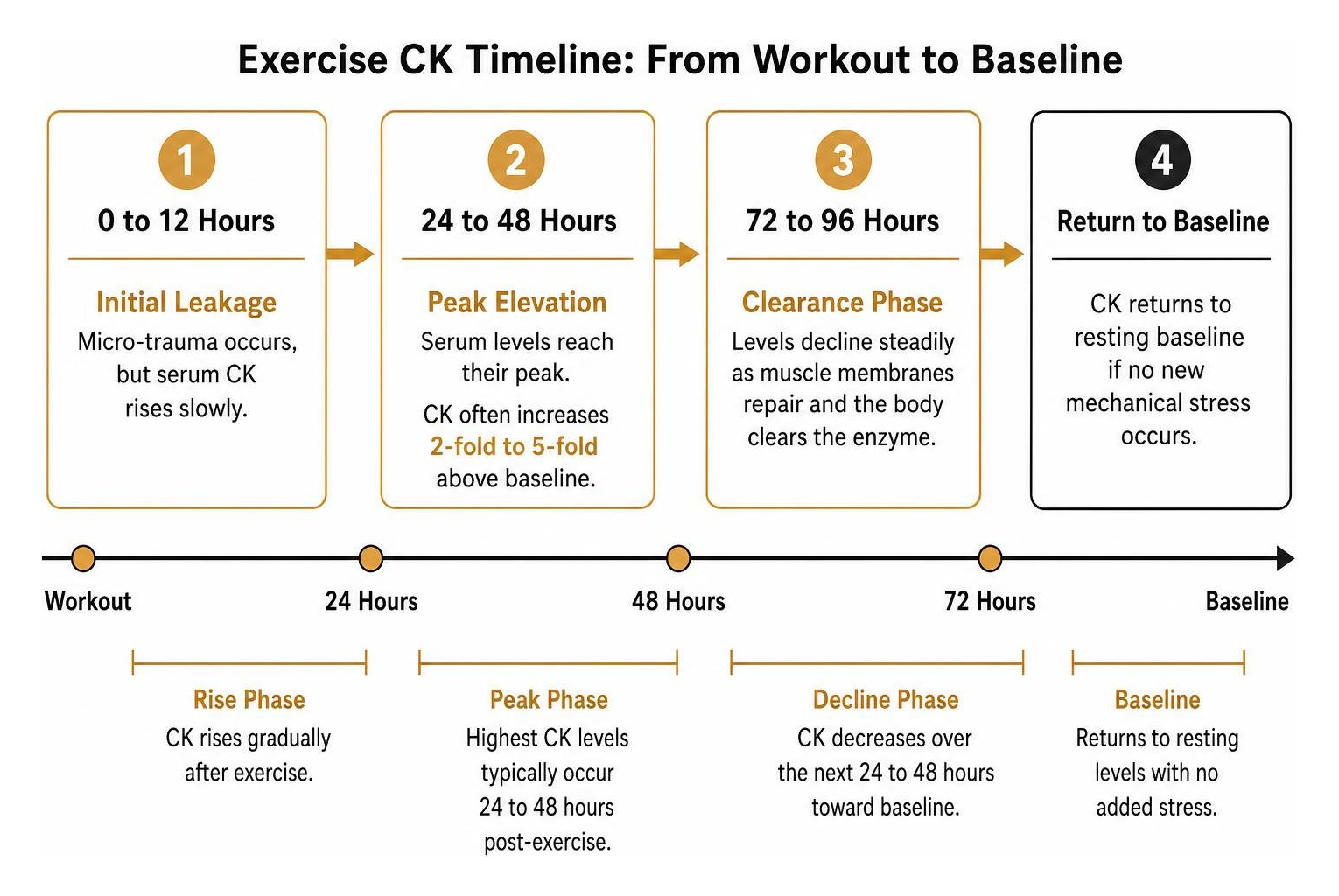
Initial Leakage (0 to 12 Hours): Micro-trauma occurs, but serum CK rises slowly.
Peak Elevation (24 to 48 Hours): Serum levels reach their peak. Following a marathon, unaccustomed eccentric lifting, or high-intensity intervals, total CK often jumps 2-fold to 5-fold above baseline (frequently hitting 1,000 to 2,500 U/L).
Clearance Phase (72 to 96 Hours): As muscle membranes repair and the reticuloendothelial system filters the enzyme, levels decline steadily back toward resting numbers, provided no new mechanical stress occurs.
Recognizing Dangerous Elevations and Rhabdomyolysis
While a 5-fold rise after a tough workout is common, extreme physical exertion—especially when combined with heat, dehydration, or viral infection—can trigger acute rhabdomyolysis. In this state, skeletal muscle fibers disintegrate rapidly, dumping massive amounts of intracellular contents into systemic circulation.
In acute rhabdomyolysis, total CK levels can surge past 10,000 U/L, occasionally reaching 100 to 200 times the upper reference limit (exceeding 50,000 to 100,000+ U/L).
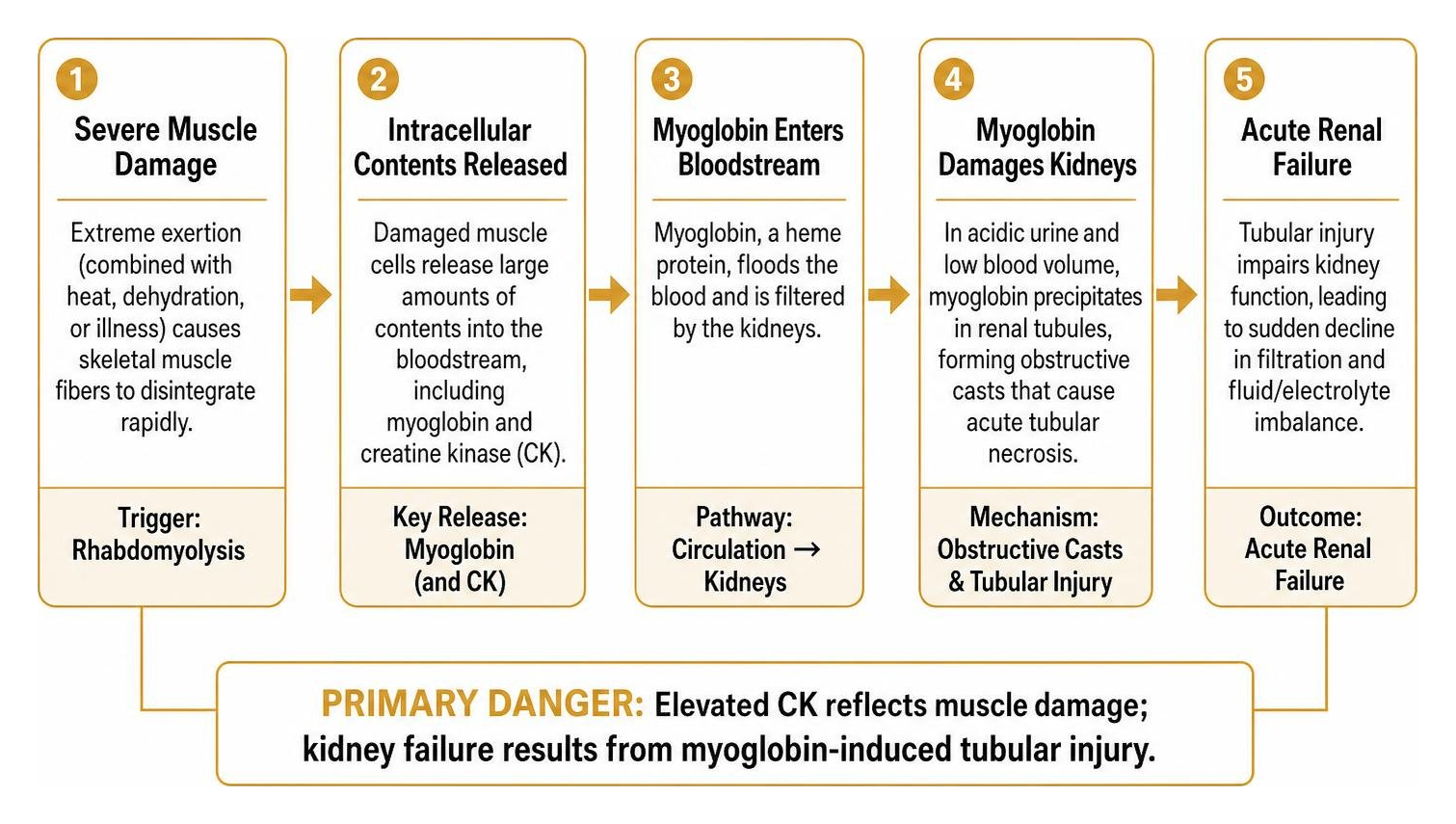
The primary clinical danger of rhabdomyolysis is not the elevated CK itself, but the concurrent release of myoglobin—a dark, oxygen-binding heme protein. When myoglobin floods the bloodstream, it filters through the kidneys and precipitates within the renal tubules. In the presence of acidic urine and low blood volume, it forms obstructive casts that cause acute tubular necrosis and sudden renal failure.
Emergency Warning Signs of Rhabdomyolysis:
Severe, debilitating muscle pain and swelling that worsens over time
Profound, sudden muscle weakness (inability to lift limbs or stand)
Urine that appears tea-colored, cola-colored, or reddish-brown (myoglobinuria)
Drastically reduced urine output despite fluid intake
Systemic symptoms including nausea, vomiting, confusion, and fever
If you notice dark, cola-colored urine alongside severe muscle swelling after training, seek immediate medical attention for intravenous hydration and renal monitoring.
Non-Athletic Causes of High Creatine Kinase Levels
Elevated CK is not always caused by tough workouts. When reviewing abnormal lab results, clinicians evaluate non-exercise factors that affect muscle membrane integrity. Diagnostic guidelines and insights on interpreting elevated CK values highlight several key non-athletic causes:
Statin-Associated Muscle Symptoms (SAMS): HMG-CoA reductase inhibitors (statins) are widely prescribed to manage cardiovascular risk, but they can occasionally impair mitochondrial function in skeletal muscle. This can cause muscle aches and mild-to-moderate CK elevations, which generally resolve after adjusting the medication dose.
Hypothyroidism: Thyroid hormone regulates muscle energy balance. Approximately 60% of hypothyroid patients exhibit elevated CK levels—often averaging 5 times the upper limit—due to altered sarcolemmal permeability and slower enzyme clearance.
Inherited Neuromuscular Disorders: Muscular dystrophies (such as Duchenne and Becker) cause chronic muscle breakdown. In young children with active Duchenne muscular dystrophy, CK levels can reach 50 to 100 times normal before obvious physical weakness appears.
Autoimmune Myopathies: Conditions such as polymyositis and dermatomyositis trigger immune-mediated attacks on muscle fibers, causing sustained CK spikes alongside progressive weakness.
Intramuscular Injections & Direct Trauma: A routine intramuscular vaccine, deep tissue trauma, a fall, or a motor vehicle accident can directly damage local muscle cells and elevate serum CK for several days.
Normal Childbirth: The intense physical strain and uterine contractions of labor typically cause a transient 6-fold rise in maternal serum CK immediately postpartum.
Protocol for Testing, Preparation, and Result Interpretation
Most commercial laboratories analyze serum CK using a coupled photometric enzyme reaction. In this assay, CK in the blood sample converts creatine phosphate and ADP into creatine and ATP. The produced ATP drives a secondary reaction that reduces NADP+ to NADPH, which is measured by a spectrophotometer at 340 nm.
For cardiac evaluations, laboratories use automated immunochemiluminometric assays to quantify the exact mass concentration of the CK-MB fraction, as detailed in these protocols for evaluating CK-MB fractions and cardiac markers.
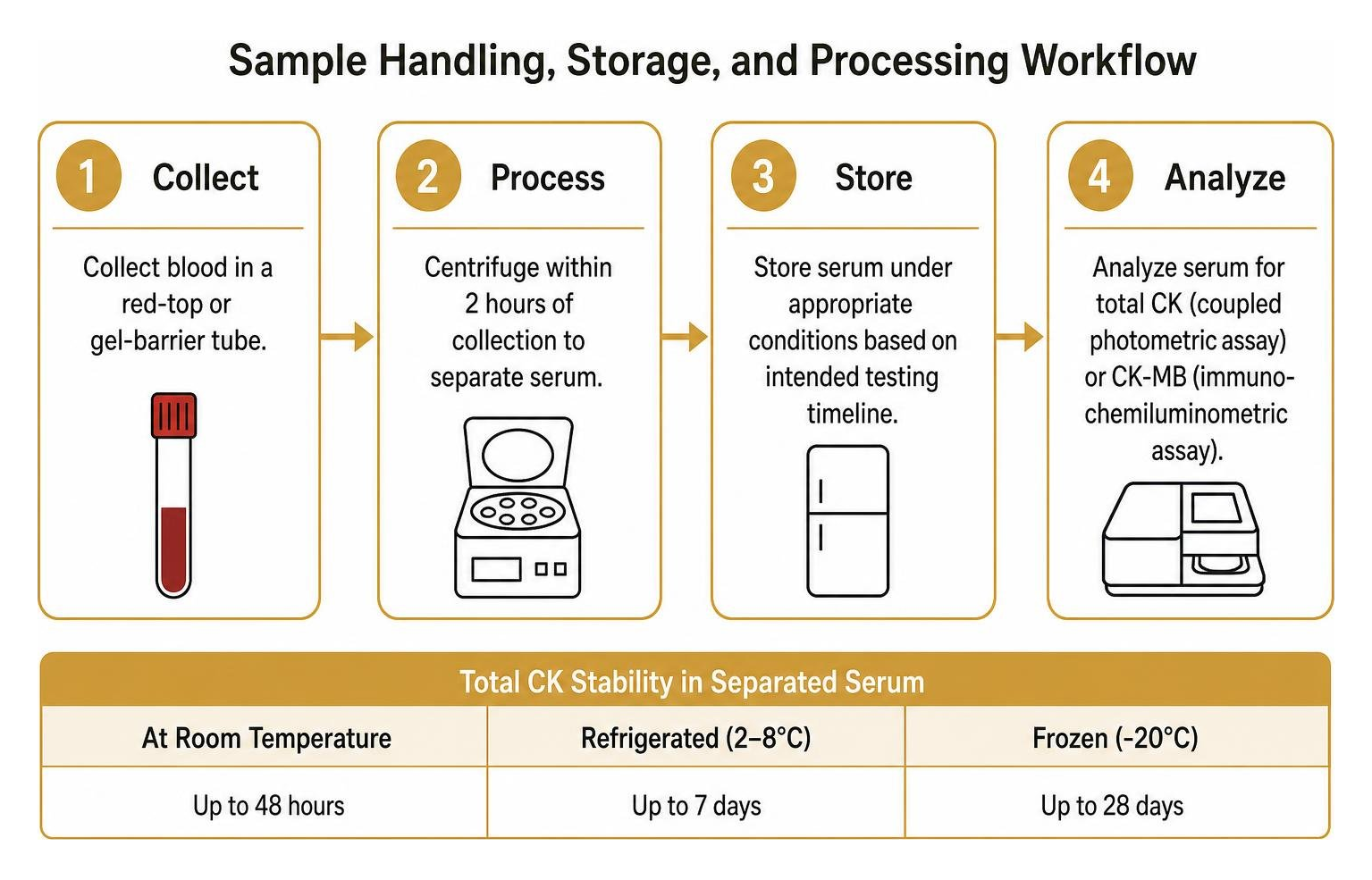
Proper specimen handling protects test accuracy. Serum should be collected in a red-top or gel-barrier tube and centrifuged within two hours of collection. Once separated, total CK remains stable at room temperature for up to 48 hours, refrigerated (2–8°C) for up to 7 days, and frozen (-20°C) for up to 28 days.
Why Athletes Need a Creatine Kinase Blood Test
For endurance competitors, CrossFitters, and strength athletes, routine biomarker tracking helps assess training tolerance. By monitoring your personal baseline and clearance curves, you can:
Identify Inadequate Recovery: If your resting CK remains consistently high days after a deload, your muscle tissue may not be repairing efficiently.
Prevent Overtraining Syndrome: Chronic muscle breakdown without adequate rest increases systemic inflammation, compromises immunity, and raises the risk of soft-tissue tears.
Optimize Tapering Windows: Tracking enzyme clearance helps ensure you enter major competitions fully recovered.
To see how we integrate enzyme panels with endocrine, metabolic, and inflammatory markers, explore our detailed approach to sports bloodwork analysis and data-driven training.

How to Prepare for a Creatine Kinase Blood Test
Pre-analytical variables can skew your test results. If you are scheduling a routine check to establish your true resting baseline, follow these preparation steps:
Avoid Strenuous Exercise for 48 Hours: Avoid heavy eccentric lifting, interval sprints, and long-distance sessions for at least 48 hours before your blood draw.
Discontinue High-Dose Biotin (72 Hours Prior): Biotin (Vitamin B7) supplements can interfere with immunoassays, including CK-MB and cardiac troponin tests, causing falsely low readings. Stop high-dose biotin 72 hours before testing.
Stay Well Hydrated: Dehydration concentrates serum proteins, which can artificially raise your measured enzyme levels.
Avoid Alcohol for 48 Hours: Alcohol consumption impairs muscle protein synthesis, alters membrane stability, and can cause mild, transient CK spikes.
Note Recent Injections or Deep Bodywork: Inform your provider if you have had recent intramuscular injections, deep-tissue massage, or dry needling, as these cause localized muscle damage that elevates circulating CK.
Cardiac Health: CK-MB vs. Cardiac Troponin
Historically, the CK-MB isoenzyme was the primary blood test used to diagnose acute myocardial infarctions (heart attacks). Following an ischemic cardiac event, damaged cardiomyocytes release CK-MB into the blood:
Initial Rise: 3 to 6 hours after the onset of chest pain
Peak Levels: 15 to 20 hours post-infarction (averaging 17 to 20 hours for transmural infarctions)
Return to Baseline: Normalizes within 48 to 72 hours as the body clears the enzyme
However, in modern cardiology, cardiac troponins (Troponin I and Troponin T) measured with high-sensitivity assays (hs-cTn) have largely replaced CK-MB as the gold standard.
Cardiac troponins are structural proteins found almost exclusively in heart muscle. They provide significantly higher cardiac specificity and sensitivity than CK-MB. This distinction is especially important for athletes.
A marathon runner who presents to an emergency room with chest wall tightness and fatigue may show markedly elevated total CK (from leg muscle breakdown) and elevated CK-MB (since regenerating skeletal muscle can express small amounts of the MB sub-fraction). In this scenario, high-sensitivity cardiac troponin testing accurately confirms whether the heart muscle itself has been injured, ruling out a cardiac event without being misled by exercise-induced muscle damage.
Biomarker | Primary Diagnostic Utility | Initial Rise | Peak Concentration | Return to Baseline |
|---|---|---|---|---|
Total CK | Skeletal muscle trauma, myopathies, rhabdomyolysis | 6 – 12 hours | 24 – 48 hours | 3 – 5 days |
CK-MB | Secondary cardiac monitoring, re-infarction tracking | 3 – 6 hours | 15 – 20 hours | 48 – 72 hours |
High-Sensitivity Troponin (hs-cTn) | Gold standard for acute myocardial infarction | 2 – 4 hours | 12 – 24 hours | 7 – 14 days |
Frequently Asked Questions About Creatine Kinase Blood Tests
How high can CK levels go after intense exercise?
Post-workout CK spikes vary based on genetics, training status, and workout intensity. Following unaccustomed high-volume training, heavy eccentric squats, or an ultramarathon, healthy athletes frequently reach 1,500 to 5,000 U/L within 24 to 48 hours. Values up to 10,000 U/L can occasionally occur without causing medical complications, provided the athlete remains well hydrated and kidneys continue filtering waste effectively.
Does taking a creatine supplement increase my creatine kinase levels?
No. Taking dietary creatine monohydrate increases intramuscular storage of free creatine and phosphocreatine, which supports short-burst energy output. It does not damage muscle cell membranes or cause creatine kinase to leak into your bloodstream. However, because creatine supplementation allows you to train harder, that increased workout volume can indirectly lead to higher post-exercise CK levels.
How long does it take for elevated CK levels to return to baseline?
In healthy athletes, serum CK follows a predictable clearance curve. After a hard workout, levels typically peak between 24 and 48 hours and decline back to your baseline within 72 to 96 hours. If your CK levels remain high after a full week of rest, consult a physician to check for underlying muscle conditions, thyroid dysfunction, or medication-related side effects.
Conclusion
A high creatine kinase result can be unsettling, but for dedicated athletes, it is usually a natural reflection of hard training rather than a sign of serious disease. The key is understanding context: the timing of your blood draw, the nature of your recent workouts, and whether you have symptoms like muscle swelling or dark urine.
When tracked correctly, CK serves as a practical recovery marker that helps you balance training intensity with adequate rest. Rather than relying on generic reference ranges, tracking your personal baseline allows you to adjust your training volume effectively.
At Longevity Athlete, we specialize in helping high-performers optimize their health and longevity through precision testing. The Signature Plan is a self-guided group program. The Gold and Platinum Plans create individualized lifestyle protocols tailored directly to your unique physiology, training load, and recovery needs. To build a data-driven approach to your health and training, learn how we help athletes balance athletic performance and long-term health.