Hormone Panel 101
What Is a Comprehensive Hormone Panel and Why Does It Matter?
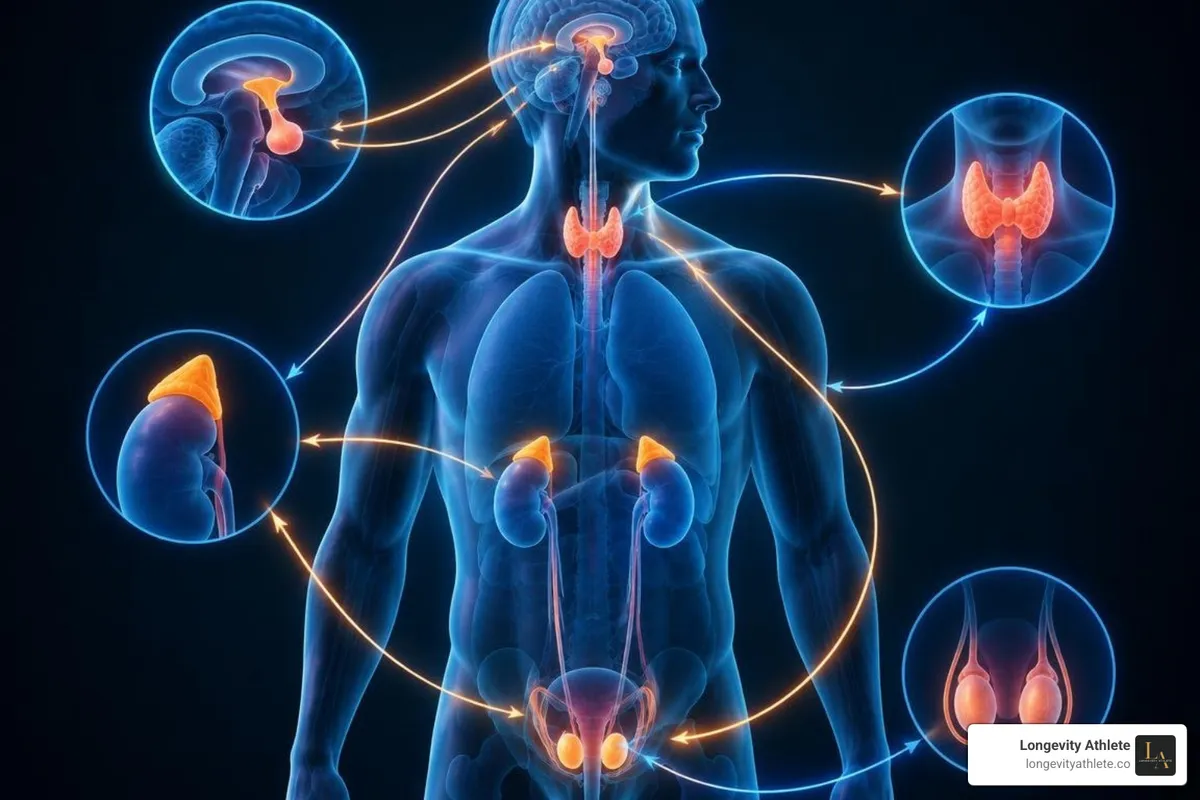
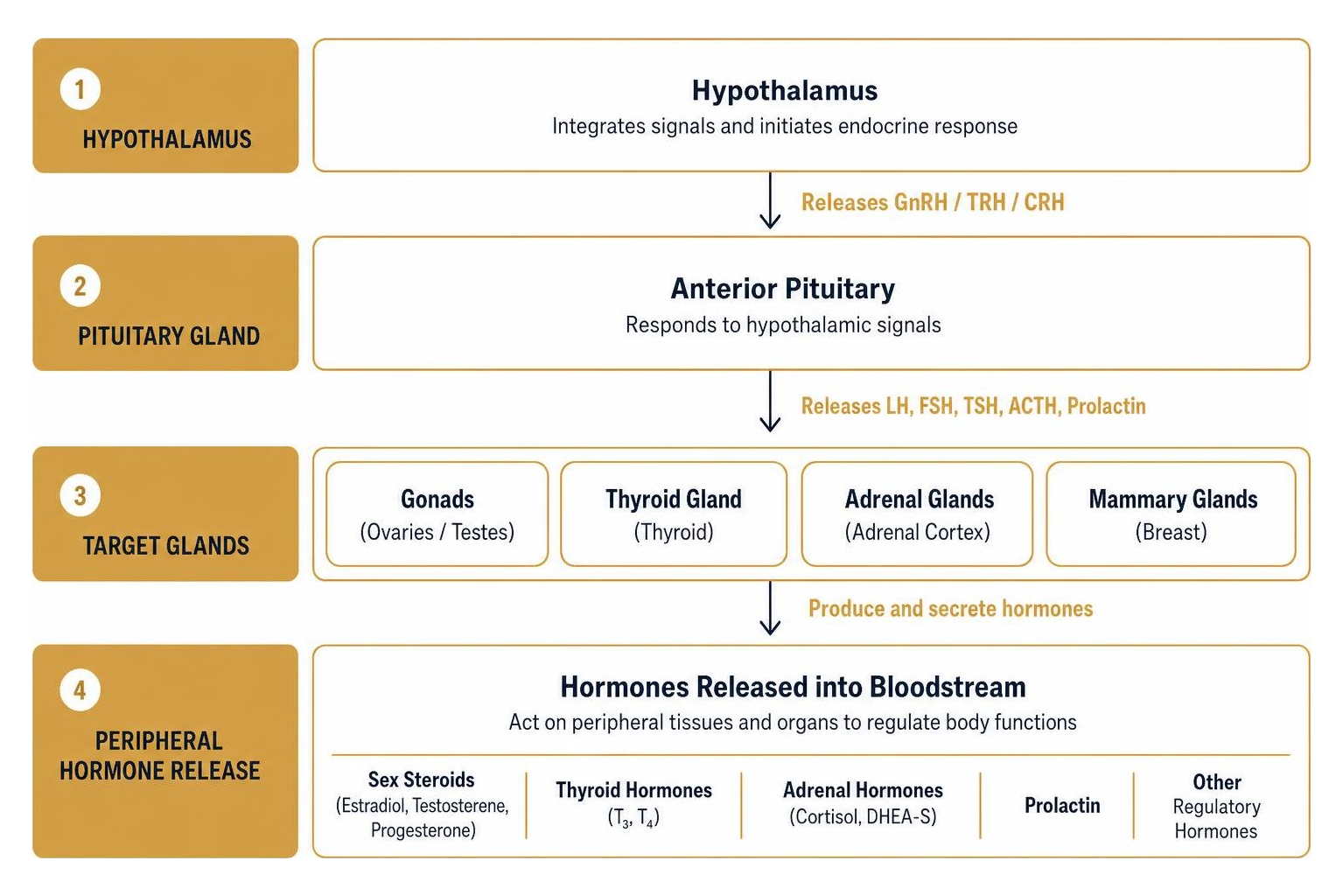
Your endocrine system operates like an intricate communication network. Rather than working in isolation, your glands produce chemical messengers that circulate continuously to regulate metabolism, tissue repair, body composition, and mood. A full endocrine assessment evaluates the feedback loops connecting your brain (the hypothalamus and pituitary gland) with your peripheral organs, including the adrenal glands, thyroid, and gonads.
When an athlete experiences persistent fatigue, running a single test like total testosterone or TSH often misses the broader picture. Hormones influence one another dynamically. For instance, high physiological stress raises cortisol, which can suppress pituitary signaling of luteinizing hormone (LH) and subsequently downregulate sex hormone production. Similarly, elevated thyroid antibodies can disrupt metabolic efficiency long before overt thyroid failure appears on basic screening tests.
To get meaningful diagnostic clarity, evaluating a comprehensive female biomarker analysis or a full male panel provides the necessary context.
Testing Strategy | Biomarkers Evaluated | Clinical Depth | Contextual Accuracy |
|---|---|---|---|
Single Biomarker Test | 1 marker (e.g., Total Testosterone or TSH alone) | Isolated snapshot; misses underlying drivers | Low; cannot account for binding proteins or upstream signals |
Basic Hormone Screen | 3–5 markers (e.g., Total T, Estradiol, TSH) | Identifies general hormonal shifts | Moderate; lacks adrenal, free fraction, or antibody context |
Comprehensive Endocrine Panel | 10–14+ markers (Sex steroids, Free fractions, Pituitary, Adrenal, Thyroid + Antibodies) | Maps full endocrine axes and bioactivity | High; pinpoints root-cause drivers, binding capacity, and tissue availability |
Key Biomarkers in a Female Hormone Panel
A female endocrine assessment requires looking closely at cyclic fluctuations, adrenal output, and thyroid efficiency. A well-designed expanded female hormone test panel typically measures:
Estradiol ($E_2$): The primary and most potent circulating estrogen. It governs menstrual regularity, bone mineral density, vascular elasticity, and brain function.
Progesterone: Produced primarily by the corpus luteum following ovulation. It balances estrogen, supports restorative deep sleep, and stabilizes mood via GABA receptors.
Luteinizing Hormone (LH) & Follicle-Stimulating Hormone (FSH): Pituitary hormones that orchestrate follicle maturation and trigger ovulation. The ratio of LH to FSH offers clinical clues for conditions like polyendocrine metabolic ovarian syndrome (PMOS, historically termed PCOS), which impacts an estimated 8% to 13% of reproductive-age women.
Total & Free Testosterone: Crucial for maintaining lean muscle mass, bone strength, dopamine production, and sexual drive in women.
DHEA-Sulfate (DHEA-S): An androgen produced predominantly by the adrenal glands that acts as a precursor pool for estrogens and androgens while serving as a barometer for adrenal output.
Prolactin: A pituitary hormone that, when elevated outside of pregnancy or lactation, can suppress gonadotropin-releasing hormone and disrupt regular ovulatory cycles.
Comprehensive Thyroid Markers (TSH, Free $T4$, Free $T3$, TPO Antibodies): Regulate basal metabolic rate and cellular energy production. Measuring antibodies helps spot autoimmune activity before standard TSH levels fall outside standard ranges.
For individuals exploring fertility status, specialized testing can also evaluate Anti-Müllerian Hormone (AMH) to assess ovarian reserve alongside broader endocrine markers.
Essential Markers in a Male Hormone Panel
Male hormone health relies heavily on the balance between androgen production, estrogen conversion, and transport protein availability. Evaluating a male profile requires examining:
Total Testosterone: The total quantity of testosterone circulating in the bloodstream, including both protein-bound and unbound forms.
Sex Hormone Binding Globulin (SHBG): The high-affinity carrier glycoprotein that binds testosterone, dihydrotestosterone, and estradiol. Elevated SHBG renders a large portion of testosterone biologically inactive, meaning a man can have "normal" total testosterone while experiencing classic low-testosterone symptoms due to suppressed free hormone availability.
Free and Bioavailable Testosterone: The unbound or weakly albumin-bound fraction that is biologically active and freely diffuses into target tissues like muscle and brain cells.
Estradiol: Men produce estradiol via the aromatization of testosterone. Maintaining balanced estradiol is vital for bone density, cardiovascular health, and libido, whereas disproportionately high levels can contribute to water retention or gynecomastia.
Dihydrotestosterone (DHT): A potent androgen converted from testosterone via the 5-alpha reductase enzyme, essential for physical strength, central nervous system drive, and sexual function.
Prostate-Specific Antigen (PSA): A glycoprotein measured to establish baseline prostate health before considering any targeted hormonal or lifestyle optimization protocols.
Common Signs and Symptoms of Hormonal Imbalance
Hormones govern everything from mitochondrial output to neurotransmitter synthesis. When communication across the endocrine axes falters, symptoms often emerge gradually before becoming chronic hurdles to daily performance.
Common manifestations include:
Persistent Physical and Mental Fatigue: Waking up exhausted despite eight hours of sleep, or experiencing severe afternoon energy crashes.
Unexplained Changes in Body Composition: Sudden accumulation of central visceral adipose tissue or persistent loss of lean muscle mass despite rigorous training.
Sleep Architecture Disruptions: Difficulty falling asleep, frequent nighttime awakenings, or reduced slow-wave restorative sleep.
Cognitive Impairment: Brain fog, impaired short-term memory, and diminished executive focus during demanding tasks.
Mood Changes and Emotional Lability: Uncharacteristic irritability, heightened baseline anxiety, or depressive episodes unrelated to external life circumstances.
Diminished Libido and Sexual Dysfunction: Low sexual desire, erectile performance issues, or vaginal dryness.
Impaired Athletic Recovery: Prolonged muscle soreness, chronic joint inflammation, elevated resting heart rate, and recurrent overuse injuries.
Recognizing these symptoms is step one; pinpointing the underlying biochemical drivers through objective data is step two. Exploring structured biomarker testing services provides the targeted clarity needed to stop guessing.
Test Preparation, Sample Timing, and Cost Expectations
Accurate hormone testing depends heavily on proper preparation. Because hormones follow diurnal pulses and cyclical rhythms, taking a sample at the wrong time can distort the results.

Preparation Rules for High-Accuracy Testing
Sample Timing: Collect blood between 7:00 AM and 10:00 AM. Androgens like testosterone, as well as cortisol and prolactin, peak in the early morning hours and decline across the day.
Menstrual Cycle Phase Timing: For menstruating women assessing baseline fertility and pituitary function, test on Cycle Days 2 to 4 (where Day 1 is the first day of full menstrual flow). For evaluating luteal progesterone production and confirming ovulation, test approximately 7 days before an expected period (typically Day 21 of a standard 28-day cycle).
Fasting Protocol: Fast for 8 to 12 hours prior to collection (water is encouraged) to prevent postprandial glucose and lipid surges from interfering with metabolic markers.
Biotin Washout: Stop high-dose biotin (vitamin B7) supplements for at least 72 hours before your blood draw. Biotin is widely used in laboratory immunoassays; excess circulating biotin can cause falsely high or low readings across thyroid and reproductive hormone panels.
Topical Hormone Precautions: If using prescribed topical hormone creams, avoid applying them to your forearms or hands for 24 hours prior to venipuncture to prevent local sample contamination.
Testing Dimension | Protocol Requirement | Clinical Rationale |
|---|---|---|
Collection Time | Morning (7:00 AM – 10:00 AM) | Captures peak diurnal levels for testosterone, cortisol, and DHEA-S |
Menstrual Baseline | Cycle Days 2–4 | Measures baseline gonadotropins ($FSH$, $LH$) and low resting estradiol |
Luteal Assessment | Mid-luteal (Day 21 of 28-day cycle) | Assesses post-ovulatory progesterone peak |
Dietary Status | 8–12 Hour Overnight Fast | Minimizes acute metabolic interference with lipids and glucose |
Supplement Washout | 72 Hours off high-dose Biotin | Prevents false immunoassay analytical interference |
Cost Expectations and Accessibility
Direct-to-consumer and cash-pay laboratory pricing has made functional endocrine screening accessible without requiring extensive insurance pre-authorizations:
Basic female starter profiles generally range from $195 to $225.
Comprehensive panels evaluating 10 to 14 biomarkers typically range between $289 and $450 depending on whether advanced methodologies like Liquid Chromatography-Tandem Mass Spectrometry (LC/MS/MS) are used.
Comprehensive male androgen panels evaluating total and free testosterone, SHBG, DHT, and estradiol fall between $199 and $299.
Reviewing transparent pricing allows you to choose the depth of biomarker screening that matches your specific health goals.
How to Interpret Results and Take Action
Receiving a laboratory report can feel like reading a wall of disconnected numbers. Standard laboratory reference ranges represent a broad statistical average derived from a wide cross-section of the population—including individuals with subclinical disease, high stress, and sedentary lifestyles.
A number that is technically "normal" according to a standard lab bracket may be far from optimal for an active individual seeking sustained energy and high physical output.

When reviewing your results:
Assess Relative Ratios: Individual markers tell only part of the story. For example, evaluate your Free Testosterone in relation to SHBG, or your Progesterone in relation to Estradiol.
Account for Training Stress: Heavy endurance or high-volume resistance training can temporarily elevate cortisol and suppress resting gonadotropin secretion.
Address Foundational Habits: Simple adjustments in macronutrient distribution, sleep hygiene, and recovery periods frequently normalize mild functional imbalances without requiring pharmaceutical intervention.
Establish a Retesting Timeline: Retest every 3 to 6 months when implementing lifestyle, nutritional, or training changes, and annually once values stabilize.
To learn more about our philosophy and methodology, explore the about page, or browse educational articles on our blog. When you are ready to evaluate your biomarkers, you can Book A Call to discuss your data.
Frequently Asked Questions About Endocrine Testing
Can a hormone test definitively diagnose PCOS or PMOS?
No single blood test can diagnose polyendocrine metabolic ovarian syndrome on its own. Diagnosis follows clinical frameworks like the Rotterdam criteria, which require meeting at least two of three markers: irregular or absent ovulatory cycles, clinical or biochemical signs of hyperandrogenism (such as elevated free testosterone or DHEA-S), and polycystic ovarian morphology verified via ultrasound. Blood testing identifies the underlying hormonal patterns, but a licensed physician must make the definitive clinical diagnosis.
How often should active individuals retest their hormone levels?
For individuals actively modifying their nutrition, training load, or supplementation, retesting every 3 to 6 months provides clear objective feedback on protocol efficacy. For athletes in a stable maintenance phase, an annual comprehensive endocrine panel is generally sufficient to track biological trends and support long-term vitality.
Do supplements like biotin affect hormone blood test accuracy?
Yes. High-dose biotin (frequently found in hair, skin, and nail formulations or multivitamin blends) interferes with the streptavidin-biotin binding technology used in standard laboratory immunoassays. This interference can falsely elevate thyroid hormones like Free $T3$ and Free $T4$ while artificially suppressing TSH and altering sex steroid readings. A 72-hour supplement washout prior to blood collection avoids these analytical errors.
Conclusion
Understanding your internal biochemistry is essential for long-term health, sustainable athletic performance, and proactive aging. A comprehensive blood panel takes the guesswork out of fatigue, metabolic shifts, and recovery hurdles, giving you clear baseline data to make informed lifestyle choices.
At Longevity Athlete, we turn complex biomarker data into structured, practical plans. The Signature Plan is a self-guided group program. The Gold and Platinum Plans create individualized lifestyle protocols designed around your unique physiology and performance demands.
If you are ready to take a targeted approach to your endocrine health, Contact Us or visit our homepage to explore our personalized consulting programs.