
Field to Full Recovery: Practical Milestones for Injured Athletes
A Smarter Path to Recovering From a Sports Injury
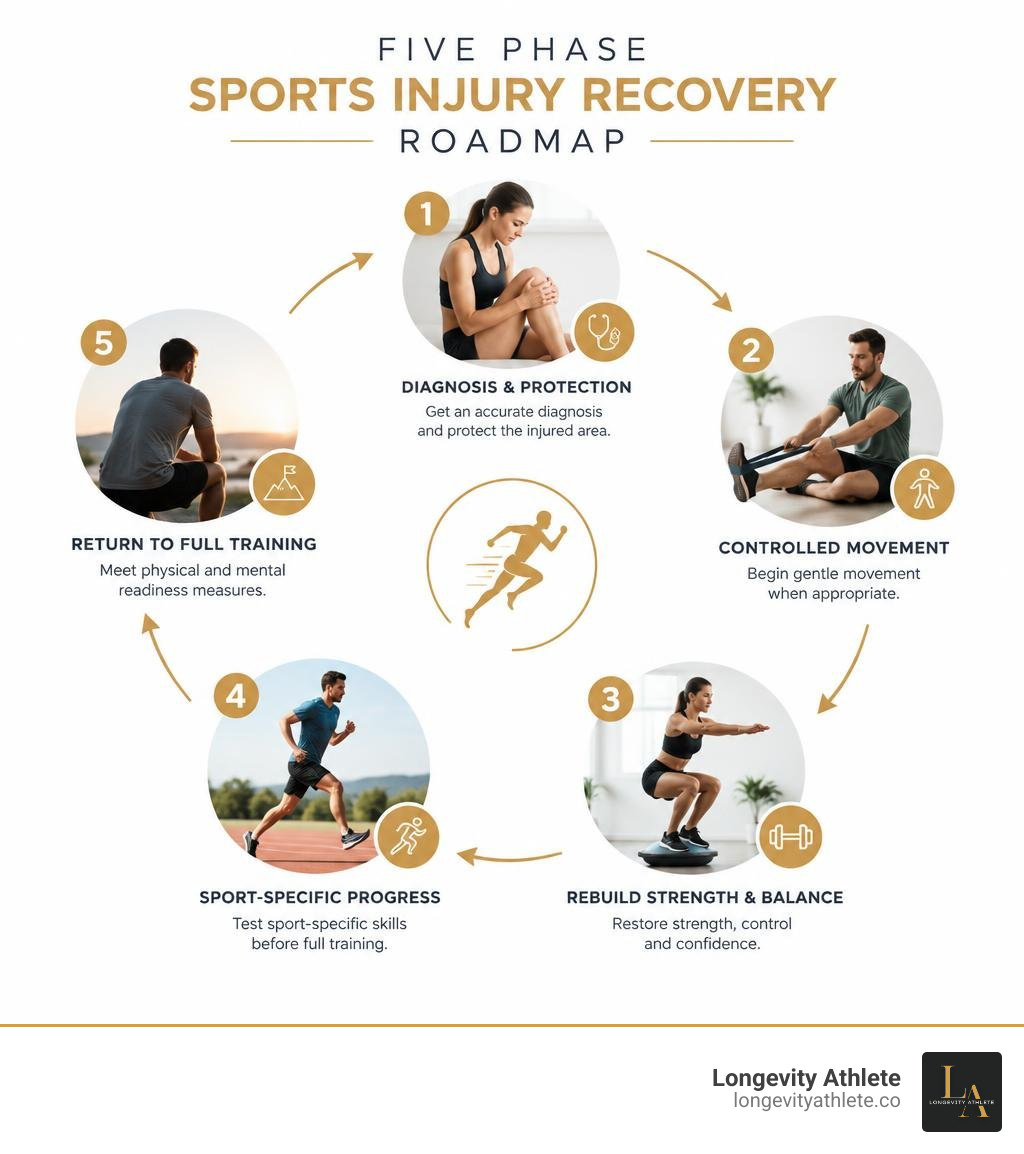
Recovering from a sports injury works best when you follow milestones, not just the calendar. Get an accurate diagnosis, protect the injured area, begin controlled movement when appropriate, rebuild strength and balance, then test sport-specific skills before returning to full training.
A safe recovery plan should help you:
Reduce pain and swelling without unnecessary total rest.
Restore range of motion and basic movement.
Rebuild strength, control, and confidence on the injured side.
Progress training load gradually and watch how symptoms respond over the next 24 hours.
Return to competition only after you meet objective physical and mental readiness measures.
An injury can disrupt more than training. It can affect sleep, mood, identity, and trust in your body. The goal is not to rush back because pain has faded. It is to restore the capacity to handle the demands of your sport without compensating, avoiding movement, or taking avoidable re-injury risks.
For athletes who track performance, rehabilitation is a chance to replace guesswork with useful data: symptom trends, strength symmetry, mobility, training load, sleep, and relevant biomarkers. Longevity Athlete's Signature Plan is a self-guided group program, while the Gold and Platinum Plans create individualized lifestyle protocols to support recovery, long-term health, and performance.
The Biological Phases of Recovering from a Sports Injury
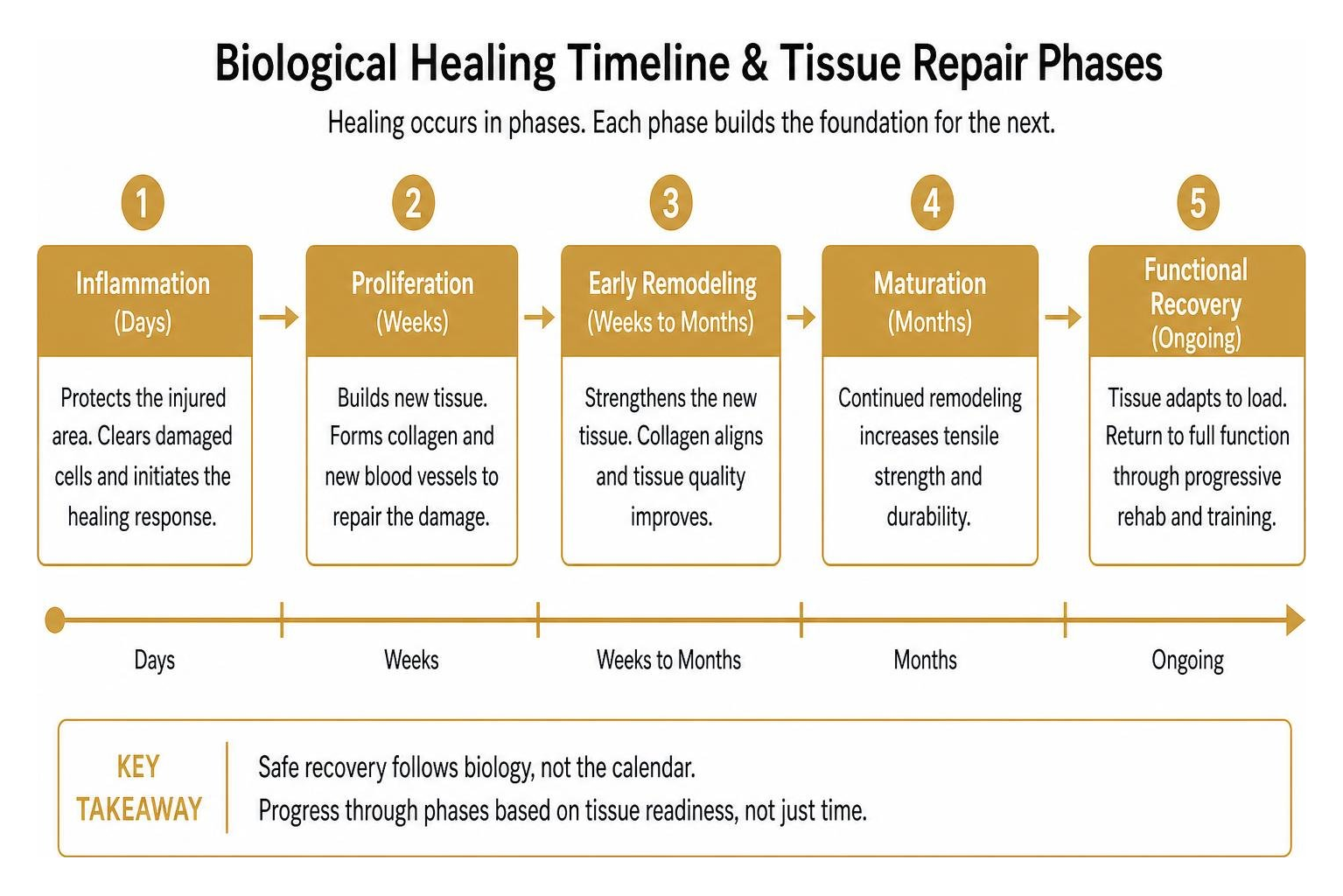
When tissue suffers damage, our bodies initiate a complex biological cascade. Healing does not occur overnight, nor does it follow a simple linear line on a calendar. Biological healing operates on physiological floors—minimum timeframes required for cellular synthesis, matrix deposition, and structural remodeling.
Understanding these physiological phases helps us establish safe recovery routines after acute trauma that work alongside our body's natural healing timeline rather than fighting against it.
Tissue Type | Injury Severity / Grade | Approximate Cellular Healing Window | Remodeling & Tensile Maturation |
|---|---|---|---|
Muscle | Grade 1 (Mild tear) | 2–4 weeks | 4–8 weeks |
Grade 2 (Moderate tear) | 4–8 weeks | 8–12 weeks | |
Grade 3 (Complete rupture) | 3–6 months | 6–12 months (often post-op) | |
Ligament | Grade 1 (Mild sprain) | 2–6 weeks | 6–12 weeks |
Grade 2 (Partial tear) | 6–12 weeks | 3–6 months | |
Grade 3 (Complete tear) | 3–12 months | 6–12+ months | |
Tendon | Reactive / Mild tendinopathy | 3–6 weeks | 3–6 months |
Moderate / Severe tear | 3–6 months | 6–12 months | |
Bone | Stress fracture | 4–8 weeks | 8–16 weeks |
Phase 1: Acute Protection and Controlled Loading
Historically, the sports world defaulted to the classic RICE (Rest, Ice, Compression, Elevation) model. However, prolonged rest leads to rapid muscle atrophy, joint stiffness, and decreased tissue load tolerance. Today, we rely on the POLICE protocol:
P - Protection: Shield the vulnerable structural tissue during the first 48 to 72 hours using splints, braces, or crutches to prevent further trauma.
OL - Optimal Loading: Introduce gentle, controlled mechanical stimulus early. Mechanical tension stimulates cellular signaling, directing collagen fibers to align along lines of stress.
I - Ice: Apply cold therapy judiciously (15–20 minutes at a time) for acute pain relief rather than continuous icing that might blunt necessary signaling pathways.
C - Compression: Use elastic wraps to manage interstitial fluid accumulation and reduce swelling.
E - Elevation: Elevate the injured limb above heart level to assist lymphatic drainage.

Phase 2: Tissue Repair and Fibroblastic Remodeling
Between days 4 and 21, fibroblasts enter the injured zone to lay down an initial scaffolding composed mostly of type III collagen. This newly formed matrix provides early structure, but it lacks the tensile strength of healthy tissue. At one week, repair site strength may be as low as 3% of baseline, reaching roughly 30% by three weeks, and approaching 80% around the three-month mark.
During this stage, we progress from gentle passive movement to active range of motion and low-threshold isometric muscle contractions. Isometric loading maintains neuromuscular communication without subjecting the vulnerable repair site to excessive lengthening forces.
Objective Functional Milestones: Beyond the Calendar Timeline
A major risk in sports rehabilitation is clearing an athlete based strictly on how many weeks have passed. Time-based clearance ignores neuromuscular imbalances and compensatory movement patterns.
By utilizing customized return-to-play protocols, we establish objective physical gates that an athlete must pass before progressing to higher demands.
Meeting the 90% Functional Strength Benchmark
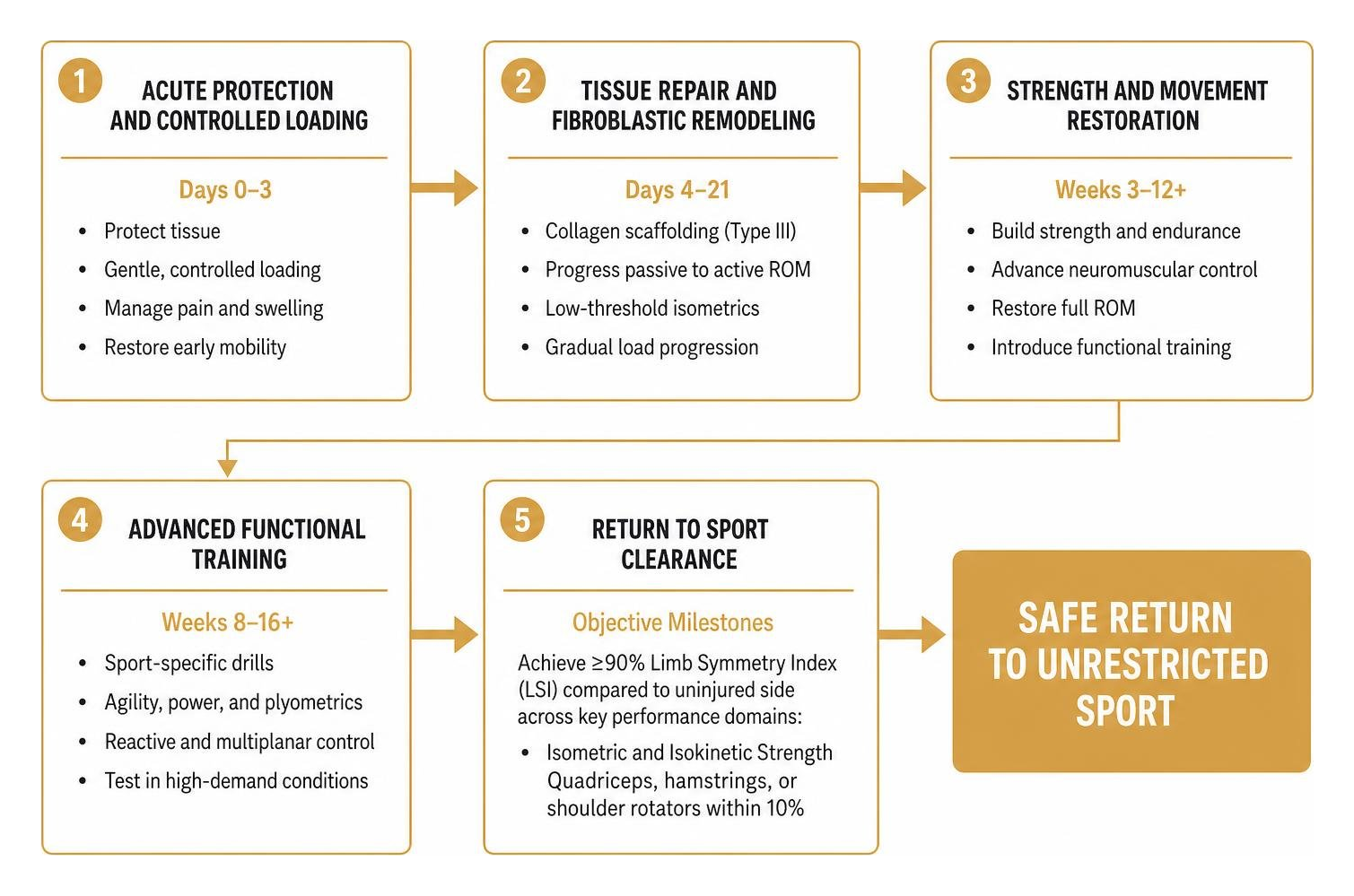
Before returning to unrestricted athletic drills, an athlete should achieve at least a 90% Limb Symmetry Index (LSI) compared to the uninjured side. This functional standard applies across multiple performance domains:
Isometric and Isokinetic Strength: Quadriceps, hamstrings, or shoulder rotators should generate torque within 10% of the contralateral limb.
Hop Testing Battery: For lower-limb injuries, this includes the single-leg hop for distance, triple hop for distance, crossover hop, and 6-meter timed hop.
Dynamic Balance: Evaluated via tools like the Y-Balance Test to assess multi-directional stability under control.

When progressing training volume or load during these testing blocks, we adhere to the classic 10% progression rule—increasing weekly volume or intensity by no more than 10% to protect remodeling tissue.
Sport-Specific Movement and Agility Drills
Once symmetry and base strength are established, rehab shifts toward replicating match demands. This includes eccentric loading protocols—such as Nordic hamstring curls, which significantly reduce re-injury rates—alongside deceleration mechanics, change-of-direction drills, and reactive agility.
Athletes must demonstrate sound movement quality and deceleration control under fatigue before moving into full-contact practice.
Fueling Cellular Repair: Nutrition, Rest, and Biomarker Monitoring
Rebuilding injured muscle, tendon, and bone requires targeted metabolic support. Healing increases resting metabolic demand, making appropriate caloric intake and micronutrient delivery essential for tissue remodeling.
Athletes can look deeper into systemic recovery by measuring key inflammation blood markers such as hs-CRP, ESR, and ferritin to ensure acute tissue inflammation resolves rather than progressing into chronic low-grade stress.
Nutrition and Biomarkers for Recovering from a Sports Injury
During rehabilitation, protein intake should remain between 1.6 and 2.2 grams per kilogram of body weight daily, distributed across 3 to 4 meals to sustain muscle protein synthesis and prevent disuse atrophy. Micronutrients like vitamin C, zinc, and collagen peptides support cross-linking in healing connective tissue.
Using data from custom biomarker-based nutrition plans allows athletes to fine-tune micronutrient timing, optimize metabolic efficiency, and support cellular health throughout rehabilitation.
Tracking Systemic Recovery and Load Tolerance
Managing rehabilitation requires balancing mechanical loading with recovery capacity. Monitoring autonomic markers like Heart Rate Variability (HRV) and resting heart rate provides real-time feedback on systemic fatigue and nervous system readiness.
Integrating objective data through a structured biomarker training plan guide ensures training loads are adjusted based on physiological recovery rather than arbitrary schedules.
The Mental Game: Cognitive and Psychological Readiness
Physical readiness does not always match mental readiness. Following a significant injury, athletes often face performance anxiety, loss of athletic identity, and a fear of re-injury (kinesiophobia).
Research indicates that high fear of re-injury can elevate secondary injury risk by altering movement mechanics and slowing reaction times. Addressing psychological readiness is just as critical as rebuilding physical strength.
Psychological Milestones When Recovering from a Sports Injury
To evaluate psychological recovery objectively, sports medicine professionals use validated tools like the Athlete Fear Avoidance Questionnaire or the ACL Return to Sport after Injury (ACL-RSI) scale, where scores above 80% indicate solid mental readiness.
Practical psychological strategies include:
Values Clarification: Focusing on personal identity, discipline, and long-term athletic health rather than short-term frustrations.
Graded Exposure: Progressing through feared movements (e.g., cutting, landing) in controlled environments to rebuild confidence step by step.
Motor Imagery and Visualization: Mentally rehearsing complex athletic movements to maintain neural pathways and confidence during non-weightbearing stages.
Consistent Daily Habits: Maintaining structure around sleep, mobility, and recovery routines to sustain purpose throughout the rehab journey.
Frequently Asked Questions About Sports Injury Rehabilitation
What is the single biggest predictor of reinjury after returning to sport?
The single biggest predictor of reinjury is returning to full sport before meeting objective functional criteria, particularly when Limb Symmetry Index (LSI) remains below 90% or when psychological readiness scores are low. Calendar-based clearance without objective testing leaves underlying strength deficits and movement compensations unaddressed.
How do I know if my pain during rehab is helpful or harmful?
Athletes can use the simple Green-Yellow-Red framework to gauge symptoms:
Green Zone (0–2/10 pain): Mild discomfort that subsides quickly; safe to continue and progress.
Yellow Zone (3–5/10 pain): Moderate discomfort that is tolerable during exercise and settles back to baseline within 24 hours without latent swelling; acceptable during loading phases.
Red Zone (6+/10 pain): Sharp, stabbing pain, joint catching, or symptoms that cause swelling or altered movement patterns that persist beyond 24 hours; indicates excessive load and requires a step back to the previous phase.
Can systemic biomarker testing accelerate athletic rehabilitation?
Systemic biomarker testing cannot bypass the biological time required for collagen or bone remodeling, but it ensures your internal environment is optimized for repair. By assessing systemic inflammation, hormonal balance, vitamin status, and metabolic markers, athletes can resolve deficiencies that might otherwise delay recovery, supporting efficient healing within biological limits.
Conclusion
A successful return to sport is a structured journey that bridges biology, physical performance, and mental readiness. By progressing through objective milestones—moving from acute protection and optimal loading to progressive strength, neuromuscular symmetry, and psychological confidence—athletes return to competition resilient and prepared for the demands of play.
At Longevity Athlete, we believe recovery should be guided by objective data rather than guesswork. Our Signature Plan is a self-guided group program, while our Gold and Platinum Plans create individualized lifestyle protocols tailored to your unique physiology, biomarkers, and long-term performance goals. Explore our precision consulting services to build your roadmap back to peak physical form.