
Red Blood Cell Count for Runners and How Distance Impacts Oxygen Flow
What Runners' Red Blood Cell Counts Can Tell You
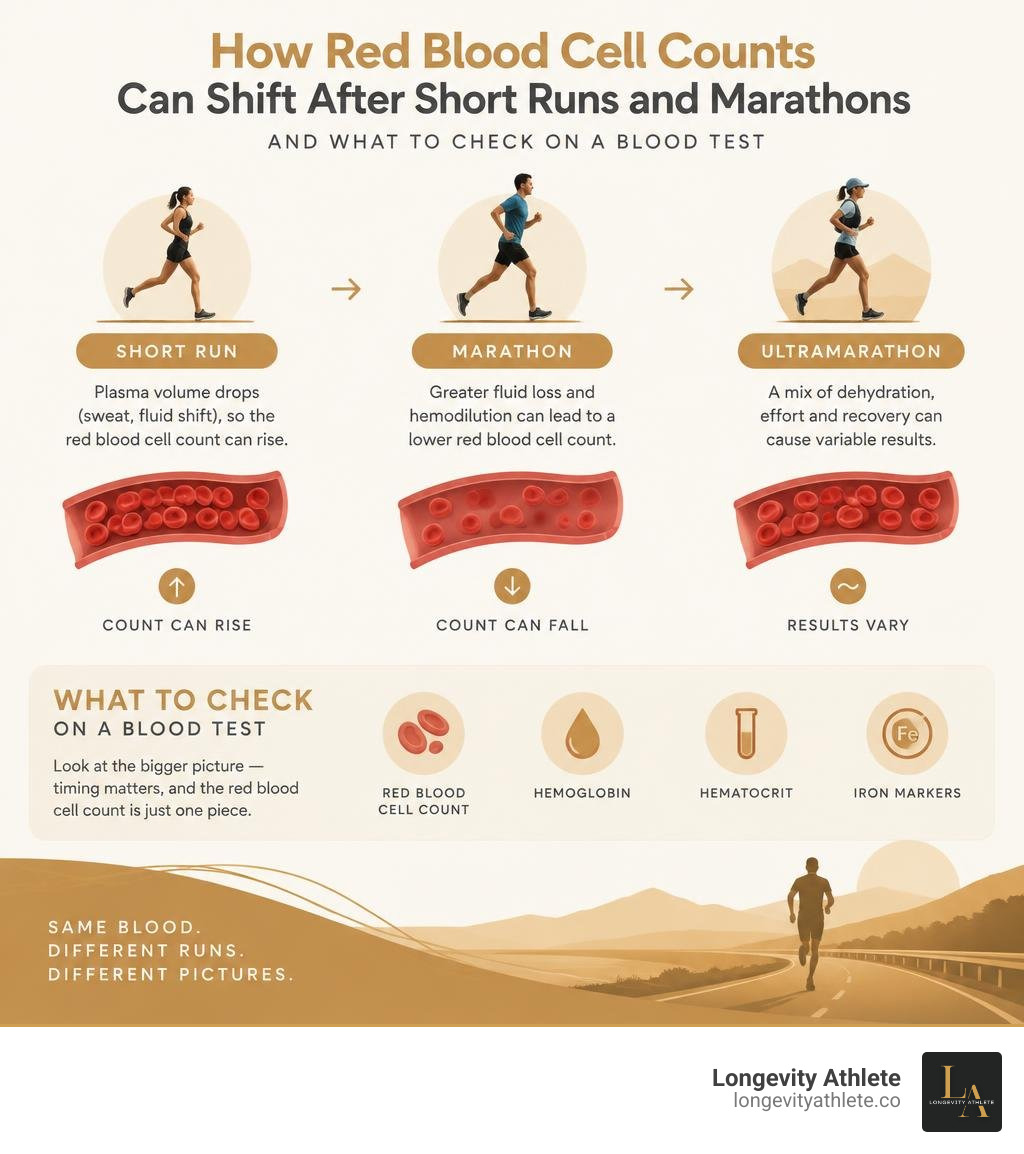
A red blood cell count tells you how many oxygen-carrying cells are in a sample of blood. For runners, the number can rise right after a run because exercise reduces plasma volume and concentrates the blood. It can fall after a marathon or during regular training without always meaning the body has fewer red blood cells. To make sense of a result, look at when the blood was drawn and read it alongside hemoglobin, hematocrit, and iron markers.
Distance matters, but it does not tell the whole story. A short run, a marathon, and an ultramarathon can produce different blood-test patterns, shaped by hydration, effort, and recovery. Understanding red blood cell count for runners requires interpreting these shifts in the context of training load and recovery status.
I'm Garric Vosloo. In more than 30 years of patient consulting, including work with elite athletes since 2000, I've helped runners interpret the red blood cell count runners see on their blood tests in the context of training and health.
Hematological Dynamics and Red Blood Cell Count Runners Rely On
When you lace up your shoes and head out the door, your circulatory system undergoes immediate, dramatic shifts. Red blood cells (erythrocytes) are the body's primary vehicles for oxygen transport. Packed with hemoglobin, they shuttle oxygen from pulmonary capillaries directly to contracting skeletal muscles.
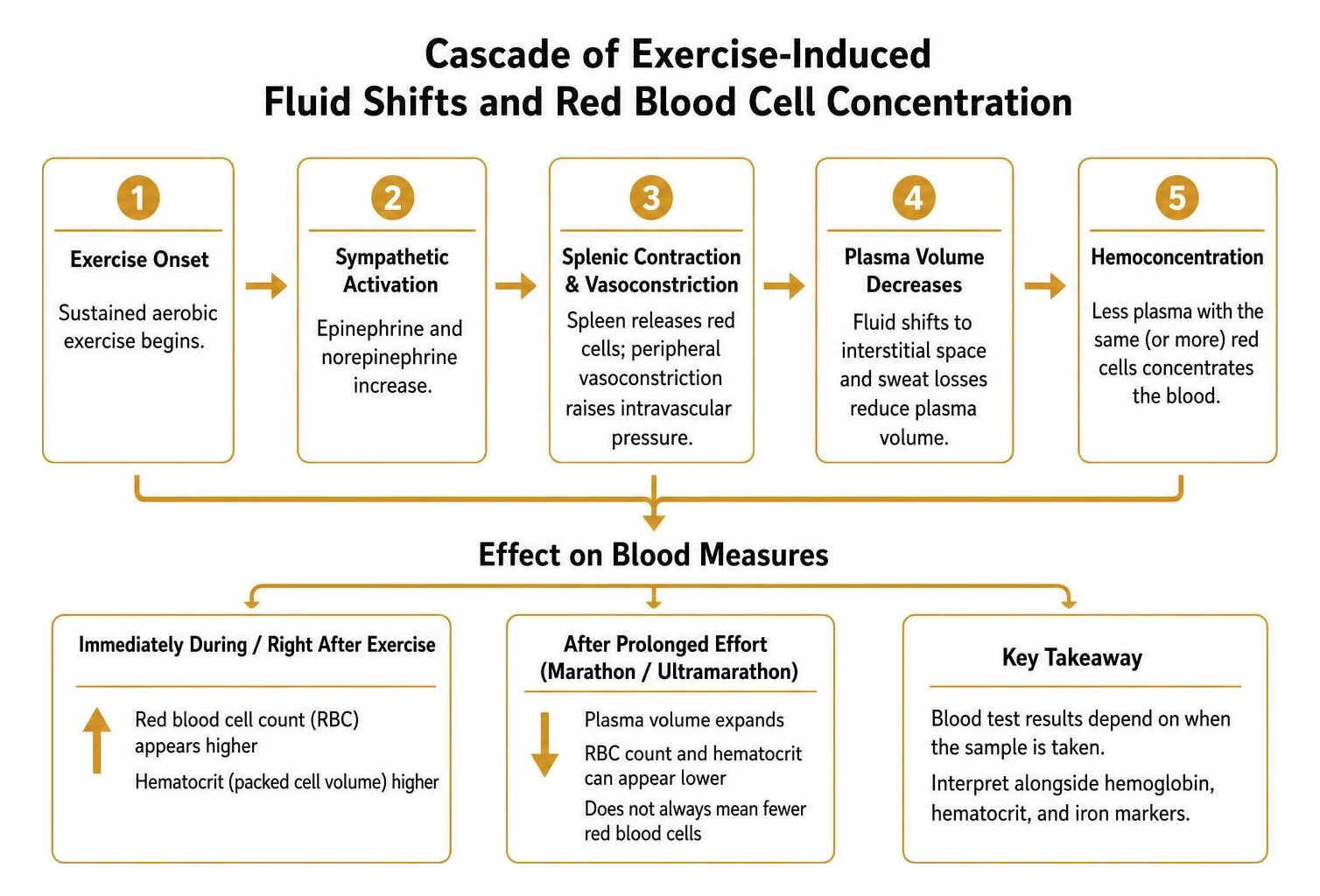
At rest, red blood cell concentration remains tightly regulated. However, acute physical exertion challenges this equilibrium. Exercise alters plasma volume, intravascular pressures, and sympathetic tone, producing rapid fluctuations in erythrocyte concentration and packed cell volume (PCV), commonly known as hematocrit.

Splenic Contraction and Acute Fluid Shifts
During the first few minutes of sustained aerobic exercise, sympathetic nervous system activity surges. Epinephrine and norepinephrine flood the bloodstream, triggering peripheral vasoconstriction and mild splenic contraction. The human spleen acts as a small dynamic reservoir for concentrated erythrocytes; when it contracts, it releases a bolus of red cells into active circulation.
Simultaneously, elevated blood pressure and muscle action drive fluid out of intravascular spaces into interstitial compartments. Sweating further compounds this fluid loss. The result is acute hemoconcentration: your circulating red cells become concentrated in a reduced volume of plasma.
Research investigating the acute hematological responses to continuous running revealed that in physically trained individuals, a 35-minute continuous run increased red blood cell count from 5.26 ± 0.71 million/cmm to 5.54 ± 0.78 million/cmm (a 5.44% increase, p < 0.01). In the same cohort, PCV rose from 43.6 ± 2.5% to 46.1 ± 2.06% (p < 0.01), while red blood cell distribution width (RDW) showed a modest, non-significant decrease from 47.2% to 45.9%.
Haemorheology, Viscosity, and Erythrocyte Deformability
For optimal oxygen delivery, red blood cells must do more than just circulate; they must deform. Capillaries in active muscle beds are often narrower than the resting diameter of an erythrocyte (~7–8 µm). Red cells must fold and stretch under shear stress to pass through these microvessels.
In sedentary individuals, rising hematocrit increases whole-blood viscosity, raising vascular resistance and slowing microvascular perfusion. Elite runners, however, display unique haemorheological adaptations. A clinical investigation into blood rheological properties in endurance runners demonstrated that well-trained athletes preserve erythrocyte deformability and stable red cell aggregation indices even after high-intensity bouts, preventing hyperviscosity and ensuring sustained capillary oxygen unloading.
How Running Distance and Intensity Alter Blood Indices
The hematological response to running depends heavily on exercise duration, environmental temperature, and relative intensity. A short threshold session produces vastly different hematological markers than a 42.2 km marathon or a multi-day ultramarathon.
Metric / Parameter | 35-Minute Steady Run | 3 km Submaximal Effort | Marathon (42.2 km) | Non-Stop Ultramarathon (230 km) |
|---|---|---|---|---|
Immediate RBC Count Shift | +5.4% (Hemoconcentration) | No significant change | Mild acute rise or unchanged | Unchanged total count |
24h to 15d Post-Run RBC | Rapid return to baseline | Baseline preserved | -6% at 24h; depressed at 15d | Normalized with rehydration |
Hematocrit / PCV | +5.7% acutely | Stable | -6% drop 24h to 15d post-race | Stable total volume; MCV drops |
RBC Deformability | Maintained | Maintained | Slightly impaired by oxidation | Significantly increased via NO |
Primary Mechanism | Fluid shifts & splenic release | Haemorheological resilience | Hemolysis, renal loss & hemodilution | RBC-NOS activation & cellular dehydration |
Short Steady-State Runs and Submaximal Threshold Efforts
In shorter, structured workouts, hematological shifts are predominantly driven by hemoconcentration rather than red cell destruction. In trained middle- and long-distance runners completing a 3 km submaximal run, baseline RBC counts (5.008 ± 0.317 x 10^12/L) and post-exercise values (5.049 ± 0.313 x 10^12/L) showed no statistically significant change (p > 0.05). Fibrinogen showed a modest, acute increase (from 2.382 g/L to 2.595 g/L, p = 0.024), reflecting a mild acute-phase response, while inflammatory and iron markers remained unchanged.
Tracking these acute shifts alongside key performance biomarkers allows us to evaluate an athlete's acute recovery capacity and haemorheological efficiency.
Acute vs. Chronic Shifts in Red Blood Cell Count Runners Experience
Over weeks and months of consistent training, endurance athletes develop a chronic hematological adaptation known as exercise-induced plasma volume expansion. Chronic training stimulates aldosterone and albumin synthesis, increasing resting plasma volume by 10% to 20%.
Because plasma volume expands proportionally more than total red cell mass, resting blood panels often display lower hematocrit and hemoglobin concentrations. Research examining mean red cell volume in distance runners emphasizes that this dilutional pseudoanemia is a positive adaptation. Expanded plasma lowers resting blood viscosity, enhances cardiac stroke volume, and improves peripheral capillary transit.
Ultra-Endurance Races and Nitric Oxide-Mediated Deformability
At extreme distances, red blood cells encounter unique metabolic stresses. An examination of RBC deformability and nitric oxide adaptations in ultramarathons evaluated athletes completing a continuous 230 km race.
Total circulating red blood cell count and hemoglobin concentration remained stable, but mean corpuscular volume (MCV) decreased significantly (from 90.17 ± 4.5 fL to 88.08 ± 3.7 fL, p < 0.001) while mean corpuscular hemoglobin concentration (MCHC) increased (from 33.25 ± 1.1 g/dL to 34.17 ± 0.9 g/dL, p = 0.004), pointing to red cell dehydration.
Crucially, red blood cell deformability improved markedly (maximum elongation index EImax rose, p = 0.0171). This adaptation was driven by upregulated red blood cell nitric oxide synthase (RBC-NOS) activity, which increases S-nitrosylation of membrane spectrins. This chemical modification keeps red cells flexible under severe, prolonged cardiovascular stress.
Mechanical Hemolysis, Genetics, and Iron Turnover
Running places mechanical stress on red blood cells through repetitive foot strikes. As the foot hits the ground, red cells flowing through the microvasculature of the plantar surface are mechanically crushed against hard surfaces.

Foot-Strike Hemolysis, Hematuria, and Bilirubin Clearance
Foot-strike hemolysis releases free hemoglobin into plasma, where it binds to haptoglobin. When haptoglobin capacity is exceeded, unbound hemoglobin is filtered by the kidneys, resulting in hemoglobinuria or exercise-induced hematuria. Renal vasoconstriction and transient hypoxia during high-intensity efforts can further increase glomerular permeability.
In amateur marathoners, erythrocyte counts dropped by 6% one day after completing a race (from 5.3 ± 0.04 to 5.0 ± 0.05 x 10^6/mm^3, p < 0.001) and remained depressed 15 days later (5.1 ± 0.05 x 10^6/mm^3, p < 0.05). Hematocrit followed an identical pattern, falling from 46.9 ± 0.3% pre-race to 44.1 ± 0.3% at 24 hours, and staying low at 44.7 ± 0.3% after two weeks.
The ACTN3 R577X Polymorphism and Recovery Kinetics
Genetic variations directly shape how an athlete's red blood cells handle mechanical and oxidative stress. Research on the ACTN3 genotype impact on marathon recovery and iron metabolism revealed that the alpha-actinin-3 gene influences post-race hematological recovery.
Runners carrying the ACTN3 XX genotype (alpha-actinin-3 deficient) exhibited no significant drops in post-marathon erythrocyte counts, hemoglobin, or hematocrit. Conversely, RR and RX genotype carriers experienced pronounced post-race erythrocyte decreases, higher rates of hematuria (40% in RR vs. 18% in XX), and greater iron loss. The structural properties of muscle fibers in XX athletes appear to cushion mechanical impact, reducing microvascular trauma and cellular turnover.
Athlete Bloodwork Monitoring and Performance Optimization
Evaluating red blood cell health requires a comprehensive view of related hematological and metabolic markers. Tracking single values in isolation often leads to misinterpreting transient fluid shifts as chronic deficiencies.
Interpreting Red Blood Cell Count Runners Blood Panels for Performance
To establish an accurate baseline, athletes should standardize blood draws:
Test in a fasted state early in the morning.
Rest for at least 24 to 48 hours following severe or depleting long runs.
Maintain consistent hydration leading up to the draw.
A complete panel must evaluate RBC count alongside MCV, MCH, RDW, serum ferritin, transferrin saturation, and reticulocyte count. Reviewing our biomarker training plan guide 2026 provides an operational roadmap for scheduling tests across macrocycles, while additional longevity and performance strategies are regularly discussed across the LA Blog.
We help athletes integrate these detailed metrics through our structured programs: our Signature Plan is a self-guided group program, whereas our Gold and Platinum Plans create individualized lifestyle protocols tailored to your unique biological profile.
Targeted Nutrition for Erythropoiesis and Iron Balance
Supporting red blood cell synthesis (erythropoiesis) and counteracting foot-strike hemolysis requires targeted nutritional strategies:
Optimize Bioavailable Iron: Consume heme iron sources (grass-fed beef, liver, shellfish) or pair non-heme sources with vitamin C. Avoid consuming coffee, tea, or calcium-rich foods within two hours of iron intake.
Support Methylation with Folate and B12: Vitamin B12 and active folate (5-MTHF) are critical coenzymes for erythroid stem cell division; deficiencies lead to elevated MCV and impaired cellular turnover.
Time Hepcidin Windows: Intense running elevates inflammatory IL-6, triggering hepcidin release and blocking iron absorption for 3 to 6 hours post-workout. Consume iron-dense meals in the morning or several hours outside hard workouts.
Maintain Antioxidant Balance: Polyphenol-rich foods, vitamin E, and selenium protect red cell membranes from lipid peroxidation without suppressing training-induced adaptations.
For structured guidance, athletes can leverage our biomarker-based nutrition plans to align dietary intake with lab results.
Frequently Asked Questions About Red Blood Cells and Running
Why does red blood cell count drop after running a marathon?
The post-marathon decline in red blood cell count stems from a combination of foot-strike hemolysis, transient renal iron loss, and significant plasma volume expansion during the initial recovery phase.
How long does it take for hematological parameters to normalize after hard runs?
Acute hemoconcentration from a short, intense run resolves within 12 to 24 hours of proper rehydration. However, the erythrocyte and hematocrit decreases seen after marathons typically require 2 to 3 weeks for full bone-marrow-driven reticulocyte replenishment.
What is runner's pseudoanemia and does it impair oxygen delivery?
Runner's pseudoanemia is a benign, dilutional drop in hematocrit caused by endurance-induced plasma expansion. It enhances performance by decreasing blood viscosity, allowing greater cardiac output and faster capillary blood flow without lowering total red cell mass.
Conclusion
Understanding your red blood cell count requires looking beyond single numbers on a laboratory printout. From the acute hemoconcentration of short threshold efforts to the mechanical hemolysis and nitric-oxide-driven adaptations of ultra-endurance races, your blood profile is constantly adapting to training loads, recovery protocols, and genetics.
At Longevity Athlete, we specialize in translating complex blood panels into actionable training, recovery, and nutrition protocols. Whether you are addressing stubborn iron fluctuations, optimizing altitude adaptations, or fine-tuning race preparation, our tiered services are built around your goals. The Signature Plan is a self-guided group program, while our Gold and Platinum Plans create individualized lifestyle protocols to help you train sustainably and perform at your highest level. Learn more about our comprehensive biomarker evaluations at Longevity Athlete.