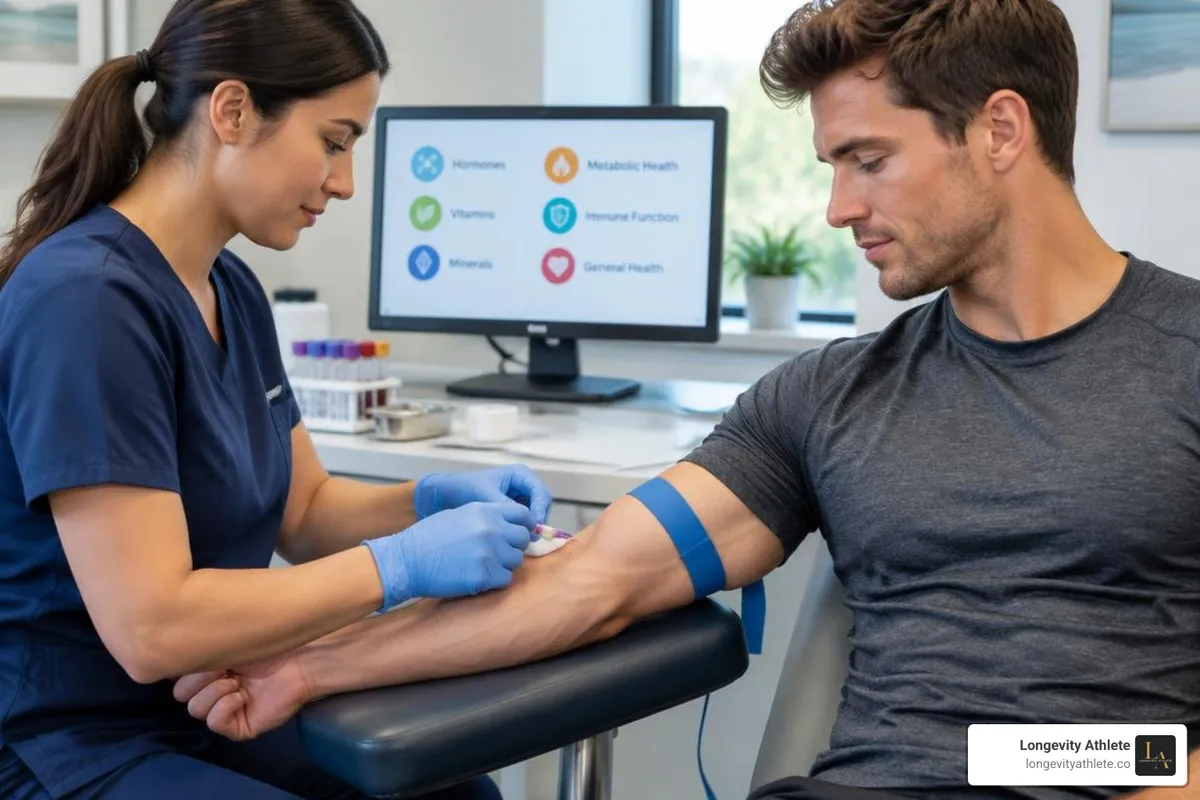
The Ultimate Guide to Sports Bloodwork for Performance
Why Standard Clinical Norms Fail: The Physiology of Sports Bloodwork
Sports bloodwork is the practice of measuring key biomarkers in an athlete's blood to track how the body is adapting to training, recovering from stress, and utilizing fuel. It moves beyond disease detection to establish an individual baseline, allowing athletes and coaches to identify meaningful shifts in iron status, hormone balance, inflammation, and muscle recovery before they become performance-limiting problems.
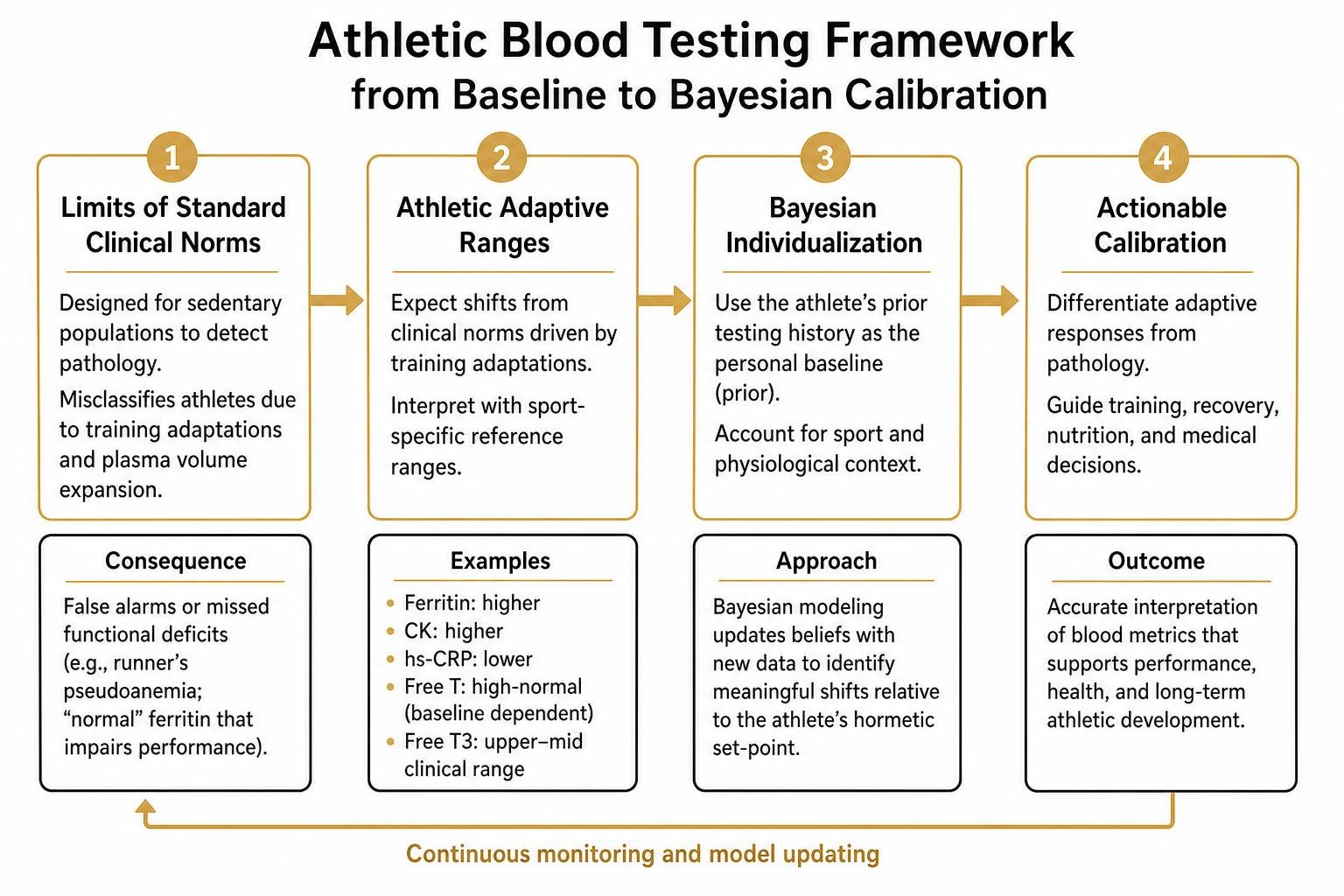
Standard clinical laboratory reference ranges are designed to detect pathology and disease in a sedentary population. When applied to high-performing athletes, these generic cutoffs routinely trigger false alarms or mask underlying functional deficits. Heavy training induces profound physiological adaptations—ranging from plasma volume expansion to sustained metabolic flux—that permanently alter resting baseline biochemistry.
Biomarker | Standard Sedentary Range | Athletic Adaptive Range | Physiological Driver in Athletes |
|---|---|---|---|
Ferritin | 15–200 ng/mL | 40–100+ ng/mL | Elevated demands for mitochondrial respiration, erythropoiesis, and foot-strike hemolysis. |
Creatine Kinase (CK) | 30–200 U/L | 150–800+ U/L (modality dependent) | Chronic micro-trauma, mechanical strain, and accelerated muscle fiber remodeling. |
hs-CRP | 0.0–3.0 mg/L | < 0.5 mg/L (true recovery) | Low-grade systemic recovery; post-session elevations reflect acute phase response. |
Free Testosterone | 5.0–21.0 pg/mL (males) | High-normal of dynamic baseline | Neuroendocrine preservation; sharp drops signal energy deficit or excessive strain. |
Triiodothyronine (Free T3) | 2.3–4.2 pg/mL | Upper-mid clinical range | Preserved thyroid conversion confirms adequate caloric and carbohydrate availability. |
One primary confounding factor is plasma volume expansion. Within weeks of regular endurance or high-volume conditioning, the circulatory system expands blood volume to optimize thermoregulation and cardiac output. This expansion creates a hemodilution effect known as runner's pseudoanemia.
A standard laboratory test might flag a lower hemoglobin or hematocrit level as standard clinical anemia, while total red cell mass is elevated. Conversely, standard ranges often define a resting ferritin level of 18 ng/mL as "normal," yet an endurance athlete operating below 35–40 ng/mL often experiences impaired aerobic capacity and compromised cellular respiration.
Sport-Specific Reference Ranges and Bayesian Adaptation
To interpret blood metrics accurately, sports medicine relies on sport-specific normative databases and Bayesian statistical modeling. Pioneered by organizations like the Australian Institute of Sport over two decades ago, these models account for the unique physiological adaptations of strength versus endurance athletes.
Rather than assessing an athlete against an arbitrary population curve, Bayesian analysis uses the individual's prior testing history as a customized baseline. When tracking performance biomarkers, this approach allows practitioners to identify meaningful shifts relative to an athlete's personal hormetic set-point. An elevated biomarker level that indicates pathology in a sedentary individual may simply reflect a normal, adaptive response to progressive overload in a competitive athlete.
Pre-Analytic Rules for Reliable Sports Bloodwork
Biomarker analysis requires strict standardization. Inconsistent sampling procedures generate volatile data, rendering longitudinal tracking ineffective.
To maintain testing validity, adhere to the following pre-analytic guidelines:
Consistent Circadian Window: Complete all resting blood draws between 7:00 a.m. and 9:00 a.m. to control for diurnal fluctuations in testosterone, cortisol, and iron metabolism.
Strict Fasting State: Maintain a 12-hour overnight fast with water permitted.
Posture Standardization: Remain seated or supine for 10 to 15 minutes before venipuncture to stabilize posture-induced hemoconcentration.
Biotin Clearance: Discontinue supplements containing biotin (vitamin B7) at least 72 hours before testing, as excess biotin interferes with laboratory immunoassay technologies (such as thyroid panels and cardiac markers).
Exercise Washout Period: Standard resting profiles require 24 to 48 hours of recovery or light active recovery. Strenuous physical exertion immediately prior to testing skews muscle damage and inflammatory markers.
Menstrual Tracking: Female athletes should document their current cycle phase, as dynamic shifts in estrogen and progesterone alter fluid balance, substrate oxidation, and systemic inflammatory tone.
Essential Biomarker Panels for Fueling, Recovery, and Longevity
Building an effective biological monitoring program involves structuring biomarkers into functional categories: fueling and micronutrient status, muscular and inflammatory strain, and metabolic recovery.
Iron Dynamics, Vitamin D, and Energy Availability
Maintaining systemic energy availability and oxygen delivery requires close management of iron metabolism, active hormone signaling, and vitamin D.
Iron status cannot be assessed using serum iron alone; it requires a complete evaluation including serum ferritin, soluble transferrin receptor, total iron-binding capacity (TIBC), and serum hepcidin. Hepcidin acts as the master regulator of iron absorption. High-intensity training causes acute spikes in interleukin-6 (IL-6), which upregulates hepcidin expression for 3 to 6 hours post-exercise, temporarily blocking iron absorption in the gut. Supplementing iron immediately after hard training sessions often yields poor bioavailability for this reason.
For active individuals, baseline serum ferritin should remain above 35–40 ng/mL to maintain mitochondrial enzyme activity, with 50 to 100 ng/mL representing an optimal range for elite aerobic endurance.
Energy availability dictates endocrine health. When energy expenditure outpaces caloric consumption, the body enters Relative Energy Deficiency in Sport (RED-S). This state downregulates free triiodothyronine (Free T3), suppression of which acts as an early physiological defense mechanism to conserve calories. Concurrently, leptin drops and ghrelin rises, accompanied by a suppression of free testosterone in men and luteinizing hormone pulsatility in women.
Research indicates that male athletes whose testosterone levels drop into the lowest quartile exhibit a substantially higher rate of bone stress fractures. Monitoring Free T3, resting testosterone, and active 25-hydroxyvitamin D alongside biomarker based nutrition plans helps protect structural tissue and maintain bone mineral density.
Muscle Damage, Systemic Inflammation, and Redox Balance
Heavy mechanical work and eccentric loading cause transient micro-trauma to the sarcolemma, releasing intracellular enzymes into the bloodstream. Interpreting a creatine kinase blood test requires evaluating context: baseline training volume, muscle mass, and the timing of the last exercise session.
Following severe physical exertion, muscle enzyme markers experience pronounced shifts. Clinical investigations of endurance runners completing the London Marathon demonstrate significant elevations in creatine kinase (CK), aspartate aminotransferase (AST), lactate dehydrogenase (LDH), and myoglobin. In an emergency medicine setting, these spikes can easily be mistaken for acute rhabdomyolysis or hepatic distress; in a competitive athlete, they reflect normal, transient exercise-induced muscular breakdown.
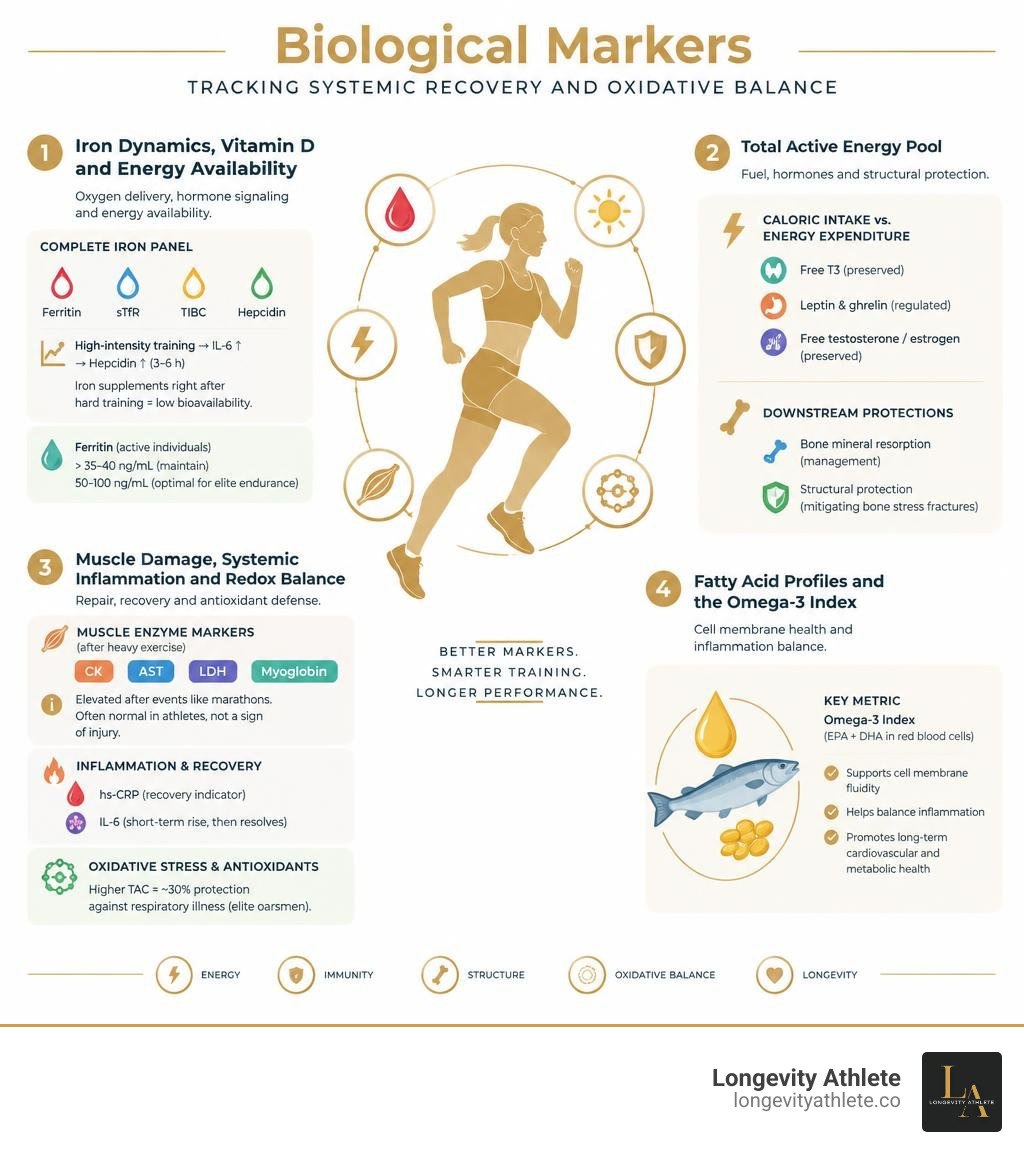
Inflammatory responses should resolve quickly within an adaptive training cycle. High-sensitivity C-reactive protein (hs-CRP) serves as a broad indicator of systemic recovery. While intense workouts cause short-term elevations in both hs-CRP and interleukin-6 (IL-6), chronic resting elevations suggest unresolved structural inflammation, joint pathology, or systemic under-recovery.
Simultaneously, evaluating oxidative stress alongside total antioxidant capacity (TAC) provides insight into an athlete's defense against exercise-induced reactive oxygen species. Research in elite Olympic oarsmen demonstrated that a modest increase in resting total antioxidant capacity exerted a meaningful protective effect against upper respiratory tract illnesses during heavy training blocks. Tracking these inflammation blood markers helps balance training stress against biological recovery.
Fatty Acid Profiles and the Omega-3 Index
The Omega-3 Index (OM3I) measures the proportion of eicosapentaenoic acid (EPA) and docosahexaenoic acid (DHA) integrated into red blood cell membranes.
An optimal, high-level target OM3I range is recommended for athletes. Higher concentrations of EPA and DHA in the lipid bilayer enhance red blood cell deformability, improving capillary transit and microvascular oxygen delivery to working muscles.
Beyond cardiovascular efficiency, red blood cell fatty acid profiles influence recovery cascades. Omega-3 fatty acids generate specialized pro-resolving mediators (resolvins and protectins) that actively resolve cellular inflammation. Maintaining optimal omega-3 status also provides neuroprotective benefits, supporting cognitive stamina and brain resilience in contact or high-speed sports. Athletes can verify their lipid status through periodic laboratory assays or validated methods to conduct inflammation testing and home assessments.
Modality-Specific Biomarker Responses Across Endurance, Strength, and HIIT
Different training modalities impose distinct metabolic, mechanical, and neuroendocrine demands on the body. A biomarker pattern that indicates functional overreaching in an endurance runner will differ substantially from that of a strength athlete.
Endurance Disciplines: Urea, IGF-1, and Glycogen Depletion
In sustained endurance disciplines like cycling and distance running, metabolic strain and glycogen depletion govern biomarker shifts. Controlled training camp studies demonstrate that 6 days of intensified endurance volume produce fatigue-dependent elevations in serum urea (averaging increases of 11 ± 9 mg/dL) alongside sharp decreases in insulin-like growth factor 1 (IGF-1 drops of -56 ± 28 ng/mL).
Elevated blood urea nitrogen reflects accelerated amino acid oxidation and protein catabolism once muscle glycogen stores are depleted. In these endurance cohorts, resting creatine kinase showed only modest shifts (54 ± 84 U/L), confirming that metabolic markers like urea and IGF-1 are more reliable indicators of endurance-specific fatigue than muscle damage markers. Fatigue-dependent biomarker research across athletic disciplines has consistently demonstrated this modality-specific response pattern.
High-Intensity and Strength Training: Creatine Kinase and Endocrine Strain
Conversely, strength training and high-intensity interval training (HIIT) place higher demands on structural tissue through explosive eccentric contractions and rapid glycolytic flux.
Following a 6-day overload block, strength athletes experienced CK surges averaging 582 ± 649 U/L, while HIIT athletes exhibited massive CK increases averaging 863 ± 952 U/L. This mechanical stress directly impacts systemic recovery and neuroendocrine balance.
Longitudinal research evaluating collegiate athletes across a competitive season confirmed that high mechanical strain tracks with notable hormonal shifts (Huggins et al., 2017). Total testosterone dropped from a preseason baseline of 665 ± 198 ng/dL down to 588 ± 151 ng/dL during Week 1 of competition, while resting CK surged to 820 ± 899 U/L (against a standard clinical reference range of 44–196 U/L).
Stepwise regression modeling demonstrated that 39% of the variance in physical workload (PlayerLoad) was explained by a combination of Free T, T4, HbA1c, glucose, growth hormone, and CK (Huggins et al., 2017). When training loads climb rapidly, endocrine output temporarily drops while muscle enzymes rise, signaling the need for scheduled recovery periods. Tracking endocrine and muscular biomarkers across seasonal training loads provides further evidence of this load-driven endocrine suppression.
Implementing Longitudinal Testing: Profiling vs. Monitoring
A successful physiological tracking system balances deep assessment profiling with frequent, lightweight monitoring.
Comprehensive profiling should occur roughly 3 to 4 times per year—aligned with key macrocycle phases like preseason baselines, peak training blocks, and post-competition recovery.
These comprehensive panels evaluate long-term trends: iron stores, endocrine health, bone metabolism, and structural fatty acid levels. Profiling identifies subtle, slow-developing deficiencies before they degrade performance, informing updates to an athlete's overarching biomarker training plan.
Point-of-Care vs. Venous Testing in Weekly Sports Bloodwork
While quarterly venous draws provide comprehensive laboratory accuracy, point-of-care (POC) testing offers immediate physiological feedback for weekly micro-adjustments.
Using capillary blood samples from a simple finger prick allows for rapid evaluation of specific parameters:
Lactate Threshold Profiling: Tracking shifts in submaximal blood lactate curves during standard stage tests helps pinpoint metabolic adaptation and pacing targets.
Capillary Complete Blood Count (CBC): Research comparing capillary and venous samples confirms that capillary methods are practical for immediate post-exercise assessments, showing strong correlations for markers like hemoglobin (r = 0.88). Capillary vs. venous sampling considerations following exercise support the validity of this approach for field-based monitoring.
Rapid Recovery Checks: In-season teams regularly deploy portable POC analyzers to assess creatine kinase and acute inflammation within minutes. If an athlete presents with a resting CK two to three times their personal baseline alongside elevated resting heart rate metrics, coaches can adjust that day's session from high-intensity intervals to active recovery.
Integrating Blood Biomarkers with Wearables and Training Load
Blood chemistry provides biological context that enhances the utility of wearable devices. Wearable metrics such as heart rate variability (HRV), resting heart rate, and sleep staging track autonomic nervous system status, while sports bloodwork reveals cellular integrity, substrate availability, and endocrine drive.
Triangulating internal biochemistry, autonomic status, and subjective feedback provides a complete operational picture:
Autonomic State: An athlete with stable HRV might appear ready for a high-intensity session on paper.
Biological Reality: If their blood panel reveals suppressed Free T3, low ferritin, and elevated hs-CRP, their neuromuscular system is compensating under systemic stress.
Training Adjustment: Identifying this biological reality allows coaches to reduce training volume and adjust fueling strategies before the athlete develops non-functional overreaching, illness, or structural injury.
Frequently Asked Questions about Sports Bloodwork
How often should competitive athletes schedule comprehensive blood tests?
Most competitive athletes benefit from comprehensive venous profiling three to four times per year, scheduled at key points in their periodization cycle: transition, mid-preseason, peak volume overload, and taper. Weekly or bi-weekly point-of-care testing (such as capillary lactate or recovery CK) can then be used to guide day-to-day training load decisions.
What is the minimum recovery window required between hard training and a resting blood draw?
For a standard resting profile, maintain a 24- to 48-hour window of rest or very light active recovery. Strenuous workouts immediately prior to a blood draw trigger acute-phase inflammatory responses, hemoconcentration, and large elevations in muscle enzymes that obscure your true baseline.
Can low testosterone or low thyroid hormones indicate overtraining in endurance athletes?
Yes. Suppressed free testosterone alongside low free triiodothyronine (Free T3) is a hallmark of Relative Energy Deficiency in Sport (RED-S) and non-functional overreaching. When daily energy expenditure consistently exceeds caloric and carbohydrate intake, the body downregulates reproductive and metabolic hormones to conserve energy for basic physiological maintenance.
Conclusion
Precision athletic development requires looking beyond surface-level performance metrics. Training load, sleep tracking, and subjective feedback gain meaningful context when anchored by internal biological data. By establishing customized baselines, standardizing pre-analytic procedures, and interpreting results against sport-specific ranges, athletes can systematically help lower the risk of under-recovery, protect endocrine health, and support long-term performance.
At Longevity Athlete, we provide precision-performance wellness consulting for disciplined athletes seeking data-driven guidance. The Signature Plan is a self-guided group program. The Gold and Platinum Plans create individualized lifestyle programs. Combining personalized biomarker testing with regular plan refinement allows athletes to take the guesswork out of their preparation, optimizing both competitive performance and long-term health. Learn more about our complete approach on the Longevity Athlete Home Platform.
References
Smith JE, Garbutt G, Lopes P, Tunstall Pedoe D. "Effects of prolonged strenuous exercise (marathon running) on biochemical and haematological markers used in the investigation of patients in the emergency department.." British journal of sports medicine, 2004. PMCID PMC1724837. Robert A. Huggins, Ryan M. Curtis, Andrea R. Fortunati, Maren S. Fragala, Matthew L. Hall, Elaine C. Lee, David P. Looney, Chris A. West, Douglas J. Casa. "Biomarkers of Endocrine, Muscle, and Inflammatory Health Track Training Load of a Collegiate Soccer Season." Medicine & Science in Sports & Exercise, 2017. DOI 10.1249/01.mss.0000518486.92630.2a.