
Build Resilient Athletes Through Science-Backed Training Load Management
Foundations of Modern Training Load Management
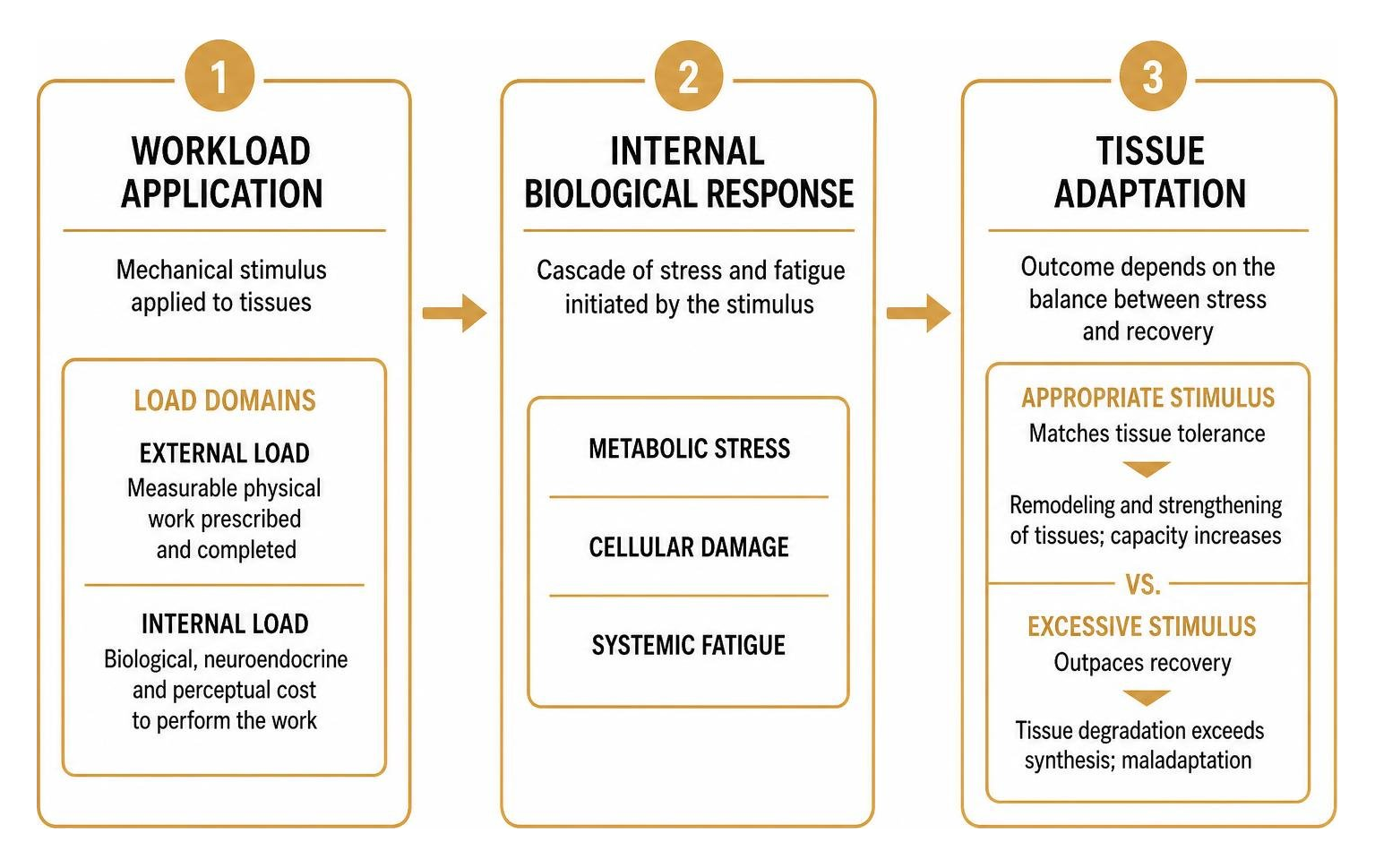
Training load is not merely the sum of miles run or kilograms lifted. It represents the complete physiological, mechanical, and psychological burden applied to a human biological system over time. When we apply mechanical stimulus to tissues, we initiate a cascade of metabolic stress, cellular damage, and systemic fatigue. If the magnitude and timing of that stimulus match the athlete's current tissue tolerance, the body compensates by remodeling structural proteins, strengthening connective tissues, and expanding cardiorespiratory capacity. When the stressor outpaces recovery, tissue degradation exceeds synthesis, driving the system into maladaptation.
To build durable athletes, we separate workload into two interconnected domains: external load and internal load. External load comprises the measurable physical work prescribed and completed. Internal load is the biological, neuroendocrine, and perceptual price the athlete pays to perform that external work.
Load Domain | Primary Focus | Practical Metrics | Key Limitations |
|---|---|---|---|
External Load | Physical output & work completed | Distance (km), tonnage (kg), speed, power output (W), sprint counts | Ignores biological stress, sleep deficits, and personal recovery rates |
Internal Load | Biological & perceptual cost | Heart rate (TRIMP), session-RPE (sRPE), blood lactate, HRV | Highly variable; influenced by non-training life stress and psychology |
Managing these dimensions requires recognizing that identical external workloads can trigger drastically divergent internal responses across athletes—or even within the same athlete across different days.
Core Principles of Training Load Management
A successful workload strategy relies on four foundational pillars: progressive overload, spike avoidance, periodization, and autoregulation.
Progressive Overload: Fitness gains require systematic increases in stress over time. However, the objective is raising the athlete's capacity "floor"—the robust baseline of work they can tolerate routinely—rather than merely chasing brief peaks in output.
Spike Avoidance: Rapid week-to-week changes in volume, intensity, or frequency place musculoskeletal structures under extreme strain. The International Olympic Committee consensus on load and injury risk highlights that sudden surges in workload serve as primary drivers for soft-tissue breakdowns across elite athletics. Capping regular weekly progression at modest thresholds preserves structural integrity.
Periodization: Structuring training into macrocycles (annual plans), mesocycles (multi-week blocks), and microcycles (weekly schedules) ensures that specific qualities—such as maximal strength, power endurance, or aerobic capacity—are developed sequentially while allowing built-in recovery phases.
Autoregulation: While periodization sets the map, autoregulation acts as the steering wheel. Day-to-day readiness fluctuates based on sleep, mental fatigue, and underlying systemic stress. Adjusting sets, repetitions, or tempos in real time ensures that planned stimuli match actual physiological capacity.
The Acute-to-Chronic Workload Ratio and Risk Thresholds
The acute-to-chronic workload ratio (ACWR) compares the acute load (the physical work completed over the past 7 days) against the chronic load (the rolling average of work performed over the preceding 28 days). Chronic load represents an athlete's developed fitness and historical tissue tolerance; acute load represents immediate fatigue.
Epidemiological tracking demonstrates clear injury likelihood boundaries across competitive sports:
0.8 to 1.3 ("Sweet Spot"): Workload builds or maintains fitness safely. The likelihood of injury remains below 10%.
1.3 to 1.49 ("Caution Zone"): Fatigue begins outstripping fitness. Musculoskeletal strain accumulates.
≥ 1.50 ("Danger Zone"): The likelihood of injury more than doubles compared to the sweet spot.
Crucially, an acute surge (>1.5) often exhibits a delayed effect. Research demonstrates that while injury rates may remain stable during the actual week of the spike, injury likelihood is two to four times higher in the subsequent 7 to 14 days. This latency occurs because micro-trauma accumulates quietly in tendons, ligaments, and myofibrils before manifesting as clinical pain or structural failure.
Biomechanical, Neuromuscular, and Biomarker Monitoring
Relying solely on GPS distances or weight-room tonnage leaves dangerous blind spots. Comprehensive load management integrates session-RPE (sRPE), Training Impulse (TRIMP), daily weigh-ins, and blood chemistry to create a multi-layered profile of systemic strain.
The session-RPE method calculates internal load by multiplying the athlete's subjective rating of perceived exertion (on a 1–10 modified Borg scale) by total session duration in minutes:
TRIMP expands on this cardiovascularly by weighting heart-rate zones against blood-lactate accumulation curves. Meanwhile, simple daily morning weigh-ins provide immediate insights into hydration status and acute metabolic catabolism.
To look beneath surface symptoms, our team at Longevity Athlete integrates deep biological surveillance. Analyzing systemic performance biomarkers—including creatine kinase, high-sensitivity C-reactive protein (hs-CRP), free testosterone, and cortisol ratios—exposes cellular inflammation, muscular damage, and endocrine fatigue well before performance falls off a cliff.
Coupling internal recovery markers with targeted biomarker based nutrition plans ensures that fuel and micronutrient delivery actively support tissue repair and hormonal equilibrium throughout demanding microcycles.
Integrating Wearables into Training Load Management
Modern wearable sensors and force plates bridge the gap between laboratory sports science and daily practice:
Heart Rate Variability (HRV): Tracking rMSSD (root mean square of successive differences) during deep sleep or morning baselines reflects autonomic nervous system balance. A depressed HRV paired with an elevated resting heart rate indicates parasympathetic withdrawal and incomplete systemic recovery.
Reactive Strength Index (RSI): Evaluated via drop jumps or countermovement jumps on dual force plates, RSI measures stretch-shortening cycle efficiency and central nervous system (CNS) readiness. When an athlete's RSI drops more than 0.5 standard deviations below their 30-day rolling baseline, neuromuscular fatigue is present, even if their perceived motivation is high.
Velocity-Based Training (VBT): Linear position transducers and accelerometers track barbell velocity in real time. If an athlete’s mean concentric velocity on an 80% 1RM back squat drops significantly below baseline, tonnage can be adjusted immediately to prevent overreaching.
Emerging predictive physiological modeling research demonstrates that machine learning frameworks can forecast individual strain thresholds by cross-referencing multi-modal data streams, assisting coaches in tailoring load distribution before non-contact soft-tissue injuries occur.
Tracking Non-Sport Stressors and Travel Demands
The central nervous system does not isolate training stress from life stress; it processes cumulative allostatic load. Research in sports medicine highlights that non-sport stressors—such as academic exams, personal relationship conflicts, corporate deadlines, and sleep deprivation—significantly elevate injury risk by disrupting motor control, increasing systemic cortisol, and impairing cellular recovery.
Travel logistics further exacerbate this vulnerability. Rapid transitions across time zones impair circadian rhythms, suppress melatonin synthesis, and compromise nutritional timing. In collision and team sports, calendar congestion—such as playing two competitive fixtures within four days—consistently correlates with spikes in soft-tissue injuries compared to single-match weeks. Standardized daily wellness questionnaires assessing muscle soreness, sleep quality, psychological stress, and mood state are more sensitive and consistent than objective metrics alone for detecting early maladaptation.
Cross-Discipline Applications: From Elite Athletics to Clinical Rehabilitation

Load management principles extend far beyond professional sports stadiums. In clinical orthopedics, physical therapists apply structured, phase-based mechanical loading to guide tissue healing after surgical interventions or tendon tears. By quantifying progressive joint torques and tendon strain, clinicians restore tensile strength without provoking chronic inflammatory setbacks.
In chronic disease management—including metabolic syndrome, cardiovascular disease, and autoimmune conditions—regulating exercise dosing prevents immune suppression and systemic exhaustion while improving cardiorespiratory fitness.
Even in medical education, workload modeling has emerged to combat cognitive burnout. Researchers apply mathematical formulas to quantify student burden:
(Where H represents study hours, C represents clinical shifts, R represents restorative rest, and a, b, and c are weighted coefficients.)
Balancing cognitive demands with structured downtime mirrors athletic periodization, demonstrating that human capacity follows universal adaptation laws across physical and cognitive domains.
Balancing In-Season Performance and Long-Term Athlete Development
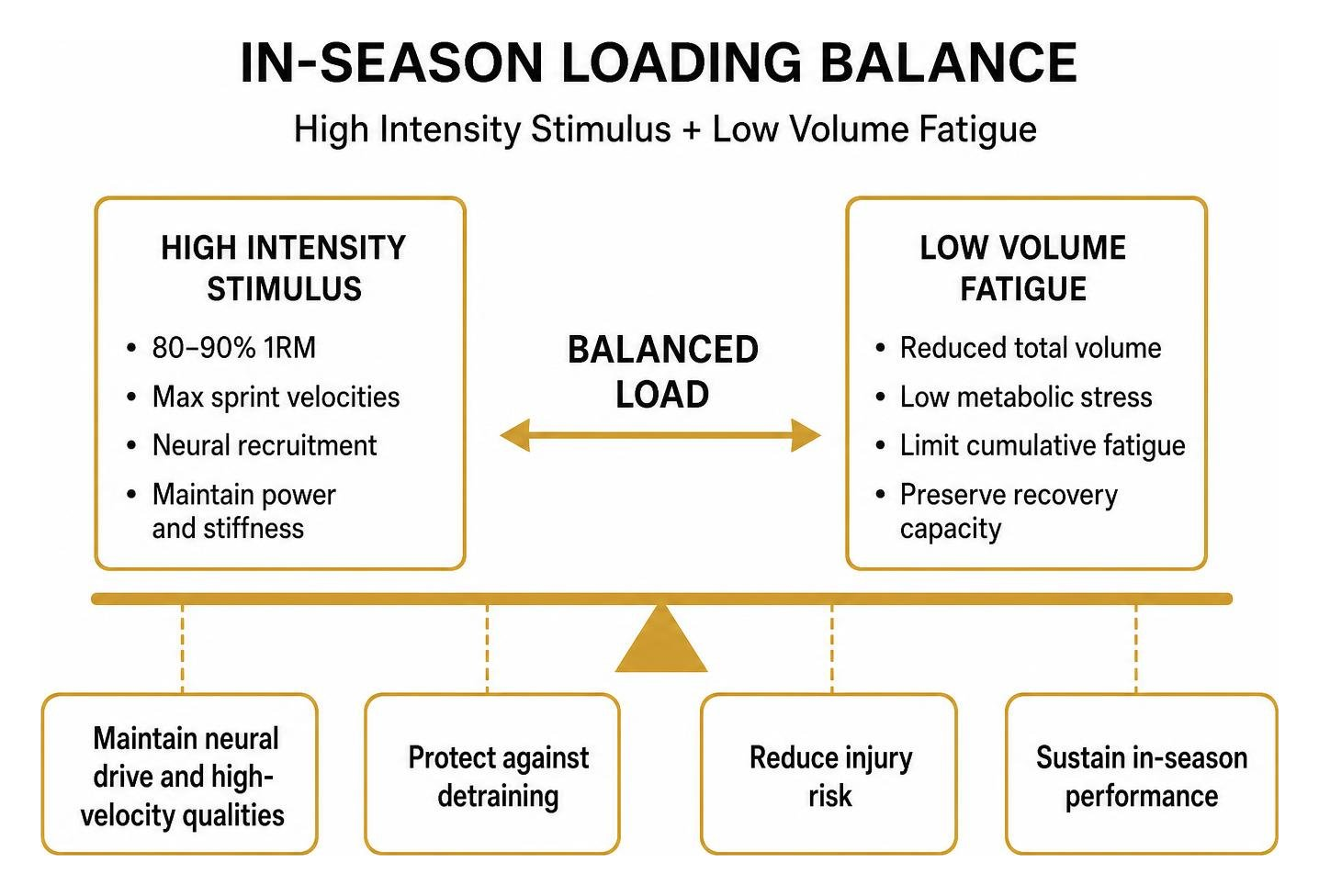
A common misconception in competitive sports is that managing in-season load requires dropping intensity. In reality, maintaining neural recruitment and high-velocity muscle qualities requires athletes to sustain high intensity (80–90% 1RM or maximum sprint velocities) while substantially reducing overall volume.
This low-volume, high-intensity strategy stimulates the motor unit pool and preserves structural stiffness without accumulating metabolic fatigue. Micro-dosing strength sessions across the week protects athletes from detraining, while scheduled 40–50% volume deloads every 3 to 4 weeks allow physiological systems to regenerate. Aligning these loading waves with structured biomarker training plans provides objective confirmation that hormonal health and cellular adaptation remain on track throughout a grueling competitive season.
Ineffective and Outdated Load Management Practices
Misunderstanding load management leads to ineffective coaching decisions that diminish resilience rather than building it:
Arbitrary Benching: Resting players solely based on fixed calendar dates rather than physiological and kinematic indicators creates sudden fitness detraining, paradoxically spiking injury risk when they return to high-intensity competition.
Ignoring Internal Biological Cost: Prescribing training purely by external outputs (e.g., standardizing 10 km runs for an entire squad) ignores that an athlete fighting poor sleep or illness experiences that session at an extreme physiological cost.
Chronic Underloading: Shielding athletes from intense training weakens muscle-tendon units, lowers chronic workload tolerance, and leaves them fragile when competition demands inevitably peak.
Single-Metric Tunnel Vision: Relying exclusively on one metric—such as GPS distance or a standalone ACWR calculation—without validating it against subjective wellness, movement mechanics, and biomarker trends creates a false sense of security.
Frequently Asked Questions About Athlete Load
What is the acute-to-chronic workload ratio sweet spot?
The evidence-based sweet spot for the acute-to-chronic workload ratio is between 0.8 and 1.3. Within this range, acute training stress safely challenges the body while resting on a solid foundation of developed chronic fitness, keeping the statistical likelihood of soft-tissue injury below 10%. Ratios exceeding 1.5 indicate an unsafe spike in fatigue relative to prepared fitness.
How do subjective wellness scores compare to objective wearable data?
Scientific reviews demonstrate that subjective self-reported measures (tracking perceived muscle soreness, sleep quality, stress levels, and mood) are often more sensitive and consistent than objective hardware metrics in detecting acute changes in athlete well-being. The most robust monitoring systems combine both: subjective logs reveal perceptual strain early, while wearables and force plates quantify neuromuscular and autonomic output.
How does load management extend an athlete's career longevity?
By eliminating sudden training spikes and chronic overtraining, load management preserves joint cartilage, protects tendon stiffness, and maintains endocrine balance across years of intense competition. Consistently building a high chronic workload floor prepares athletes to withstand competitive demands without accumulating career-shortening micro-trauma.
Conclusion
Building resilient, high-performing athletes requires moving past guesswork and embracing precision science. True load management is not about training less—it is about training with intentional calibration. By pairing external workload metrics with internal biological feedback, coaches, clinicians, and athletes can systematically elevate performance capacity while insulating the body against breakdown.
At Longevity Athlete, we specialize in translating complex physiological data into actionable strategies. The Signature Plan is a self-guided group program. The Gold and Platinum Plans create individualized lifestyle protocols. Explore our comprehensive performance services or visit our blog to discover how precision diagnostics can transform your athletic longevity.