The Best Home Blood Test Options for Athletes Seeking Faster Gains
Choosing the Right Home Blood Test Athletes Need for Peak Performance
The best home blood test options for athletes fall into two main categories: targeted performance panels that measure 15–25 acute recovery markers, and comprehensive systemic audits that track 100+ biomarkers for long-term health baselines. Targeted panels are ideal for monitoring training tolerance, hormonal balance, and iron status during heavy training blocks, while comprehensive audits provide a broader view of cardiovascular, metabolic, and organ function over time. Choosing between them depends on whether you need immediate, action-oriented data for your next training cycle or longitudinal baselines for longevity tracking.
Finding the right diagnostic panel requires balancing convenience with analytical rigor. When you decide to monitor internal physiology, you are essentially looking under the hood of your engine to see how mechanical output reflects cellular health. For active individuals, baseline testing serves as an objective compass, helping you gauge training adaptations, manage fuel availability, and steer clear of non-functional overreaching.
The diagnostic landscape offers multiple pathways to obtain these metrics. Understanding the trade-offs between broad-spectrum wellness audits and focused athletic panels ensures that your financial and physical investments directly translate into measurable gains. Research on athlete biomarker tracking highlights the value of systematic physiological monitoring for optimizing training responses and preventing overtraining.
Comprehensive Metabolic Panels: What a Full Home Blood Test Athletes Select Covers
A comprehensive metabolic panel serves as an exhaustive audit of your baseline health. When seeking a full home blood test athletes often select expansive options that evaluate systemic health markers across dozens of biological pathways. These panels measure cardiovascular risk factors, metabolic efficiency, liver and kidney function, thyroid status, and essential micronutrient baselines.
These extensive audits typically measure over 100 biomarkers, requiring multiple vials of blood collected via professional phlebotomy or specialized collection hardware. While traditional physicals might order basic complete blood counts, comprehensive athletic panels incorporate advanced lipids like Apolipoprotein B (ApoB), high-sensitivity C-reactive protein (hs-CRP), fasting insulin, and detailed hormone fractions.
Establishing these longitudinal baselines allows you to see how years of intense endurance or strength training influence your organ systems, metabolic flexibility, and cardiovascular longevity.
Targeted Performance Profiles: Why a Specialized Home Blood Test Athletes Order Speeds Recovery
Targeted performance profiles bypass the sprawling systemic audits in favor of acute, action-oriented data. When ordering a focused athletic panel, the objective centers on immediate training tolerance, recovery readiness, and systemic strain.
Rather than assessing 100 distinct data points that might not change month-to-month, specialized athletic panels focus on 15 to 25 core markers. These profiles zoom in on:
Oxygen Delivery: Ferritin, total iron-binding capacity, and red blood cell dynamics.
Musculoskeletal Stress: Markers of muscle damage and tissue breakdown.
Hormonal Balance: Anabolic-to-catabolic ratios (such as free testosterone to cortisol).
Inflammatory Load: Acute-phase reactants that spike following heavy mesocycles.
Targeted panels offer rapid turnaround times, allowing you to fine-tune weekly training blocks, adjust taper periods before target events, and catch under-recovery patterns before they manifest as chronic fatigue or injury.
Critical Biomarkers for Endurance, Strength, and Longevity
Every data point on a lab report tells a physiological story. Tracking the right performance biomarkers removes guesswork from your fueling and recovery strategies, providing clarity on how your tissues tolerate high-volume workloads.
Here are the key metrics disciplined athletes monitor closely:
Ferritin and Iron Dynamics: Ferritin reflects your body's total iron storage. Because endurance sports increase iron loss through foot-strike hemolysis, sweating, and gastrointestinal micro-bleeding, suboptimal ferritin drastically impairs aerobic capacity and oxygen transport. Research on athlete iron status monitoring demonstrates that regular ferritin assessment is essential for preventing performance-limiting iron deficiency in endurance athletes.
Muscle Breakdown Markers: Tracking your creatine kinase blood test values provides insight into skeletal muscle microtrauma. Elevated creatine kinase levels paired with high subjective fatigue signal that your muscular system requires additional recovery before the next intense stimulus.
Endocrine Balance: Total and free testosterone, estradiol, DHEA-S, and cortisol illustrate your body's anabolic versus catabolic state. Suppressed hormones often point to low energy availability (LEA) or systemic overtraining.
ApoB and Advanced Lipids: Standard cholesterol panels only tell part of the story. ApoB quantifies the total number of atherogenic particles in circulation, offering a precise look at cardiovascular health and metabolic management under high-calorie diets.
Inflammation & Systemic Stress: High-sensitivity CRP and erythrocyte sedimentation rate (ESR) reflect systemic inflammation, helping you separate routine training adaptation from systemic maladaptation.
Sample Collection Methods, Costs, and Result Turnaround
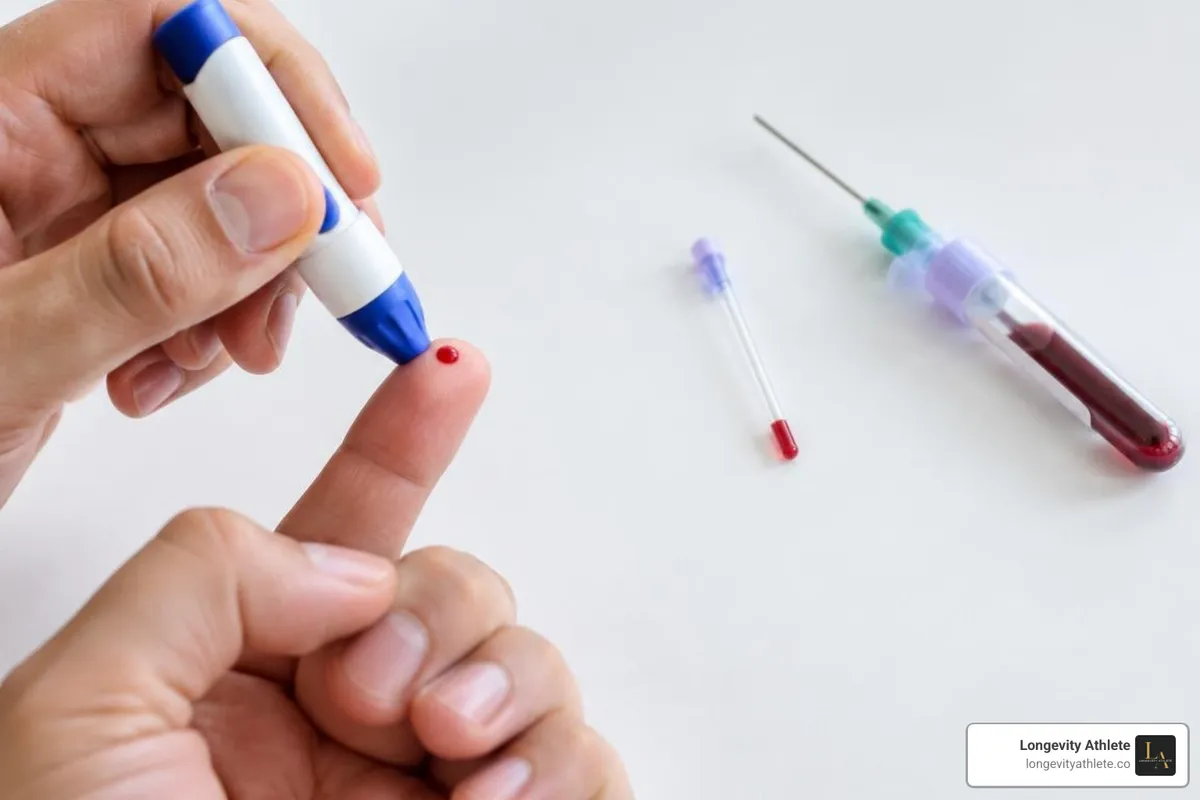
Collection formats, lab processing windows, and price points vary widely across the modern testing landscape. Some options rely on standard outpatient phlebotomy draws, while others use advanced microfluidic upper-arm devices or traditional fingerstick dried blood spots.
The table below illustrates how different testing modalities compare in terms of cost, convenience, sample volume, and result timelines:
Testing Approach | Typical Biomarker Count | Blood Sample Method | Average Result Turnaround | Estimated Out-of-Pocket Cost | Primary Focus |
|---|---|---|---|---|---|
Comprehensive Systemic Audit | 100+ biomarkers | In-lab venous draw (multiple vials) | 2–3 weeks | ~$500 / year | Broad longevity, metabolic health, preventive baselines |
Specialized Athletic Panel | 15–20 biomarkers | In-lab venous draw (3 vials) | 5 business days | $350–$450 per test | Acute training tolerance, hormonal recovery, iron |
Rapid Micro-Sample Panel | 20–25 biomarkers | At-home upper-arm device or fingerstick (1 vial) | 5–7 business days | $140–$160 per test | Routine tracking, basic lipids, foundational hormones |
Specialized Stool Microbiome | Complete gut ecology | At-home single wipe / swab | 8–10 weeks | ~$200 per kit | Microbiome diversity, gut-derived inflammation |
Most specialized testing services qualify for reimbursement through Flexible Spending Accounts (FSA) or Health Savings Accounts (HSA), helping reduce your direct out-of-pocket expenses.
Interpreting Results and Avoiding Common Home Testing Pitfalls
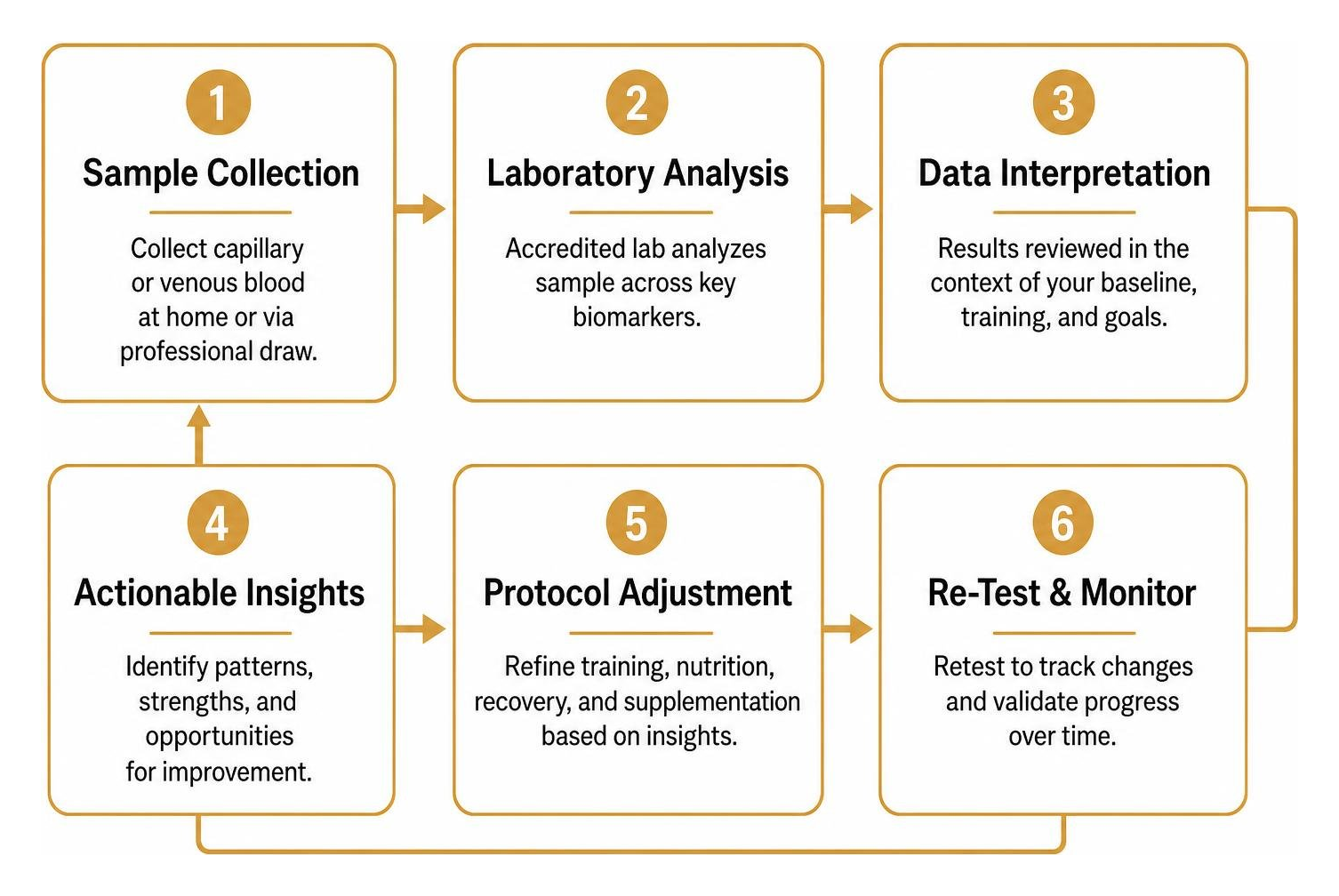
Collecting your biological data is only the first step; deriving actionable insights without falling into common traps is where the real value lies.
The home testing market is expanding rapidly, but data without context often creates unnecessary anxiety. Athletes frequently encounter a few common pitfalls:
Overtesting and Anomaly Fixation: Biological markers fluctuate naturally throughout the day based on hydration, recent meals, sleep quality, and the timing of your last hard workout. Treating a single slightly elevated marker as an emergency can lead to unnecessary training disruptions.
Supplement Upsell Fatigue: Many direct-to-consumer testing companies use out-of-range markers to aggressively market proprietary supplement blends. An isolated low reading does not automatically require a cabinet full of expensive pills.
Vague Recommendations: Automated algorithmic reports often generate generic advice like "reduce stress" or "eat more leafy greens"—guidance that fails to account for high-performance training demands.

To get genuine value from your data, you must learn how to test for inflammation at home within a structured, repeatable framework. Understanding the difference between acute training-induced inflammation and chronic systemic inflammation is critical for making informed decisions about recovery timing and training load adjustments.
Once your results are in, pairing them with an expert—such as a sports dietitian or performance physiologist—allows you to build targeted biomarker-based nutrition plans. This ensures every dietary tweak, supplement addition, and training adjustment directly supports your athletic goals without unnecessary guesswork. Professional interpretation also helps you contextualize borderline values against your individual training history, competition calendar, and recovery patterns rather than relying on generic population reference ranges.
Frequently Asked Questions About Athletic Biomarker Testing
Can at-home blood panels replace standard annual physical exams and screenings?
No. While at-home panels provide valuable performance data, they do not replace standard annual physical examinations, clinical consultations, or critical preventive screenings such as colonoscopies and mammograms. Home panels serve as an adjunctive optimization tool, not a substitute for formal diagnostic medicine.
How frequently should competitive athletes test their blood biomarkers?
Testing frequency depends on your competition schedule and training periodization. A practical approach involves testing three to four times per year:
Baseline Phase: During pre-season base building to establish standard resting values.
Peak Volume Phase: In the middle of heavy training blocks to monitor recovery, iron stores, and muscle breakdown.
Taper Phase: Two to three weeks before a key event to ensure systemic recovery and optimal fuel availability.
How accurate are capillary collection kits compared to standard venous draws?
Capillary blood collected via fingersticks can be susceptible to sample hemolysis (ruptured red blood cells) or interstitial fluid contamination if the finger is squeezed too hard during collection. Modern microfluidic upper-arm devices significantly reduce this error. However, for deep panels requiring large sample volumes and maximum analytical precision, standard venous draws performed by a professional phlebotomist remain the clinical gold standard.
Conclusion
Harnessing internal biological data gives athletes a distinct edge, turning vague fatigue into clear, solvable physiological feedback. By identifying your specific performance goals, selecting the appropriate testing modality, and pairing your numbers with expert interpretation, you can protect your long-term health while accelerating training adaptations.
At Longevity Athlete, we help you transform complex data into sustainable, high-impact results. Our Signature Plan is a self-guided group program designed for athletes who want structured biomarker education and community support. For those seeking bespoke guidance, our Gold and Platinum Plans create individualized lifestyle protocols that align your nutrition, recovery, and training directly with your unique physiology.