
A Comprehensive Guide to a Tailored Athlete Supplement Plan
How to Build an Athlete Supplement Plan That Fits Your Sport
Start an athlete supplement plan with enough food, carbohydrates, protein, fluids, and sleep to support your training. Then choose supplements for a clear purpose: creatine may support strength and power, while caffeine may help with endurance or hard sessions. Check for nutrient gaps before adding vitamins or minerals, and choose third-party-tested products to reduce contamination risk.
The right plan depends on your sport, training load, health needs, and how you respond. More supplements do not always mean better performance.
I’m Garric Vosloo, and I’ve worked with elite athletes, including Olympians and national teams, since 2000. That experience shapes how I approach an athlete supplement plan: build the basics first, then refine each choice using individual data.
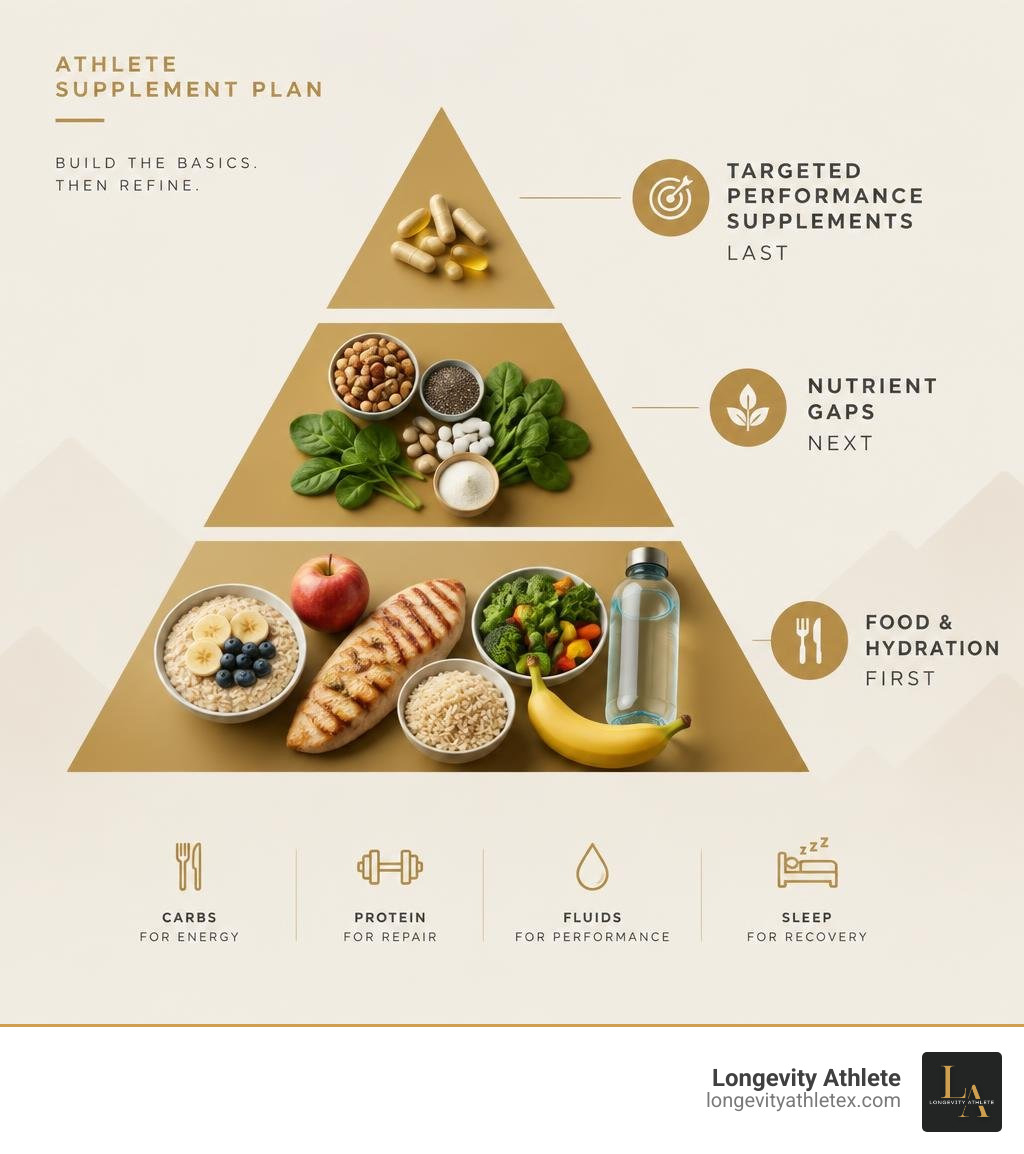
The Foundation: Why Nutrition Precedes an Athlete Supplement Plan
Before introducing single-ingredient ergogenics or specialized micronutrients, we must establish sufficient energy intake. An athlete supplement plan cannot compensate for an inadequate dietary baseline. When daily caloric intake falls short of energy expenditure, athletes risk Relative Energy Deficiency in Sport (RED-S), a syndrome that impairs metabolic rate, bone health, immunity, protein synthesis, and cardiovascular function.
Carbohydrates remain the primary fuel source for moderate- to high-intensity training. Daily intake guidelines for athletes range from 3 to 12 grams per kilogram of body mass, depending on volume and intensity. Daily dietary protein needs typically range between 1.2 and 2.0 grams per kilogram of body weight to support muscle tissue repair and adaptation. Pairing adequate macronutrients with healthy dietary fats ensures proper hormone production and fat-soluble vitamin uptake. Establishing biomarker-based nutrition plans ensures that dietary foundations meet the physiological demands of training before introducing targeted supplements.
Micronutrient Deficiencies and the Limits of Whole Foods
Even well-designed whole-food diets can leave micronutrient gaps due to heavy training loads, restricted dietary patterns, or poor absorption. High-volume sweat loss, gastrointestinal transit variations, and mechanical hemolysis accelerate nutrient depletion.
Key micronutrients requiring regular evaluation include:
Iron: Essential for hemoglobin synthesis and oxygen transport. Female endurance athletes face elevated risks of depletion through sweat, menses, and foot-strike hemolysis.
Vitamin D: Acts as a secosteroid hormone supporting bone mineral density, muscle contractility, and immune function.
Calcium: Works synergistically with vitamin D to maintain skeletal integrity and muscle signaling.
Magnesium: Involved in hundreds of enzymatic reactions, including energy production and neuromuscular regulation.
Blindly supplementing micronutrients carries real risks. For example, excessive iron intake can cause gastrointestinal distress, organ tissue loading, or impaired absorption of other trace minerals. Objective screening via sports bloodwork helps identify verified deficiencies before implementing targeted interventions.
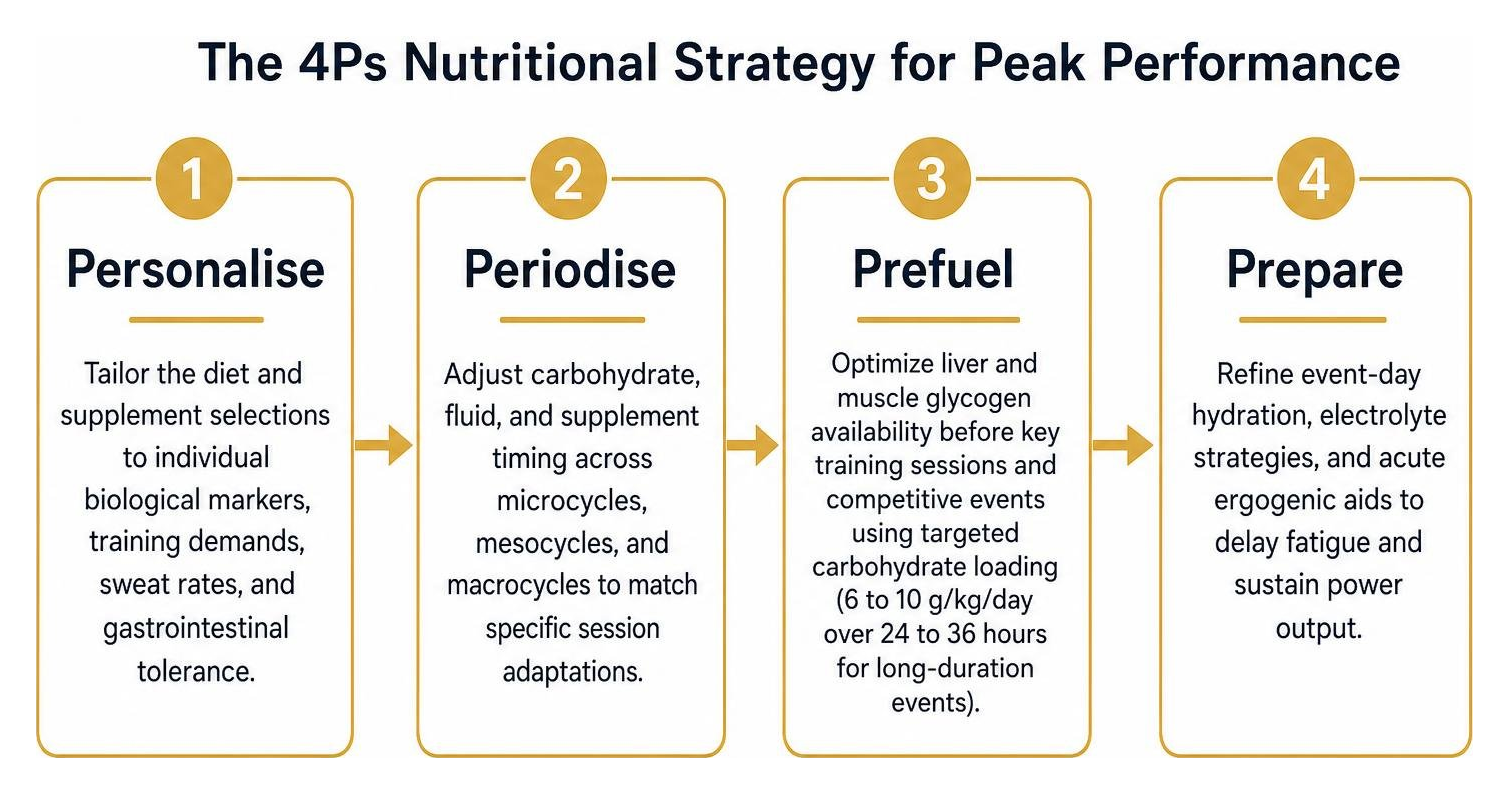
The 4Ps Nutritional Strategy for Peak Performance
To translate foundational fueling into sustained performance, modern sports nutrition uses structured frameworks. The 4Ps framework of nutritional strategies for optimal performance (Gleeson, 2026) outlines four integrated steps:
Personalise: Tailor the diet and supplement selections to individual biological markers, training demands, sweat rates, and gastrointestinal tolerance.
Periodise: Adjust carbohydrate, fluid, and supplement timing across microcycles, mesocycles, and macrocycles to match specific session adaptations (such as train-low sessions versus high-intensity work).
Prefuel: Optimize liver and muscle glycogen availability before key training sessions and competitive events using targeted carbohydrate loading (typically 6 to 10 grams per kilogram per day over 24 to 36 hours for long-duration events).
Prepare: Refine event-day hydration, electrolyte strategies, and acute ergogenic aids to delay fatigue and sustain power output.
Evidence-Based Ergogenic Aids for Strength, Power, and Endurance
Major sports nutrition governing bodies classify ergogenic aids by their level of scientific backing. Tier-1 compounds have demonstrated efficacy across repeated randomized controlled trials.
Supplement | Primary Performance Benefit | Target Athletic Demand | Typical Evidence-Based Dosage | Optimal Timing |
|---|---|---|---|---|
Creatine Monohydrate | Phosphocreatine resynthesis, strength, power output | High-intensity sprint, powerlifting, team sports | 3–5 g/day (or 20 g/day loading for 5–7 days) | Consistent daily timing, post-workout with carbs/protein |
Caffeine Anhydrous | Central nervous system stimulation, reduced RPE | Endurance, team sports, high-intensity intervals | 3–6 mg/kg body mass | 30–60 minutes pre-exercise |
Beta-Alanine | Muscle carnosine loading, intracellular buffering | Sustained efforts lasting 1–10 minutes | 3.2–6.4 g/day across divided doses | Daily intake for 4–8 weeks; split doses to avoid paresthesia |
Dietary Nitrates (Beetroot) | Nitric oxide production, oxygen cost reduction | Aerobic endurance, time trials | ~400–800 mg nitrate (or ~7 mg/kg) | 2–3 hours pre-exercise |
Sodium Bicarbonate | Extracellular buffering, hydrogen ion clearance | Repeated sprints, middle-distance events (1–7 min) | 0.2–0.3 g/kg body mass | 60–120 minutes pre-exercise with water and carbohydrates |
Structuring Tier-1 Compounds in an Athlete Supplement Plan
Creatine Monohydrate
Creatine increases intramuscular stores of phosphocreatine, accelerating adenosine triphosphate (ATP) resynthesis during short, explosive bouts of exercise. Research confirms its efficacy for strength, power, and lean mass accretion. While a loading phase of 20 grams per day (divided into 4 doses) saturates muscle stores in 5 to 7 days, a daily dose of 3 to 5 grams achieves identical saturation within 3 to 4 weeks with minimal acute water retention.
Caffeine Anhydrous
Caffeine acts primarily as an adenosine receptor antagonist, reducing perceived exertion (RPE), enhancing motor unit recruitment, and improving sustained endurance. A dosage of 3 to 6 milligrams per kilogram taken 30 to 60 minutes prior to exercise provides robust ergogenic effects. Daily high-dose consumption may reduce sensitivity, so cycling caffeine intake around target competition blocks can help preserve its performance impact.
Beta-Alanine
Beta-alanine serves as the rate-limiting precursor in intramuscular carnosine synthesis. Elevated carnosine levels buffer hydrogen ions produced during high-intensity glycolysis, delaying the onset of muscular fatigue. Daily dosing of 3.2 to 6.4 grams over 4 to 8 weeks substantially increases muscle carnosine levels. To prevent paresthesia (a harmless tingling sensation on the skin), athletes should split their total daily amount into divided doses of 0.8 to 1.6 grams or use sustained-release formulations.
Buffering Agents and Secondary Ergogenics
Sodium Bicarbonate
Sodium bicarbonate increases blood bicarbonate concentrations, improving extracellular buffering capacity during high-intensity exercise lasting 1 to 10 minutes. A standard dose of 0.2 to 0.3 grams per kilogram consumed 60 to 120 minutes prior to exercise may support anaerobic capacity. However, high doses can cause gastrointestinal distress; pairing it with a small, carbohydrate-rich meal and adequate fluids helps improve tolerance.
Dietary Nitrates
Found abundantly in concentrated beetroot juice, dietary nitrates are reduced to nitrite and subsequently converted into nitric oxide. Nitric oxide promotes vasodilation, enhances blood flow to working muscles, and may reduce the oxygen cost of submaximal exercise. Ingestion of 400 to 800 milligrams of nitrate 2 to 3 hours before endurance events supports sustained output.
Tart Cherry and High-Dose Antioxidants
Tart cherry concentrate contains polyphenol compounds that may assist in managing exercise-induced oxidative stress and muscle soreness. However, chronic consumption of high-dose antioxidant supplements (such as mega-dose vitamins C and E) can blunt normal cellular signaling pathways needed for training adaptation. Athletes should reserve concentrated antioxidant aids for compressed multi-day tournaments where immediate recovery outweighs long-term muscular adaptations.
Translating Biomarkers and Physiology into Targeted Supplementation
Generic supplement lists fail to account for unique metabolic demands, sweat profiles, and baseline deficiencies. Translating objective laboratory data into targeted plans ensures each supplement serves a verified purpose.

Designing a Biomarker-Driven Athlete Supplement Plan
Effective supplementation relies on continuous biological feedback rather than guesswork. Through personalized biomarker analysis, athletes can identify subclinical deficiencies and target specific metabolic bottlenecks.
Key biological markers to track include:
Serum Ferritin and Soluble Transferrin Receptor: Evaluates iron storage and functional iron availability without relying solely on circulating serum iron.
25-Hydroxyvitamin D: Confirms active endocrine status and identifies seasonal fluctuations in bone and immune support.
High-Sensitivity C-Reactive Protein (hs-CRP) and Creatine Kinase (CK): Tracks systemic inflammation, tissue damage, and recovery rates. Regular review of athlete recovery biomarkers helps athletes adjust micronutrient and anti-inflammatory support across heavy training blocks.
Electrolyte and Sweat Sodium Profiles: Assesses individualized sodium loss per liter of sweat, informing targeted intra-workout fluid replenishment.
Adjusting for Age, Sex, and Training Phase
Sex-Specific Considerations: Female athletes experience distinct hormonal shifts across the menstrual cycle that can influence fluid dynamics, glycogen storage, and substrate oxidation. Furthermore, iron requirements are significantly higher in premenopausal female athletes due to menstrual blood loss, requiring careful monitoring to prevent low energy availability and bone mineral loss.
Age-Related Demands: Young athletes should prioritize whole-food energy density, proper hydration, and sleep before considering single-ingredient ergogenics. Conversely, masters athletes experience age-related anabolic resistance, requiring higher per-meal protein targets (0.40 to 0.45 grams per kilogram per meal) and strategic leucine enrichment to stimulate muscle protein synthesis.
Training Periodization: Supplement plans must evolve across training phases. High-volume base phases demand prioritized glycogen replenishment, electrolytes, and recovery support, whereas peaking phases shift focus toward acute ergogenics like caffeine, beta-alanine saturation, and nitrates.
Quality Control, Banned Substances, and Safety Verification
The dietary supplement industry operates under post-market regulatory models. Unlike prescription medications, supplement manufacturers are not required to prove safety or efficacy to regulatory bodies prior to retail distribution. Consequently, adulteration, unlisted stimulants, underdosing, and heavy metal contamination present real risks to athletic performance and eligibility.
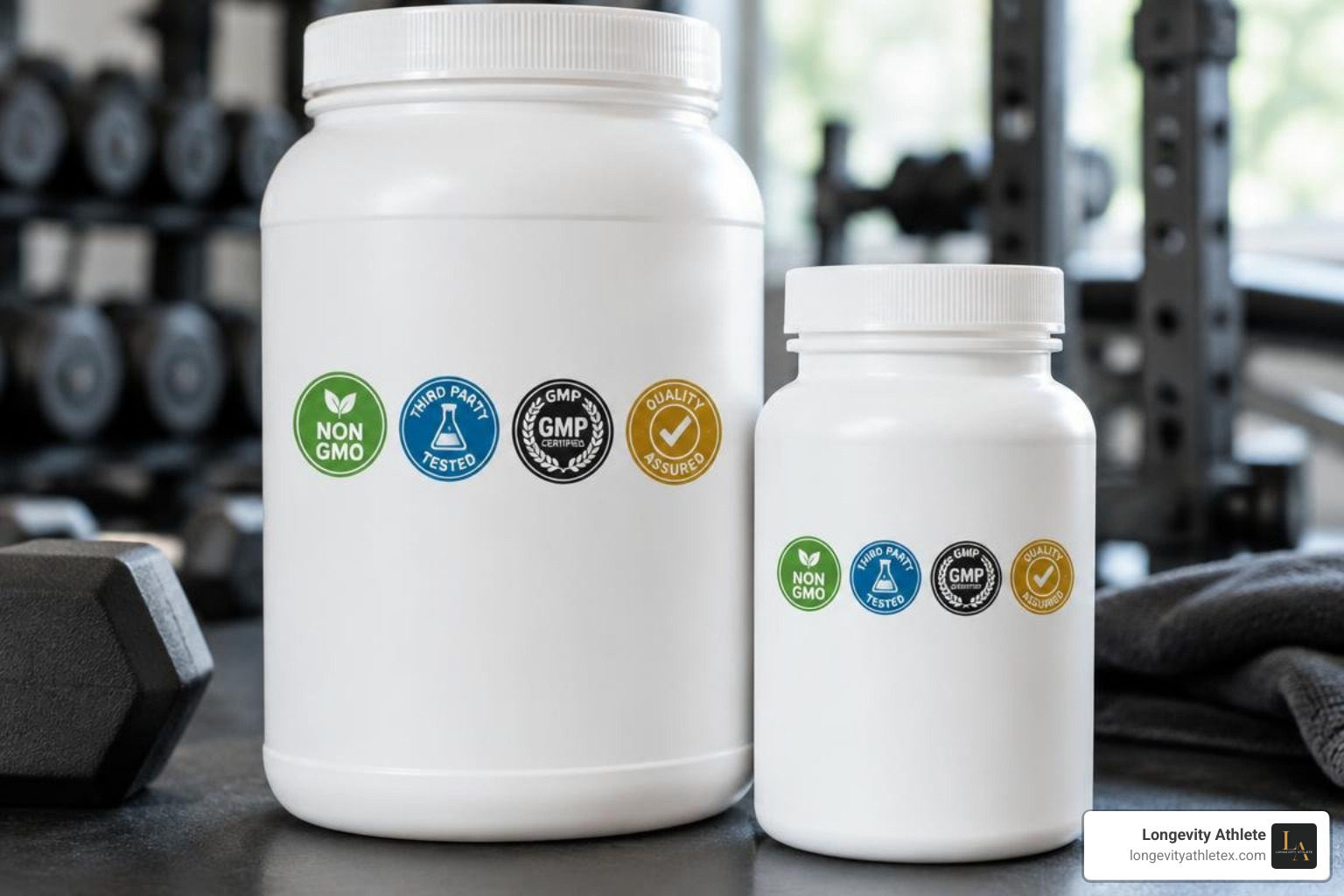
Third-Party Certification and Doping Risk Mitigation
For competitive athletes subject to World Anti-Doping Agency (WADA) or NCAA guidelines, accidental ingestion of a banned compound carries strict-liability penalties. An athlete is entirely responsible for any prohibited substance found in their biological sample.
To mitigate doping risks, choose products verified by accredited third-party testing programs:
NSF Certified for Sport: Verifies label accuracy, screens for over 280 banned substances, and audits manufacturing facilities for contaminants.
Informed Sport: Tests every individual production batch for WADA-prohibited substances before the product enters retail circulation.
USP (United States Pharmacopeia): Verifies ingredient purity, potency, and manufacturing standards, confirming that the product dissolves properly for absorption.
Avoiding Proprietary Blends and Contaminated Formulations
Multi-ingredient pre-workouts, thermogenic fat burners, and test-boosting formulations frequently conceal their exact dosages behind "proprietary blends." This practice prevents athletes from knowing the precise quantity of each active ingredient, raising several concerns:
Sub-therapeutic Dosing: Key ergogenics (such as beta-alanine or citrulline) are often included in amounts far below clinically effective ranges.
Adulteration Risks: Products marketed for rapid fat loss or extreme energy historically show higher rates of contamination with banned sympathomimetic amines or unlisted stimulants.
Organ Stress: Unregulated multi-ingredient stacks can increase hepatic and renal strain when taken in excessive amounts or combined with other supplements.
Transparent single-ingredient formulations from certified brands allow for precise dosing, controlled timing, and verifiable safety.
Frequently Asked Questions About Athlete Supplementation
Which supplements have the strongest scientific backing for athletic performance?
Creatine monohydrate, caffeine anhydrous, beta-alanine, dietary nitrates, and sodium bicarbonate possess the most extensive clinical evidence across randomized controlled trials. These compounds have proven mechanisms for supporting strength, power, buffering capacity, and endurance output when dosed and timed correctly.
How do I know if my supplements are certified safe from banned substances?
Look for independent third-party certification seals printed directly on the product packaging, specifically NSF Certified for Sport or Informed Sport. You can also cross-reference the specific lot and batch number in the online databases of these testing organizations to verify that the batch was screened for prohibited substances.
Can an athlete supplement plan compensate for inadequate dietary intake?
No. Dietary supplements are designed to complement, not replace, a balanced whole-food diet. Without adequate calories, proper carbohydrate periodization, sufficient protein, and baseline hydration, ergogenic supplements yield minimal measurable benefits and will not prevent performance declines associated with energy deficiency.
Conclusion: Building a Sustainable, Data-Driven Program
An optimal athlete supplement plan is never static. It builds from a foundation of nutrient-dense whole foods, adequate sleep, and periodized training, using targeted, third-party-tested supplements to support verified physiological needs.
Rather than relying on generic stacks or marketing claims, disciplined athletes evaluate their bloodwork, track performance feedback, and adjust their supplement intake to match their competitive calendar. Our Signature Plan is a self-guided group program, while our Gold and Platinum Plans create individualized lifestyle approaches using biological testing and personalized data. To optimize your performance, explore how Longevity Athlete precision-performance services can help you build an evidence-based plan tailored to your physiology.
References
Michael Gleeson. "The 4Ps framework of nutritional strategies for optimal performance." Performance Nutrition, 2026. DOI 10.1186/s44410-026-00022-0.