Biomarker-Based Training Plan for High-Performing Athletes and Long-Term Health
Build a Biomarker Based Training Plan That Protects Long-Term Performance
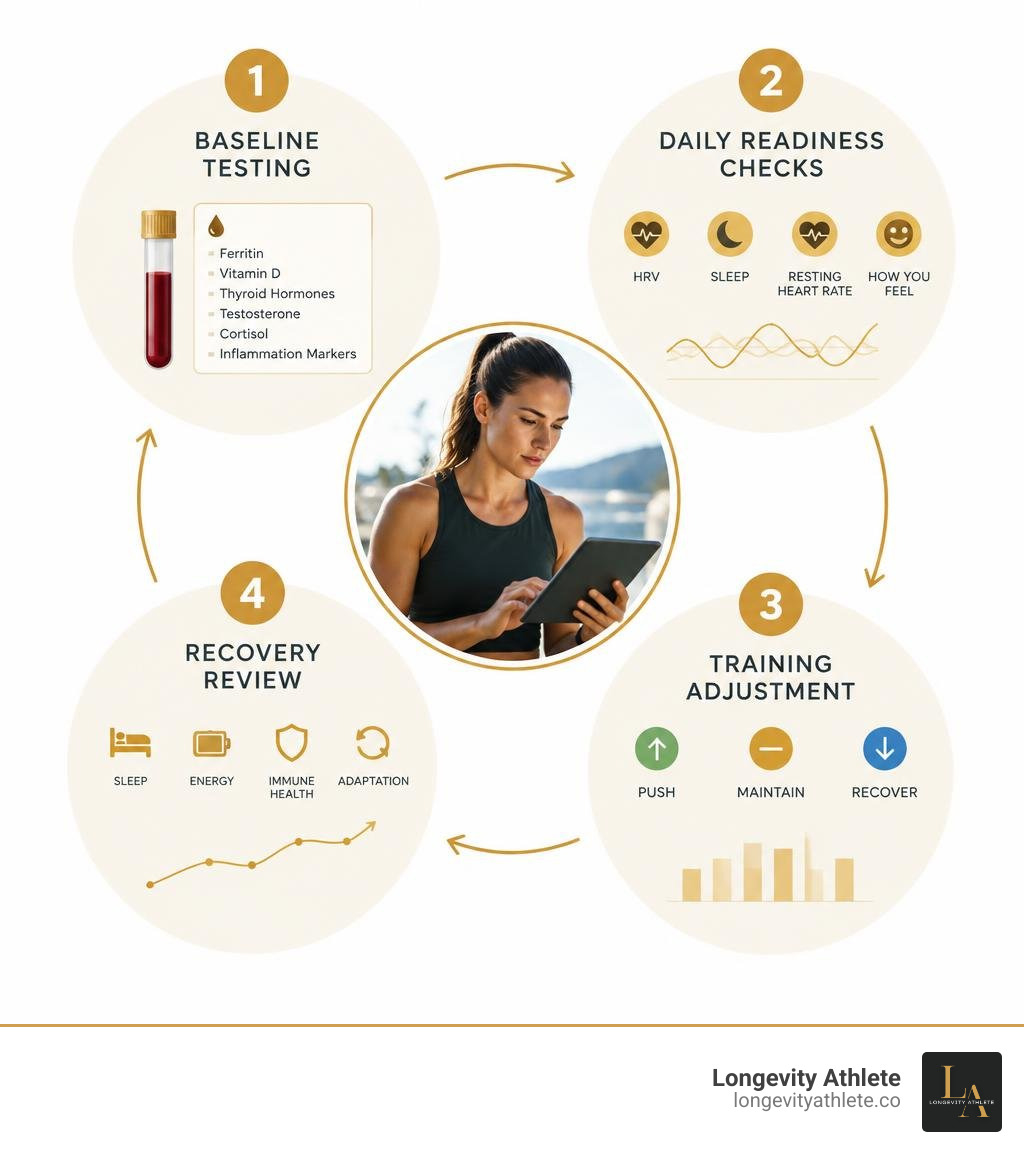
A biomarker based training plan uses blood-test trends alongside training load, HRV, sleep, resting heart rate, and how you feel to decide whether to push, maintain, or recover.
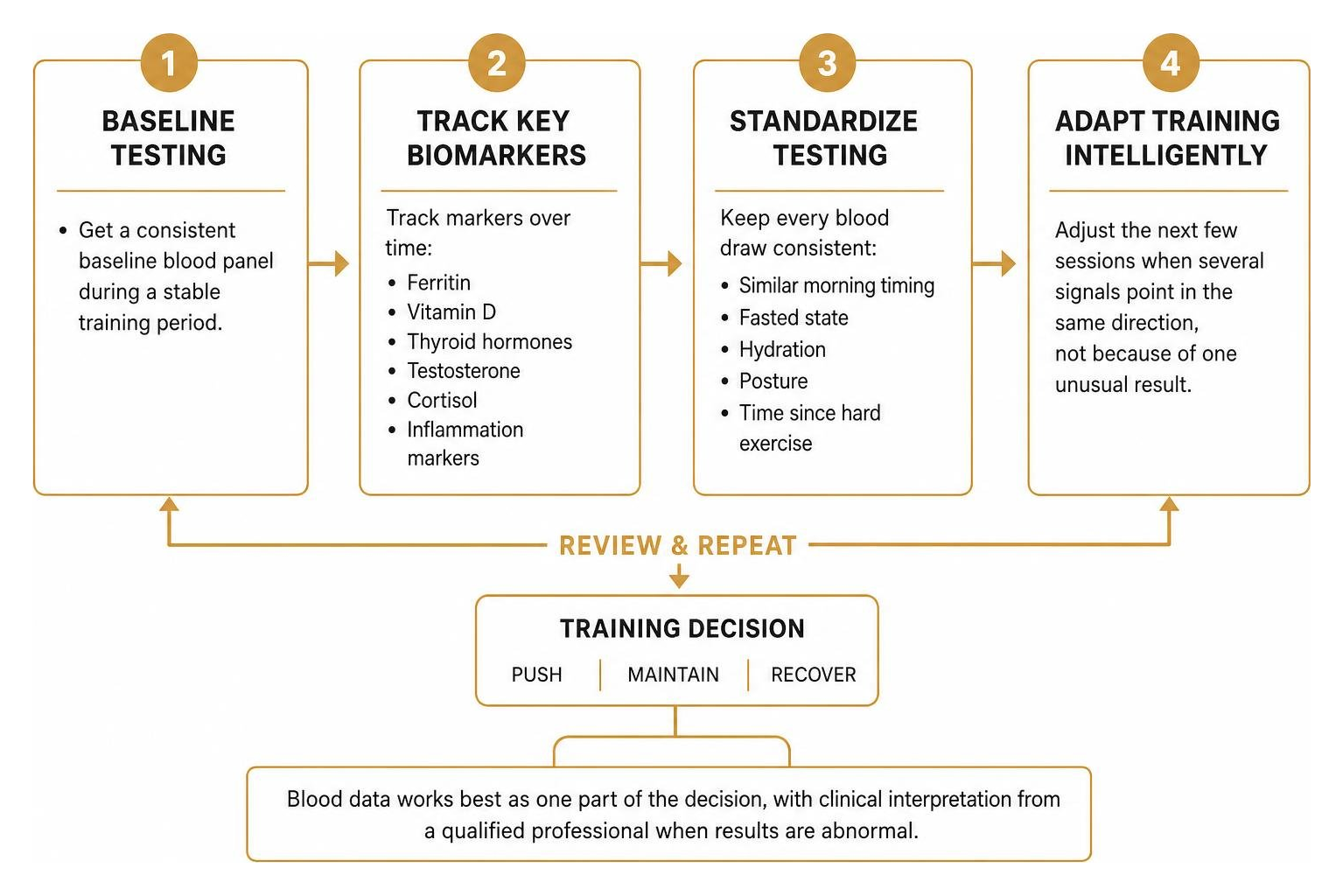
Start simply:
Get a consistent baseline blood panel during a stable training period.
Track key markers such as ferritin, vitamin D, thyroid hormones, testosterone, cortisol, and inflammation markers over time.
Standardize every blood draw: similar morning timing, fasted state, hydration, posture, and time since hard exercise.
Adjust the next few sessions when several signals point in the same direction, not because of one unusual result.
For high-performing athletes, this turns hidden biology into useful training feedback. Low iron stores, poor energy availability, rising inflammation, or suppressed hormonal signals can appear before performance drops, illness, burnout, or bone injury. The goal is not to chase perfect lab numbers. It is to find your healthy range and build enough recovery into training to keep progressing for years.
Blood data works best as one part of the decision, with clinical interpretation from a qualified professional when results are abnormal. Longevity Athlete's Signature Plan is a self-guided group program, while Gold and Platinum Plans create individualized lifestyle protocols.
Core Physiological Markers for Athletic Durability and Recovery
When we train hard, our bodies experience stress, tissue breakdown, and rebuilding behind the scenes. Relying solely on how our legs feel or what a GPS watch says can hide deep fatigue until performance drops or an injury strikes. Tracking key performance biomarkers—measurable biological signals in your blood—gives you an early, objective look at how your muscles, immune system, and hormones are handling your workload.
Following these signals helps you distinguish between healthy training fatigue that makes you faster and chronic overreaching that leads to burnout and breakdown (Lee et al., 2017). A foundational marker is creatine kinase (CK), a muscle enzyme that leaks into your bloodstream when hard training or downhill running breaks down muscle fibers.
A simple creatine kinase blood test reveals how quickly your muscles are repairing. If CK levels remain high two to three days after a tough session, your muscle tissue is still recovering and will benefit far more from an easy recovery day than another intense workout. Pairing CK with red blood cell measurements—such as hemoglobin and hematocrit—confirms whether your blood can deliver plenty of oxygen to working muscles.
Monitoring Muscle Breakdown and Inflammation Signals
Hard training triggers short-term inflammation, which is a normal, healthy signal your body uses to adapt and rebuild stronger tissues. The challenge arises when inflammation lingers for weeks without returning to your baseline.
To keep track of body-wide stress, we look at high-sensitivity C-reactive protein (hs-CRP)—a sensitive blood marker that flags systemic inflammation—through routine inflammation testing. A brief spike in hs-CRP right after a race or demanding workout is normal. However, if your baseline creeps upward during regular training weeks, it warns of unrecovered muscle tissue, inadequate sleep, or excessive training load.
Checking cellular defense markers alongside inflammation shows whether your body has the nutritional and physical reserves to keep up with daily training demands. When inflammation stays elevated while recovery markers drop, dial back high-intensity intervals until your body returns to balance.
Identifying Fueling Gaps and Hormonal Balance in a Biomarker Based Training Plan
A sustainable training plan protects your long-term vitality, not just your next race time. When an athlete trains hard without consuming enough fuel, the body enters low energy availability. Over time, this leads to Relative Energy Deficiency in Sport (RED-s)—a state where underfueling suppresses energy production, weakens bones, lowers immunity, and disrupts reproductive health.
We look at several clear hormone and nutrient markers to ensure your nutrition matches your training load:
Testosterone to Cortisol Ratio (Anabolic vs. Catabolic Balance): This compares your body's rebuilding signals against its breakdown signals. A steady downward trend over several weeks signals that training stress is outpacing recovery.
Free Triiodothyronine (Free T3 - Active Thyroid Hormone): This hormone regulates your metabolic speed and energy output. If your caloric intake is too low for your mileage, your body lowers free T3 to conserve energy, leaving you feeling sluggish, cold, and slow to recover.
Serum Ferritin and Hepcidin (Iron Storage and Iron Regulation): Ferritin measures your stored iron reserves, which are vital for shuttling oxygen to working muscles. Hepcidin is an iron-regulating hormone that spikes with inflammation and temporarily blocks iron absorption. Checking both markers catches iron depletion before it turns into severe fatigue.
Vitamin D (25-Hydroxy): Crucial for bone density, muscle contractility, and immune defense. Low levels significantly increase the risk of bone stress injuries and frequent colds that interrupt training.
Establishing Reliable Baselines: Test Preparation and Personal Ranges
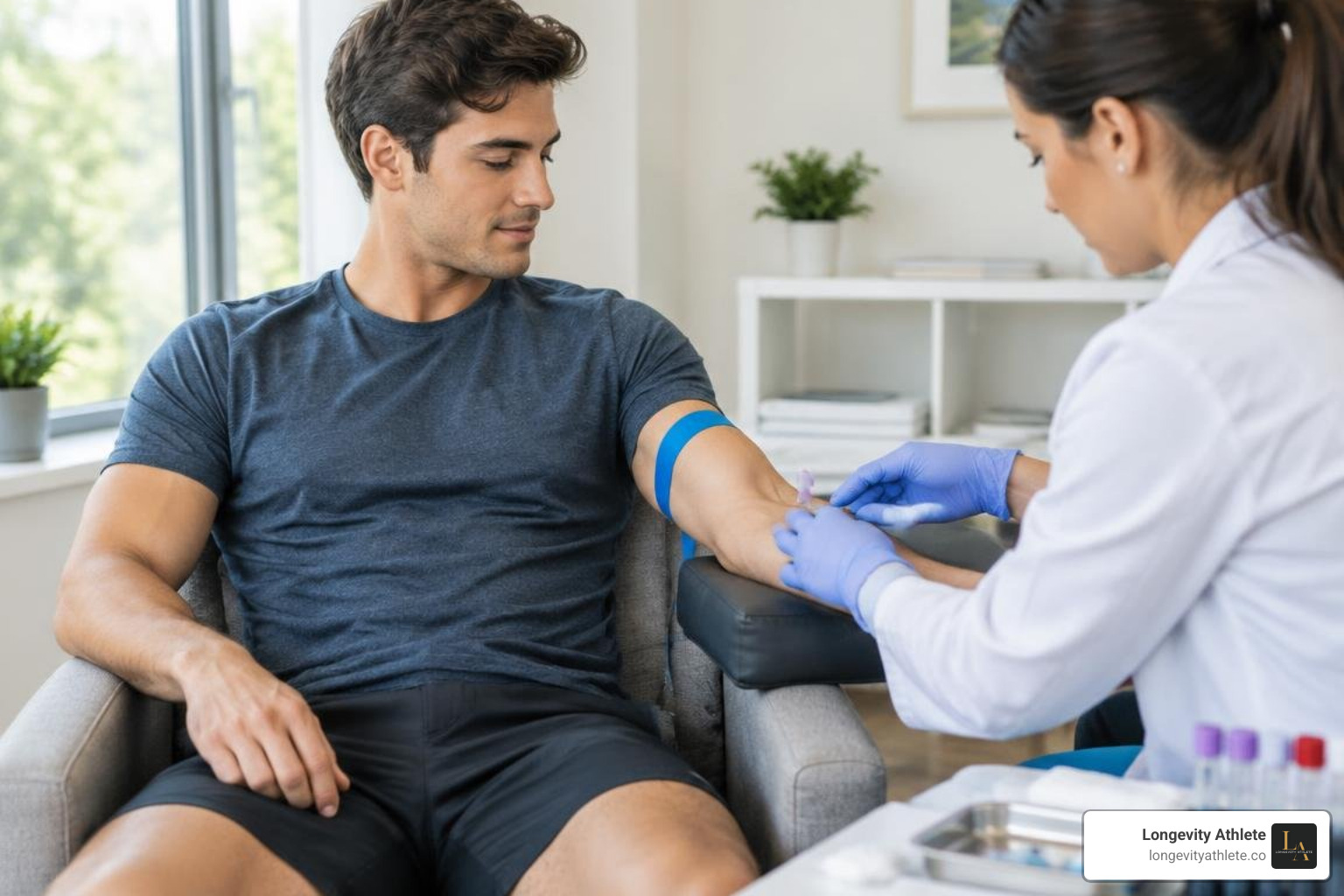
A blood test is only as helpful as your pre-test preparation. Testing right after a brutal workout, while dehydrated, or after a large meal can cause temporary spikes in inflammation and artificial shifts in nutrient levels. Standardizing your testing routine guarantees that your results show genuine physiological trends rather than temporary test-day noise.
Follow this straightforward preparation checklist before every baseline test:
Rest 24 Hours Beforehand: Avoid hard workouts for at least 24 hours before testing; schedule your blood draw after a full rest day or an easy recovery spin.
Fast for 10 to 12 Hours: Complete an overnight fast with water only so recent meals do not distort blood sugar, lipids, or metabolic markers.
Sit Quietly for 10 to 15 Minutes: Rest seated in the clinic before your blood is drawn. Rushing into the lab alters fluid balance and temporarily changes blood protein concentrations.
Test at the Same Morning Time: Schedule blood draws between 7:00 AM and 9:00 AM to account for natural daily shifts in testosterone and cortisol.
Drink Water Upon Waking: Drink about 500 mL (17 oz) of water in the morning to prevent mild dehydration from falsely raising red blood cell counts.
Moving Beyond Generic Population Ranges to Athlete-Specific Baselines
Standard laboratory reference ranges are designed to screen the general population for medical conditions. Because athletes adapt to consistent exercise, their healthy numbers often look very different from sedentary averages.
For example, regular aerobic training expands your resting blood plasma volume. This healthy adaptation can place hemoglobin numbers near the lower end of standard hospital charts without meaning you are anemic. Likewise, regular strength sessions keep muscle enzymes like creatine kinase slightly higher than average without indicating muscle injury.
Instead of comparing your numbers against broad hospital averages, build your personal baseline and watch for shifts over time. The key question is: "Has this marker changed compared to my own healthy range during similar training blocks?"
Tracking Your Trends Over Time for Smarter Training
A single blood test offers a helpful snapshot, but tracking your markers consistently throughout the year—across building phases, peak volume, taper, and post-season recovery—shows how your body genuinely handles different workloads.
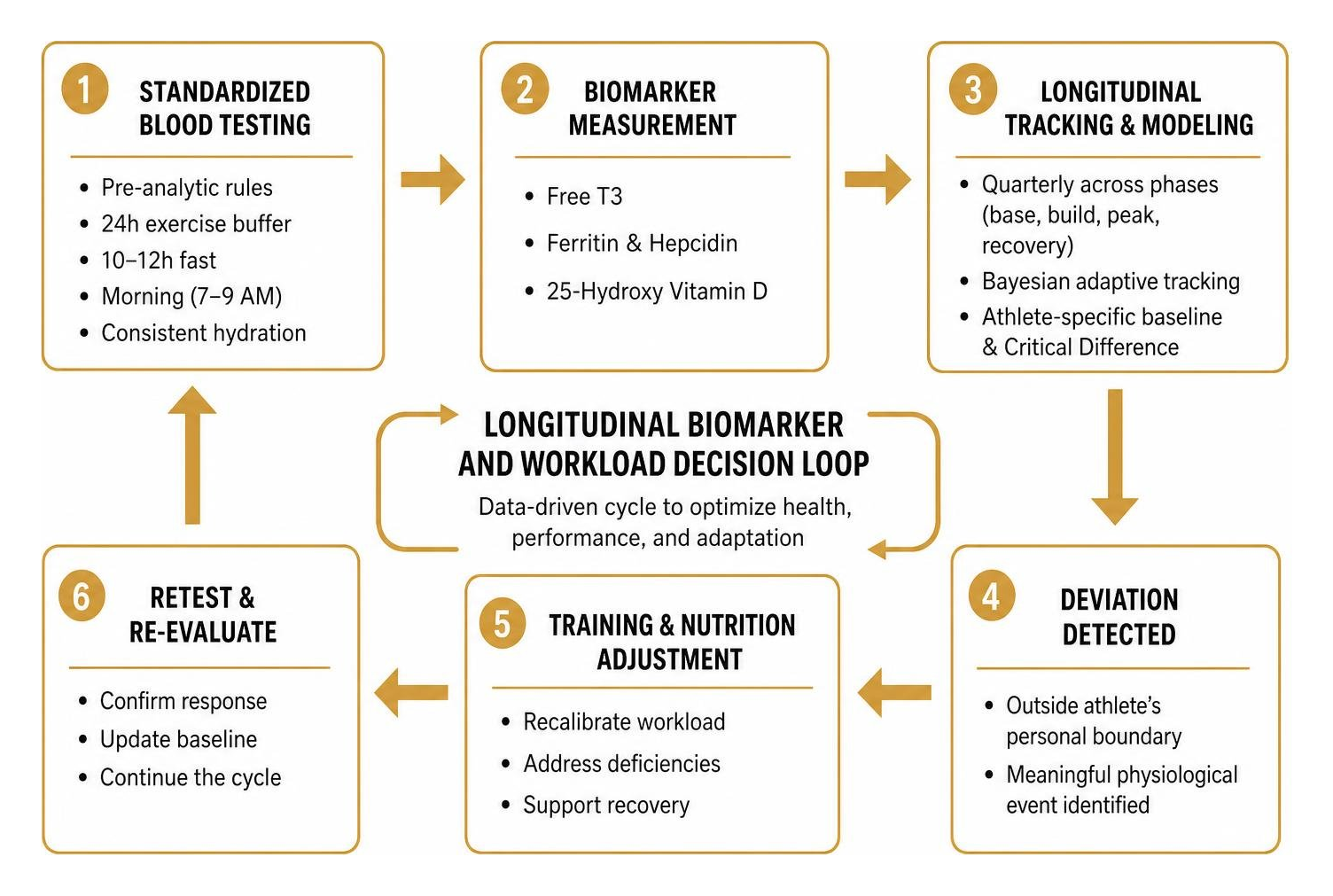
Long-term tracking creates an individual profile based on your personal history. Rather than aiming for static population numbers, your baseline updates with each season. When a biomarker moves outside your normal range, you get an early warning to tweak your volume or nutrition before overtraining or injury sidelines you.
Step-by-Step: How to Structure a Biomarker Based Training Plan
Putting biomarker data to work comes down to simple, practical decision rules. You can combine seasonal blood tests with daily wearable metrics to decide when to push hard, hold steady, deload, or rest.
Daily and Weekly Readiness: Blending Wearables with Blood Data
Quarterly blood panels provide deep insight into your physiological foundation, while daily wearable metrics give fast, non-invasive feedback. Using both together gives you clear guardrails for every session:
When to Push (High-Intensity Work):
The Signal: Overnight Heart Rate Variability (HRV) is normal or high, resting heart rate is steady, muscles feel fresh, and quarterly blood markers (iron, hormones, inflammation) are in your target zone.
The Action: Execute planned high-intensity intervals, tempo work, or heavy strength sessions.
When to Maintain (Aerobic Base Work):
The Signal: HRV is slightly lower than average, but resting heart rate is normal and your perceived energy is steady.
The Action: Stick to Zone 2 aerobic base mileage; skip optional hard efforts or sprint finishes.
When to Deload (Active Recovery Week):
The Signal: Resting heart rate stays elevated for multiple days, muscle heaviness lingers, or blood panels show declining ferritin, free T3, or testosterone.
The Action: Take a 5 to 7 day deload. Reduce total training volume by 40% to 50% while keeping intensity strictly conversational.
When to Rest (Full Recovery):
The Signal: Inflammation markers (hs-CRP) are high, morning HRV drops sharply, and you feel run down or fatigued.
The Action: Take 24 to 48 hours of complete rest, gentle walking, and focused sleep to let your body recharge.
Modulating Volume and Intensity Based on Physiological Stress Signals
When your body signals that fatigue is accumulating, make straightforward training adjustments:
Dial Back Intensity: When muscle breakdown markers or inflammation remain high, swap hard threshold and interval sessions for easy recovery work in Zone 1 and Zone 2. This keeps your aerobic engine active without causing further muscle damage.
Take Proactive Rest Days: If several recovery signals point to accumulated fatigue, take an extra rest day rather than forcing a scheduled hard workout.
Match Fueling to Training Demands: Pair training adjustments with smart nutrition. For instance, addressing low ferritin reserves with targeted dietary adjustments through biomarker based nutrition plans speeds up your recovery. Athletes monitoring recovery between routine lab tests can also learn how to test for inflammation at home to verify that recovery is on track.
Frequently Asked Questions About Athletic Biomarker Testing
How often should endurance athletes test blood biomarkers?
For most active athletes, a comprehensive venous blood panel tested quarterly (3 to 4 times per year) offers a practical balance between actionable insight and convenience. Helpful testing windows include:
During the early base phase (to establish your baseline).
At the peak of heavy training (to catch overreaching or fuel deficits early).
During taper before a target race (to confirm freshness and readiness).
During post-season recovery (to verify hormonal and nutrient restoration).
Can home finger-prick blood tests replace laboratory venous draws?
Finger-prick capillary tests offer convenient checks between larger lab visits, but they do not fully replace standard venous blood draws. Capillary samples take blood from tiny vessels near the skin surface, which can vary slightly if the fingertip is squeezed during collection.
Finger-prick tests work well for fast directional checks on single markers, such as muscle enzymes (creatine kinase) or blood lactate. For complete hormone panels, thyroid function, iron stores (ferritin), and complete blood counts, standard venous draws from an arm vein remain the most accurate and dependable method.
How quickly do biomarkers respond to training plan adjustments?
Different biological systems adapt and recover at different rates:
Muscle Damage and Inflammation (hs-CRP, Creatine Kinase): Respond within 24 to 72 hours after adjusting volume or intensity.
Autonomic Recovery (HRV, Resting Heart Rate): Typically normalizes within 3 to 5 days of reduced stress, light active recovery, and proper sleep.
Hormonal Balance (Testosterone, Cortisol, Free T3): Generally takes 2 to 4 weeks of consistent fueling and managed training volume to stabilize.
Nutrient and Red Blood Cell Stores (Ferritin, Hemoglobin, Vitamin D): Require 6 to 12 weeks of proper nutrition, targeted supplementation, and appropriate training load to show significant increases.
Conclusion: Sustaining Peak Performance and Longevity
Building an exceptional athletic foundation is not about training until your body breaks down; it is about providing the precise stimulus your body can adapt to, absorb, and rebuild from. A well-designed biomarker based training plan strips away guesswork and emotional bias, replacing subjective assumptions with clear, objective physiological feedback.
By monitoring key markers of muscle recovery, inflammation, hormonal balance, and energy availability, we can train with genuine confidence. We protect our joints, preserve endocrine health, avoid preventable bone injuries, and sustain our athletic pursuits for decades to come.
At Longevity Athlete, we specialize in helping dedicated endurance enthusiasts and performance-focused individuals decode their biology. If you are ready to remove the guesswork, protect your durability, and build a sustainable, data-driven athletic routine, our precision wellness services are here to support your journey. Explore our comprehensive services and dive deeper into our educational blog to discover how individualized biomarker insights can elevate your training. While our Signature Plan is a self-guided group program, our Gold and Platinum Plans create individualized lifestyle protocols tailored specifically to your unique physiology.
References
Lee EC, Fragala MS, Kavouras SA, Queen RM, Pryor JL, Casa DJ. "Biomarkers in Sports and Exercise: Tracking Health, Performance, and Recovery in Athletes.." Journal of strength and conditioning research, 2017. PMCID PMC5640004.