
Master Your Calcium Magnesium Balance for Stronger Bones and Muscle Function
What Calcium Magnesium Balance Means for Bones and Muscles
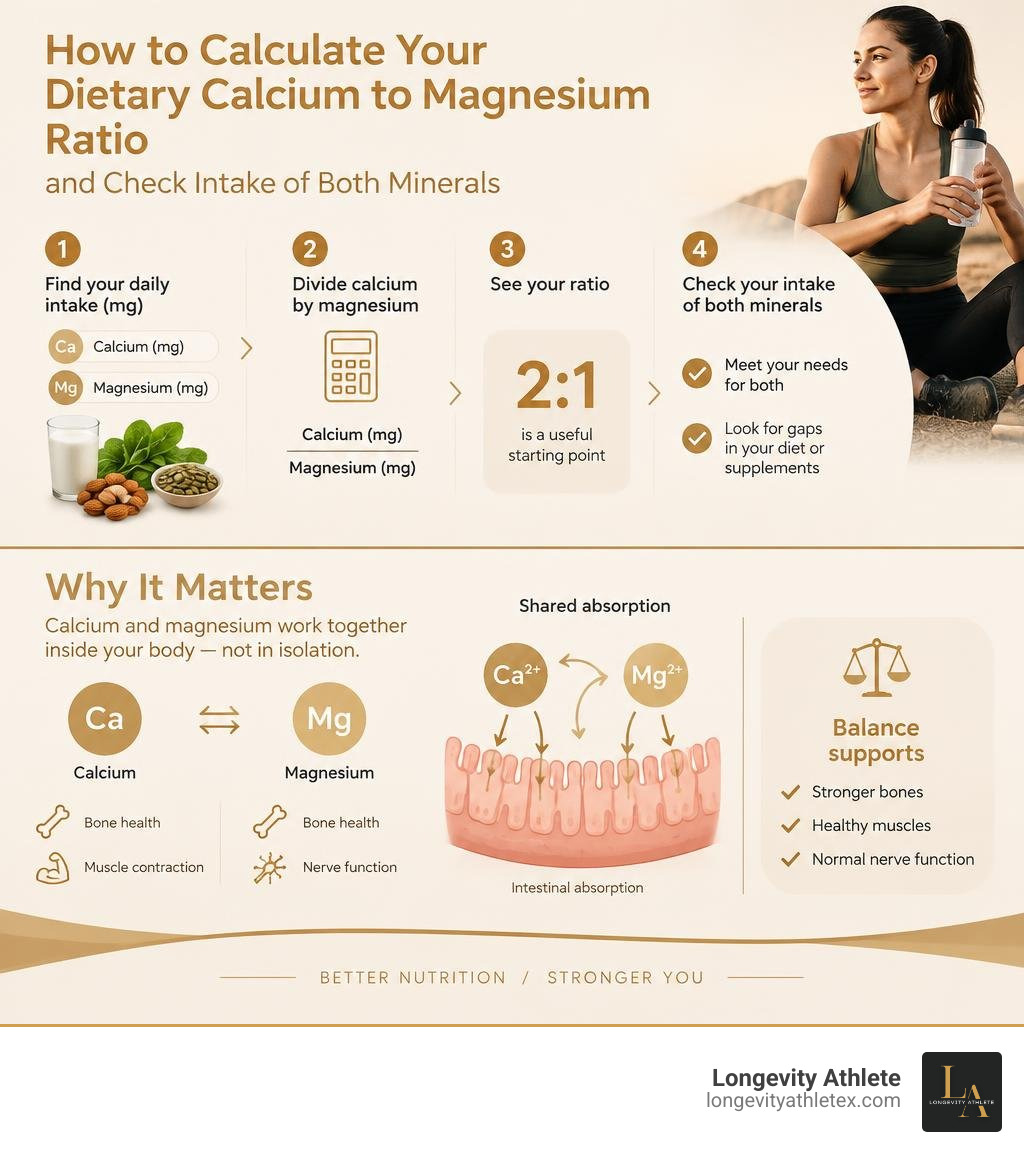
Calcium magnesium balance is the amount of calcium you consume compared with magnesium. To find your dietary ratio, divide your daily calcium intake in milligrams by your magnesium intake in milligrams. A ratio near 2:1 is a useful starting point, but research does not support one perfect target for everyone. Getting enough of both minerals matters more than reaching a number by cutting out needed calcium or adding a supplement you may not need. Research on dietary and supplement ratios suggests the balance may matter alongside each mineral's intake.
Calcium helps build bone and supports muscle contraction. Magnesium also supports bone health and normal muscle and nerve function. For athletes, the practical first step is to review food and supplement intake together, then look for gaps.
I'm Garric Vosloo. My years of patient consulting and work with elite athletes shape how I approach calcium magnesium balance: start with the individual's diet and needs, not a one-size-fits-all number.
Why Calcium Magnesium Balance Matters More Than Isolated Mineral Intake
For decades, nutritional guidelines isolated individual minerals into daily targets. Athletes were told to load up on calcium for bone strength, while magnesium remained an afterthought. However, focusing solely on individual minerals overlooks how these nutrients interact inside the human body. Calcium and magnesium do not work in isolation; they share competitive transport mechanisms, balance cellular hydration, and co-regulate enzymatic cascades.
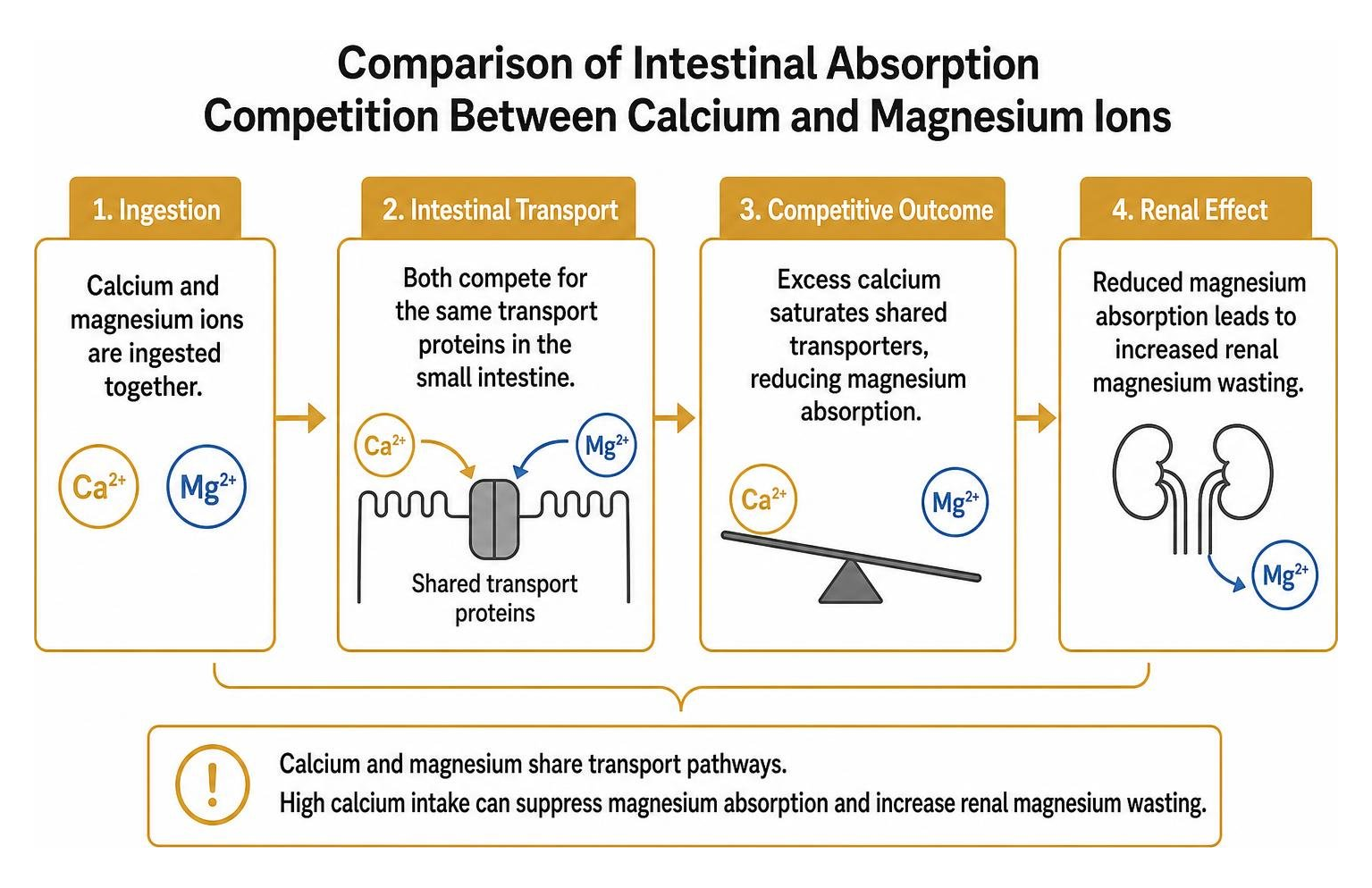
When we ingest calcium and magnesium, both divalent cations compete for the same transport proteins in the small intestine and similar reabsorption pathways in the renal tubules of the kidneys. As highlighted in a clinical review on mineral balance, an excessive intake of calcium relative to magnesium can saturate these shared transporters, effectively suppressing magnesium absorption and driving renal magnesium wasting. When looking at key performance biomarkers, evaluating both minerals side-by-side provides a much more accurate picture of metabolic efficiency and neuromuscular readiness.
Evolutionary Baselines and Modern Intake Shifts
Human physiology evolved on ancestral diets that provided roughly equal amounts of calcium and magnesium by weight, creating a dietary ratio close to 1:1 or 4:3. In contrast, modern food manufacturing has dramatically skewed this relationship. The widespread fortification of commercial foods with calcium, combined with soil depletion and the industrial processing of whole grains, has stripped magnesium from standard diets.
According to a comprehensive dietary supplement ratio analysis published in Nutrients, the average dietary calcium-to-magnesium ratio for US adults has climbed above 3.0:1 since 2000. That same analysis examined commercial supplement formulations and found that the mean calcium-to-magnesium ratio across multi-mineral products is 2.9:1, with powdered formulations reaching as high as 48.5:1. When high-dose calcium supplements are layered onto a modern diet, this mineral gap widens further.
Calciotrophic Hormones and Vitamin D Activation
The relationship between calcium and magnesium is coordinated by calciotrophic hormones, primarily parathyroid hormone (PTH) and active vitamin D (1,25-dihydroxyvitamin D). When circulating ionized calcium drops, the parathyroid glands secrete PTH to stimulate bone resorption and signal the kidneys to synthesize active vitamin D.
However, the enzymatic conversion of storage 25-hydroxyvitamin D into active 1,25-dihydroxyvitamin D requires magnesium as an essential cofactor for hepatic 25-hydroxylase and renal 1-alpha-hydroxylase (CYP450 enzymes). A study on calciotrophic hormones in Dietetics demonstrated that elevated dietary calcium-to-magnesium ratios correlate with higher circulating PTH levels. When magnesium levels are insufficient, vitamin D remains trapped in its inactive form, blunting calcium absorption and placing unnecessary stress on the skeletal matrix.
Physiological Mechanisms: Calcium, Magnesium, and Neuromuscular Function
At the cellular level, calcium and magnesium act as physiological counterparts. Calcium serves as the primary secondary messenger that triggers excitation, contraction, and cellular communication, while magnesium functions as the master regulator that restores the cell to a resting state.
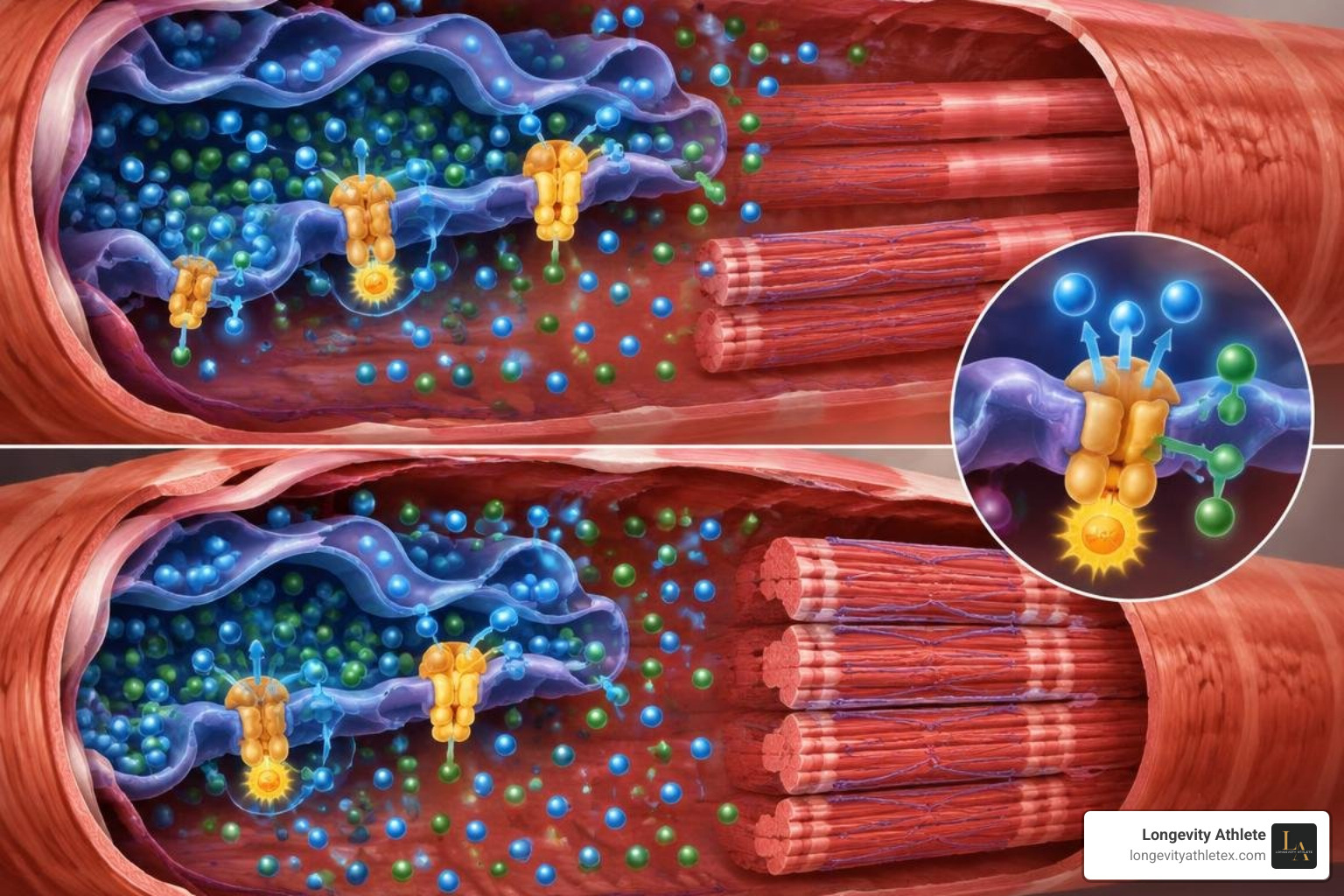
Both minerals interact with the calcium-sensing receptor (CaSR), a G-protein coupled receptor that monitors extracellular mineral concentrations. Inside muscle fibers, electrical impulses stimulate the sarcoplasmic reticulum to flood the cytoplasm with calcium. Calcium binds to troponin C, initiating actin-myosin cross-bridging and generating muscular force.
To end the contraction and prevent muscle cramping, the cell relies on magnesium. Magnesium powers the ATP-dependent calcium pumps (SERCA) that transport calcium back into the sarcoplasmic reticulum, allowing muscle fibers to relax. Magnesium also regulates mitochondrial membrane potential and is required to bind to ATP molecules to produce biologically active Mg-ATP complexes. Without sufficient intracellular magnesium, cellular energy production slows down and muscles struggle to release tension.
Cellular Signaling and How Calcium-Magnesium Balance Modulates Inflammation
When intracellular calcium levels remain elevated due to low magnesium availability, it can trigger inflammatory signaling cascades. Calcium overload stimulates nuclear factor kappa B (NF-κB) transcription, leading to increased production of pro-inflammatory cytokines such as interleukin-6 (IL-6), tumor necrosis factor-alpha (TNF-α), and matrix metalloproteinase-9 (MMP-9).
In cross-sectional investigations, researchers noted that higher dietary calcium-to-magnesium ratios were significantly associated with elevated levels of IL-6 (r = 0.626, P = 0.017) (DeLuccia et al., 2019). For athletes and active individuals managing systemic stress, tracking these important health biomarkers can help identify whether muscular soreness or slow recovery times are tied to an underlying micronutrient imbalance.
Skeletal Remodeling and Dual-Energy X-Ray Absorptiometry Findings
Bone is dynamic tissue undergoing constant remodeling through osteoblast-mediated bone formation and osteoclast-mediated bone resorption. While calcium provides the structural raw material for hydroxyapatite crystals, magnesium influences the size and structural stability of those crystals.
A deficiency in magnesium relative to calcium can lead to larger, more brittle hydroxyapatite crystal formation, reducing bone elasticity and increasing fracture susceptibility. Dual-energy X-ray absorptiometry (DXA) studies show that balanced mineral ratios correlate with improved trabecular microarchitecture and higher total bone mineral density across the femoral neck and lumbar spine, whereas extreme ratios on either end are associated with lower bone strength.
Optimal Ratio Thresholds for Bone Health, Inflammation, and Longevity
Clinical and epidemiological data indicate that the health outcomes associated with calcium and magnesium intake follow a non-linear, U-shaped curve. Both excessively high and unusually low ratios are linked to adverse health markers.
Health Outcome | Optimal Ca:Mg Intake Range | Associated Risks of High Ratio (>3.0) | Associated Risks of Low Ratio (<1.7) |
|---|---|---|---|
Bone Mineral Density | 2.2 – 3.2 | Lower hip/spine BMD, increased osteoporosis risk | Lower trabecular density, impaired mineral mineralization |
Systemic Inflammation | 1.7 – 2.6 | Elevated IL-6, CRP, and oxidative stress | Potential electrolyte imbalance if calcium is deficient |
Cardiovascular Health | 1.7 – 2.5 | Vascular calcification risk, increased arterial stiffness | Elevated mortality risk when absolute intake of magnesium is high without adequate calcium |
Population-Specific Differences and Osteoporosis Risk
The importance of this mineral balance was clearly highlighted in the Boston Puerto Rican Osteoporosis Study, published in The Journal of Nutrition. Researchers analyzed adults aged 47 to 79 and found that the dietary calcium-to-magnesium ratio was significantly associated with bone health outcomes (Fouhy et al., 2023).
The protective window for bone health appeared within a dietary intake range of 2.2 to 3.2. Compared to the middle tertile, individuals in the highest tertile faced an adjusted odds ratio for osteoporosis of 2.79 (95% CI: 1.47, 5.30), while those in the lowest tertile faced an odds ratio of 2.01 (95% CI: 1.03, 3.92) (Fouhy et al., 2023). Interestingly, average magnesium intake remained consistent across groups (~317 mg/day), demonstrating that the variations in bone mineral density were largely driven by calcium intake shifting the overall balance.
Cardiovascular Outcomes and East Asian vs. Western Cohorts
The modifying effect of this mineral ratio extends beyond bone health to systemic longevity and cardiovascular function. A landmark prospective investigation from the Shanghai cohort mortality study, covering over 130,000 Chinese men and women, revealed distinct sex-specific interactions based on baseline dietary patterns (Dai et al., 2013).
In this population, where the median dietary calcium-to-magnesium ratio was relatively low at 1.7, high magnesium intake (≥320 mg/day for women and ≥420 mg/day for men) was associated with an increased risk of total mortality if calcium intake remained inadequate (Dai et al., 2013). Specifically, among women with a ratio at or below 1.7, high magnesium intake was linked to a 24% increased risk of total mortality and a 66% increased risk of mortality from coronary heart disease (Dai et al., 2013).
Conversely, among men with a ratio above 1.7, higher intakes of both minerals were associated with reduced risks of all-cause and coronary heart disease mortality (Dai et al., 2013). These findings demonstrate that neither mineral should be consumed in excessive isolation; the physiological target depends on the broader dietary context.
Practical Nutrition and Supplementation Guidelines
Achieving an optimal mineral balance starts with prioritizing nutrient-dense whole foods. Rather than relying on isolated high-dose supplements, athletes benefit from combining complementary food sources across daily meals.

To support a healthy balance through whole foods:
Magnesium-Dense Foods: Pumpkin seeds, almonds, spinach, Swiss chard, black beans, avocado, and high-percentage dark chocolate.
Calcium-Dense Foods: Sardines with bones, pasture-raised dairy (kefir, Greek yogurt, aged cheeses), canned salmon, collard greens, sesame seeds, and fortified plant milks.
When sweat losses are elevated during high-volume endurance training, electrolyte replenishment must account for both elements alongside sodium and potassium.
Testing Biomarkers to Fine-Tune Your Daily Calcium Magnesium Balance
Standard total serum calcium and serum magnesium blood tests often fail to capture subtle intracellular deficiencies, as the body aggressively pulls minerals from bone and soft tissue to keep serum levels stable.
To gain a clearer understanding of your status, consider running more specialized assessments:
Red Blood Cell Magnesium (RBC Mg): Evaluates intracellular magnesium levels over the past 90 to 120 days.
Ionized Serum Calcium & Magnesium: Measures the physiologically active, unbound mineral fractions available for cellular signaling.
Intact Parathyroid Hormone (PTH): Serves as a functional marker of mineral adequacy and calciotrophic balance.
Athletes can utilize at-home blood testing paired with personalized biomarker analysis to establish baseline values and track shifts over time.
Building Targeted Supplement and Meal Approaches
When modifying your intake, evaluate your total mineral exposure from both food and supplements:
Check Supplement Labels: Review your current multi-vitamins, recovery drinks, and recovery powders. Avoid supplements with disproportionately high calcium-to-magnesium ratios (such as 5:1 or higher) unless specifically recommended based on clinical testing.
Select Bioavailable Forms: When magnesium supplementation is appropriate, organic chelates like magnesium glycinate, malate, or threonate offer higher bioavailability and lower digestive distress compared to inorganic magnesium oxide.
Time Mineral Intakes Intelligently: If taking moderate-to-high doses of isolated calcium or magnesium, separate their intake by a few hours to minimize competitive transporter binding in the gut.
For athletes looking to optimize energy pathways, integrating these strategies into biomarker-based nutrition plans supported by longevity coaching offers a clear path toward sustainable performance.
Frequently Asked Questions About Mineral Ratios
What is the optimal dietary calcium-to-magnesium ratio for bone and metabolic health?
Current research suggests that a total dietary calcium-to-magnesium intake ratio between 2.0:1 and 2.8:1 by weight supports bone mineral density, healthy inflammatory markers, and metabolic function for most adults. However, individual requirements can vary based on activity levels, age, baseline diet, and sweat rates.
Why does excessive calcium intake trigger muscle cramps when magnesium is low?
Calcium stimulates muscle fibers to contract by binding to troponin and enabling actin-myosin cross-bridging. Magnesium is required to power the cellular pumps that clear calcium from the cytoplasm back into the sarcoplasmic reticulum, allowing the muscle to relax. When calcium levels are disproportionately high and magnesium is low, muscles can remain in a state of hyper-excitability, leading to involuntary spasms and cramps.
How does demographic background influence personal calcium-magnesium needs?
Research shows that parathyroid hormone sensitivity and baseline mineral intakes differ across demographic groups (Alsayed et al., 2026). For example, populations with traditionally lower calcium consumption, such as East Asian cohorts, often maintain metabolic balance at lower ratios, whereas Western diets typically feature much higher baseline calcium levels. Precision nutrition strategies should always consider an individual's background, genetics, and dietary habits.
Conclusion
Mastering the balance between calcium and magnesium is an essential component of long-term skeletal strength, neuromuscular performance, and healthy recovery. Research indicates that evaluating these two shortfall nutrients together provides far deeper insight than assessing either mineral on its own. Rather than chasing extreme intakes or generic supplement formulas, the most effective approach relies on tracking your unique internal chemistry and refining your daily habits based on clear data.
At Longevity Athlete, we specialize in providing precision wellness consulting for dedicated athletes who want to perform at their best while building a foundation for long-term health. Our Signature Plan offers a self-guided group program, while our Gold and Platinum Plans create individualized lifestyle approaches grounded in comprehensive testing. Explore our consulting plans to see how data-driven biomarker analysis can help support your training and longevity goals.
References
Rosemary DeLuccia, May Cheung, Tammy Ng, Rohit Ramadoss, Asma Altasan, Deeptha Sukumar. "Calcium to Magnesium Ratio Higher Than Optimal Across Age Groups (P10-100-19)." Current Developments in Nutrition, 2019. PMCID PMC6574898. Dai Q, Shu XO, Deng X, Xiang YB, Li H, Yang G, Shrubsole MJ, Ji B, Cai H, Chow WH, Gao YT, Zheng W. "Modifying effect of calcium/magnesium intake ratio and mortality: a population-based cohort study.." BMJ open, 2013. PMCID PMC3585973. Fouhy LE, Mangano KM, Zhang X, Hughes BD, Tucker KL, Noel SE. "Association between a Calcium-to-Magnesium Ratio and Osteoporosis among Puerto Rican Adults.." The Journal of nutrition, 2023. PMCID PMC10550845. Patrick Chambers, Sunil Wimalawansa. "Calcium-Magnesium Balance—Clinical Implications for Global Human Health." 2025. DOI 10.32388/swbgwr.2. Emad Aldeen Alsayed, Patricia A. Shewokis, Jennifer Nasser, Deeptha Sukumar. "Assessing the Impact of Dietary Calcium–Magnesium Ratio on Calciotrophic Hormones and Body Composition Using Validated Food Frequency Questionnaires." Dietetics, 2026. DOI 10.3390/dietetics5010007. Costello RB, Rosanoff A, Dai Q, Saldanha LG, Potischman NA. "Perspective: Characterization of Dietary Supplements Containing Calcium and Magnesium and Their Respective Ratio-Is a Rising Ratio a Cause for Concern?." Advances in nutrition (Bethesda, Md.), 2021. PMCID PMC8264923.