
How Healthcare Providers Use C-Reactive Protein Blood Work to Spot Inflammation
What C-Reactive Protein in a Blood Test Can Tell You
C-reactive protein in blood test results is a marker of inflammation. A low result usually means little inflammation is present. A high result means inflammation may be present, but it cannot show where it is or what caused it. Check the units and your lab’s reference range, then discuss the result with your healthcare provider. A high-sensitivity CRP test measures smaller changes and may help assess heart disease risk.
I’m Garric Vosloo, an Institute for Functional Medicine Certified Practitioner with experience in patient consulting and working with elite athletes. I’ll explain how to read C-reactive protein in blood test results alongside symptoms, health history, and training demands.
What Measures C-Reactive Protein in a Blood Test?
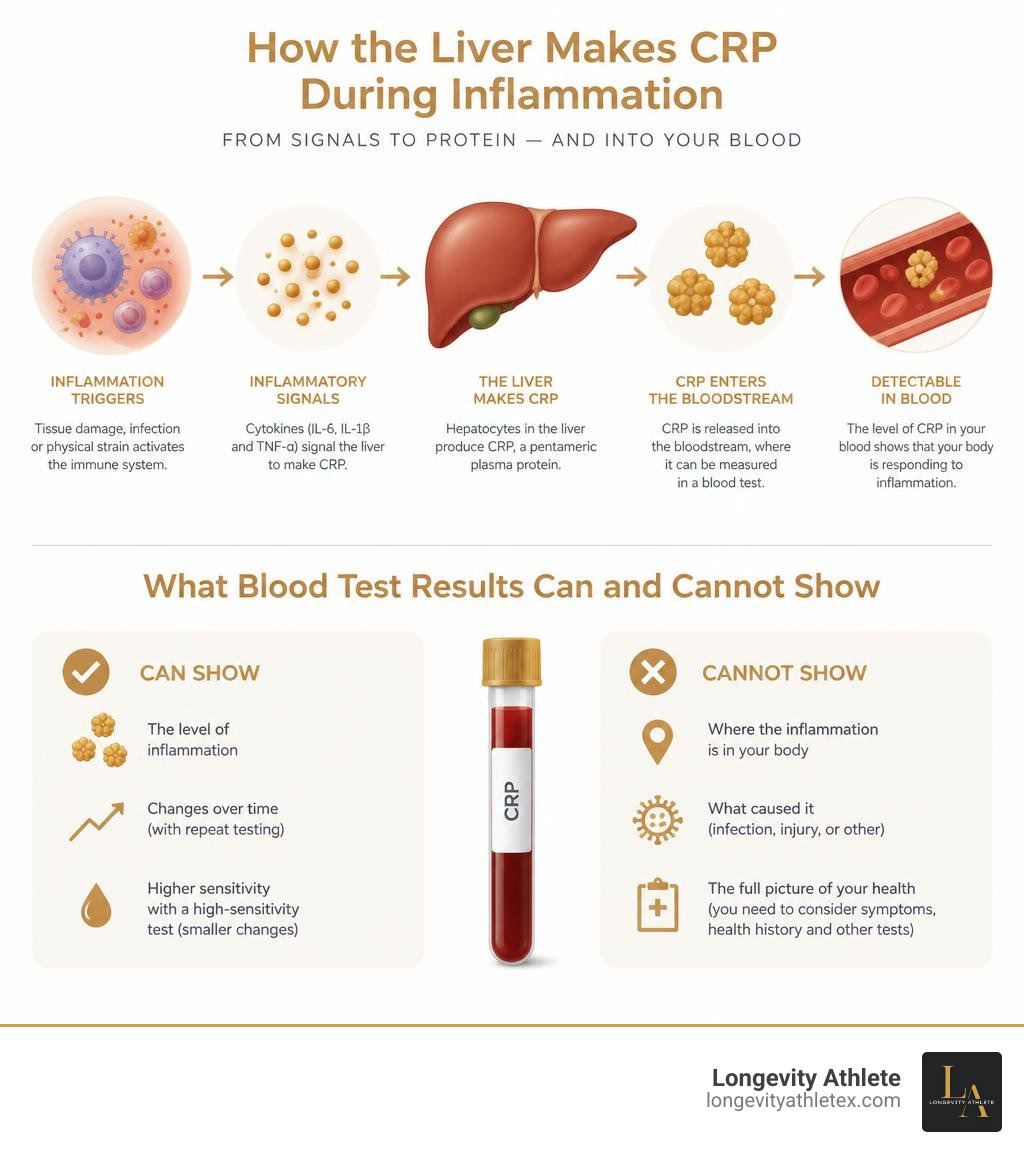
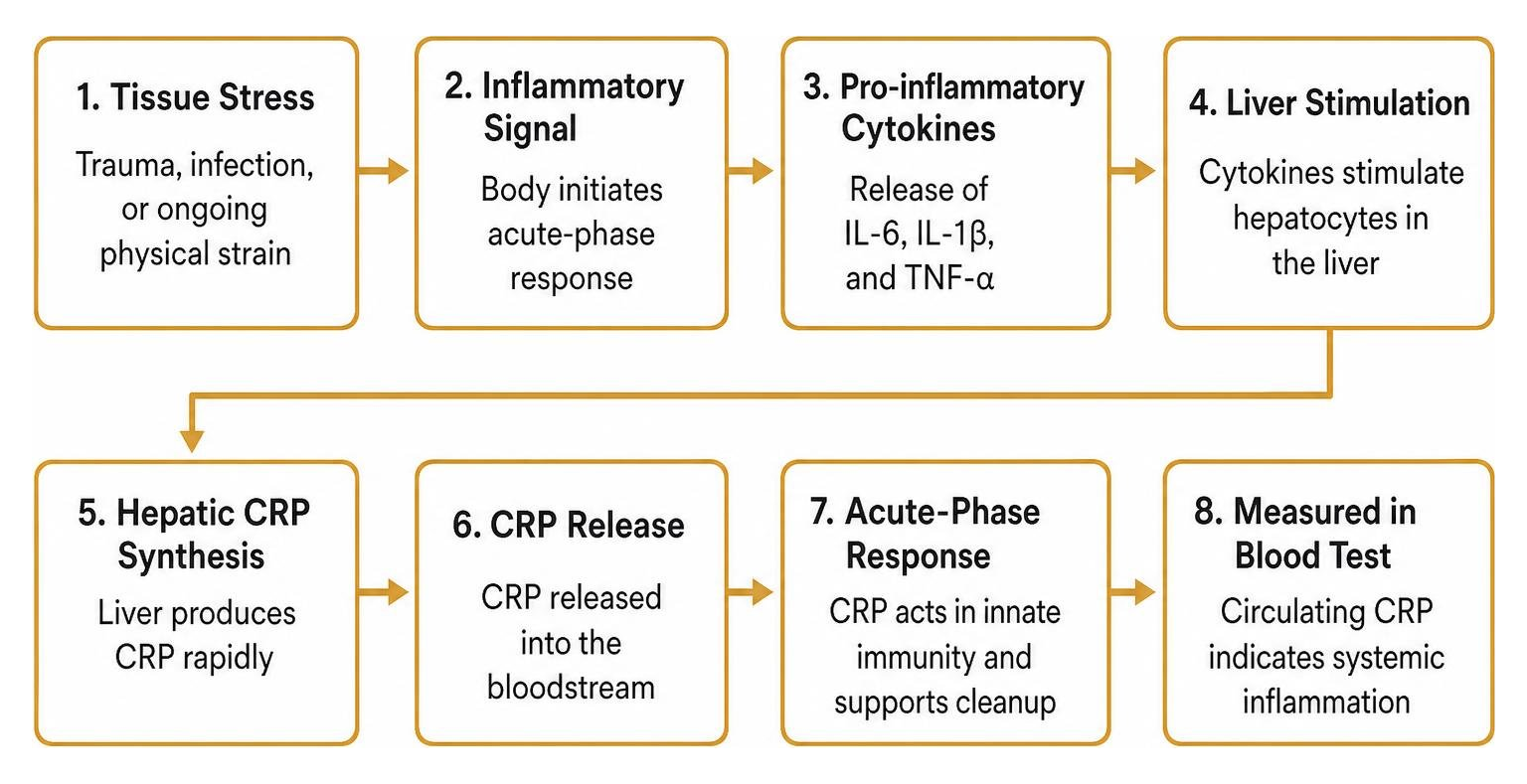
When tissue experiences trauma, infection, or ongoing physical strain, the body initiates a complex cascade known as the acute-phase response. A central element of this response is the synthesis of specialized proteins designed to manage damage and clear foreign pathogens.
C-reactive protein (CRP) is a pentameric plasma protein synthesized primarily by hepatocytes in the liver. Its release into the bloodstream is stimulated by pro-inflammatory cytokines, predominantly interleukin-6 (IL-6), alongside interleukin-1 beta (IL-1β) and tumor necrosis factor-alpha (TNF-α). Because liver production accelerates dramatically following cellular stress, measuring circulating levels serves as an early indicator of systemic inflammation, as detailed in the National Institutes of Health overview on C-reactive protein.
Biology and Function of C-Reactive Protein
Far from being merely an inactive byproduct, CRP plays an active role in innate immunity. Once released into circulation, it binds to phosphocholine expressed on the surface of damaged cells, apoptotic debris, and foreign bacterial membranes.
This binding initiates the classical complement pathway via C1q engagement, effectively tagging cellular debris and foreign invaders for clearance by phagocytes. By assisting in the removal of non-viable tissue, CRP supports the transition from acute defense to tissue repair. Because the liver produces CRP rapidly regardless of the inflammatory trigger, it serves as a sensitive, non-specific acute-phase reactant, as documented in the NCBI Clinical Methods guide to acute phase reactants.
Standard CRP vs. High-Sensitivity CRP (hs-CRP)
While both assays measure the exact same protein molecule, standard CRP and high-sensitivity CRP (hs-CRP) rely on different testing methodologies designed for distinct clinical purposes.
A standard assay is typically utilized when evaluating active infections, acute tissue injury, or flare-ups of chronic autoimmune conditions where protein concentrations rise into double or triple digits. In contrast, an hs-CRP assay uses high-precision laser nephelometry or turbidimetry to detect tiny, sub-clinical baseline variations. Tracking these subtle shifts with a dedicated inflammatory marker blood test allows clinicians to evaluate low-grade chronic inflammation and stratify cardiovascular risk in otherwise asymptomatic individuals.
Feature | Standard CRP Test | High-Sensitivity CRP (hs-CRP) |
|---|---|---|
Primary Clinical Focus | Acute infection, trauma, autoimmune flare-ups | Low-grade systemic inflammation, heart health |
Typical Measurement Range | 8.0 to 1000+ mg/L | 0.1 to 10.0 mg/L |
Detection Threshold | Detects elevations above ~5.0 to 8.0 mg/L | Detects concentrations down to ~0.1 mg/L |
Common Clinical Setting | Hospitals, rheumatology clinics, urgent care | Preventive cardiology, longevity and wellness assessments |
Why Doctors Evaluate Reactive Protein Blood Levels
Healthcare providers frequently evaluate inflammatory markers during routine checkups, specialized diagnostic workups, or post-surgical recovery. Assessing these levels gives clinicians an objective window into systemic physiological stress that physical examinations alone might miss.

Reviewing these values helps determine whether a patient is dealing with an acute event, experiencing a relapse of an autoimmune condition, or carrying hidden cardiovascular strain, as outlined in our comprehensive inflammation testing guide.
Why Doctors Order Reactive Protein in Blood Test Panels
Clinicians regularly order an evaluation of reactive protein in blood test panels to investigate unexplained symptoms such as prolonged fevers, joint swelling, persistent fatigue, or post-operative healing challenges. According to the MedlinePlus medical test details for C-reactive protein, this test helps providers distinguish between viral and severe bacterial processes, screen for post-surgical complications, and evaluate acute systemic distress.
Clinical Uses: Infection, Autoimmunity, and Recovery
In clinical practice, serial testing provides actionable data across several key areas:
Infection Screening: Severe bacterial infections often drive dramatic hepatic output, helping clinicians gauge infection severity.
Autoimmune Disease Management: Conditions such as rheumatoid arthritis, systemic lupus erythematosus (SLE), and inflammatory bowel disease (Crohn's disease and ulcerative colitis) exhibit fluctuating levels that correlate with tissue inflammation and clinical flares.
Post-Surgical Tracking: Following surgery, levels typically peak within 48 to 72 hours before steadily declining; a secondary spike often alerts surgeons to wound complications or secondary infections.
Athletic Recovery: For high-performing individuals, tracking inflammation markers can provide visibility into systemic recovery, helping to differentiate normal post-training microtrauma from excessive physical overreaching.
How to Read Your Laboratory CRP Ranges
Interpreting your laboratory report requires attention to the specific units of measurement. Most laboratories report standard results in either milligrams per deciliter (mg/dL) or milligrams per liter (mg/L). To convert mg/dL to mg/L, multiply the value by 10 (for example, 0.3 mg/dL equals 3.0 mg/L).
According to the Healthdirect guide on interpreting CRP blood tests, baseline values vary between individuals, making it essential to evaluate your findings against established clinical intervals.
How to Interpret Reactive Protein in Blood Test Results
Clinical reference standards generally categorize circulating concentrations into distinct ranges:
Normal Baseline (Less than 0.3 mg/dL or <3.0 mg/L): Indicates minimal active systemic inflammation. Most healthy adults with low baseline physiological strain maintain levels below this threshold.
Minor Elevation (0.3 to 1.0 mg/dL or 3.0 to 10.0 mg/L): Frequently associated with localized inflammation, minor viral illnesses, metabolic stress, obesity, or hard physical exercise.
Moderate Elevation (1.0 to 10.0 mg/dL or 10.0 to 100.0 mg/L): Commonly observed in systemic autoimmune conditions like rheumatoid arthritis, significant soft tissue trauma, or moderate bacterial infections.
Marked to Severe Elevation (Greater than 10.0 mg/dL or >100.0 mg/L): Indicates pronounced systemic distress, often linked to major trauma, systemic vasculitis, or acute bacterial infections.
When using high-sensitivity testing (hs-CRP) for cardiovascular risk evaluation, clinicians generally apply the following risk tiers:
Low Relative Risk: Less than 1.0 mg/L
Average Relative Risk: 1.0 to 3.0 mg/L
Higher Relative Risk: Greater than 3.0 mg/L (provided acute illness or injury is ruled out)
Factors That Influence Circulating Protein Levels
An elevated reading does not always point to a chronic medical condition. A variety of non-pathological and lifestyle factors can temporarily or chronically elevate circulating levels:
Recent High-Intensity Training: Strenuous muscular loading causes transient muscle micro-tears that trigger an acute-phase response, elevating levels for 24 to 48 hours post-workout.
Adipose Tissue Mass: Visceral fat cells secrete inflammatory cytokines, particularly IL-6, which can elevate baseline concentrations in individuals with higher body mass.
Sleep Quality and Stress: Chronic sleep deprivation and psychological distress correlate with minor elevations in baseline inflammatory proteins.
Medications: Estrogen-containing oral contraceptives and hormone replacement therapies can raise baseline readings, whereas statins and nonsteroidal anti-inflammatory drugs (NSAIDs) may suppress them.
Test Procedure, Preparation, and Clinical Limitations
Undergoing an assessment for inflammatory markers is a standard, low-risk procedure that requires only a routine peripheral blood draw.
Preparing for Blood Sampling
For most individuals, no extensive preparation or fasting is required unless the sample is drawn alongside a comprehensive lipid or metabolic panel. However, to ensure results accurately reflect your baseline state, consider these practical steps:
Disclose Medications: Inform your healthcare provider about any prescription medications, over-the-counter anti-inflammatories, or supplements you are taking.
Manage Exercise Timing: Avoid exhaustive, unaccustomed resistance training or endurance sessions for 24 to 48 hours prior to testing to prevent exercise-induced spikes.
Maintain Adequate Hydration: Drinking sufficient water prior to the blood draw supports smooth venipuncture.
Limitations and Follow-Up Diagnostic Testing
While this biomarker is an exceptionally sensitive tool for detecting active inflammation, it has clear clinical limitations:
Lack of Anatomical Specificity: The test signals that inflammation is present, but it cannot identify whether the issue is located in a joint, the cardiovascular lining, the gut, or a surgical site.
Need for Contextual Diagnostics: Providers use these results alongside complete blood counts, metabolic panels, imaging studies, and specialized antibody panels to pinpoint the underlying cause.
Transient Fluctuations: Minor sub-clinical events, such as a mild dental issue or a healing bruise, can temporarily skew results, which is why clinicians often recommend re-testing after several weeks before making significant changes to a care plan.
Frequently Asked Questions About C-Reactive Protein Testing
Can a CRP test show where inflammation is located?
No. Circulating hepatic proteins travel throughout the entire bloodstream. An elevated reading indicates that an inflammatory process is active somewhere in the body, but it cannot isolate the specific tissue, organ, or anatomical source without complementary clinical evaluations.
How quickly do CRP levels rise and fall?
Circulating concentrations begin climbing within 4 to 6 hours following an inflammatory trigger or tissue injury, typically reaching peak levels between 24 and 48 hours. Because its plasma half-life is relatively constant (approximately 19 hours), circulating levels drop rapidly once the underlying inflammatory stimulus resolves.
What is the difference between CRP and ESR tests?
Both tests measure systemic inflammation, but they differ in kinetics and analytical mechanisms. CRP reflects direct liver protein output and responds within hours. The Erythrocyte Sedimentation Rate (ESR) measures the rate at which red blood cells settle in a test tube over one hour, which is influenced by circulating fibrinogen. ESR rises and falls much more slowly, and its readings can be influenced by red blood cell morphology, age, and anemia, making CRP a more dynamic marker for real-time tracking.
Conclusion
Understanding your inflammatory markers provides valuable insight into your internal health, training readiness, and long-term wellness. A single blood test provides an informative snapshot, but tracking trends over time offers the clearest view of how your body responds to daily physical demands, recovery practices, and lifestyle habits.
At Longevity Athlete, we specialize in precision-performance wellness consulting for disciplined athletes, utilizing individualized biomarker assessments and data-driven methods to support physical longevity and athletic output. Rather than offering generic plans, we focus on detailed biomarker analysis to help you refine your daily lifestyle strategies. To gain a deeper understanding of your systemic health and explore comprehensive blood inflammation markers, consider partnering with a qualified professional to build an individualized approach for your goals.