
Vitamin D and Athletic Performance: What the Science Shows
What Vitamin D Means for Athletic Performance
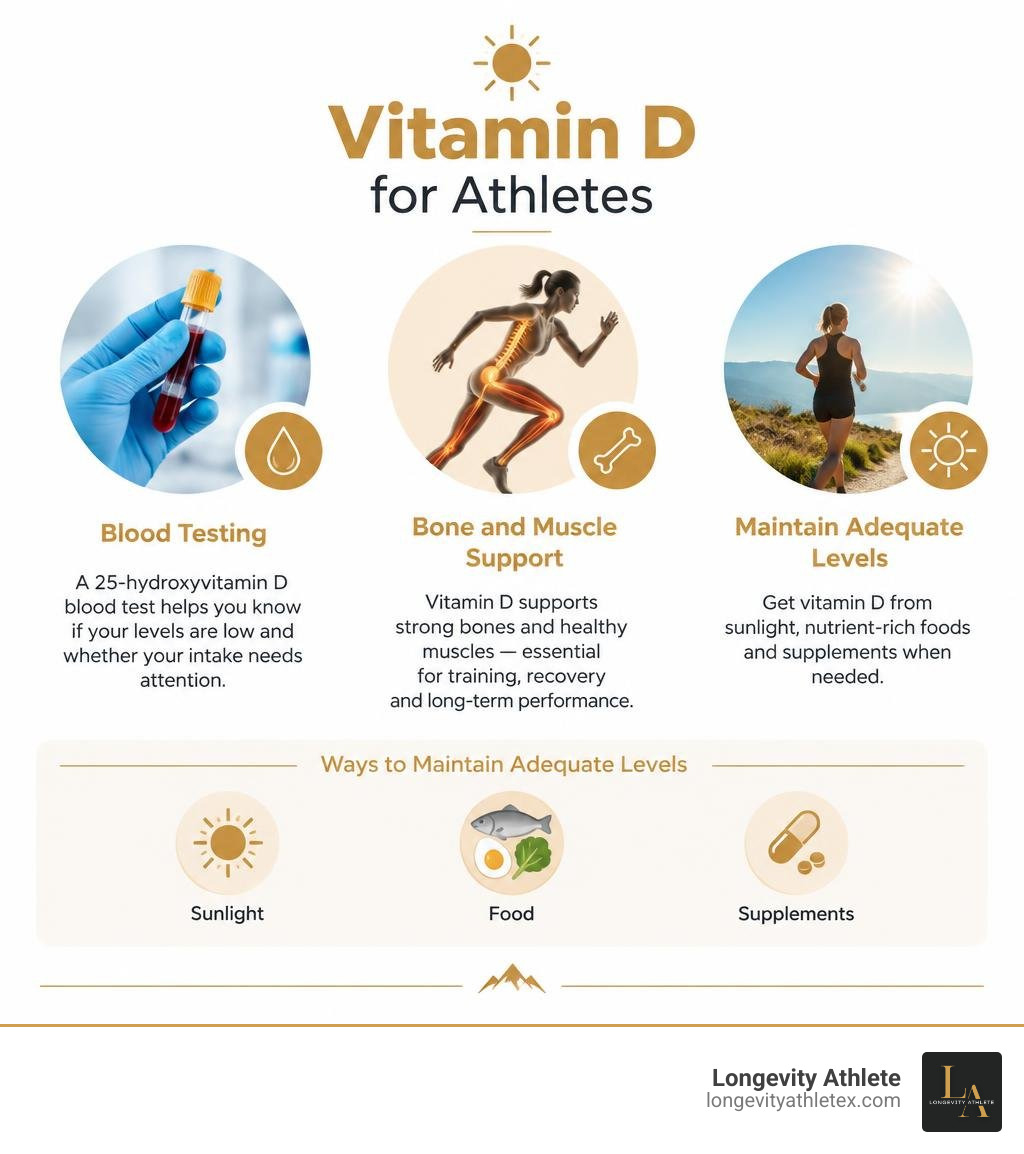
The evidence on vitamin D for athlete performance is mixed. Adequate levels support bone and muscle health, but taking extra vitamin D has not consistently improved strength, sprint speed, or endurance in athletes. If you train indoors, get little winter sun, or have a history of bone injuries, a blood test for 25-hydroxyvitamin D can help you decide whether your intake needs attention.
Sunlight, food, and supplements can all contribute to vitamin D status. The useful goal is to identify and correct a low level, not to chase a high number in hopes of a performance boost.
I’m Garric Vosloo. In more than 30 years of patient consulting, including work with elite athletes since 2000, I’ve used individualized health assessments to guide questions about vitamin D for athlete performance.
The Prevalence of Vitamin D Deficiency Across Athletic Disciplines
Athletes are often perceived as models of optimal health, yet sub-optimal micronutrient status remains common across professional and collegiate sports. A comprehensive systematic review on athletic vitamin D status highlighted that a high proportion of elite and university athletes exhibit insufficient circulating levels of 25-hydroxyvitamin D [25(OH)D], with rates varying sharply based on training environment, seasonal shifts, and latitude (de et al., 2020).
Tracking these systemic markers through targeted sports bloodwork helps identify when an athlete enters a seasonal nadir. Research published across multiple sports cohorts indicates that during late winter and early spring, circulating 25(OH)D levels decline significantly when ultraviolet B (UVB) exposure is limited, creating potential challenges for muscle recovery and bone remodeling.
Risk Factors in Indoor vs. Outdoor Sports
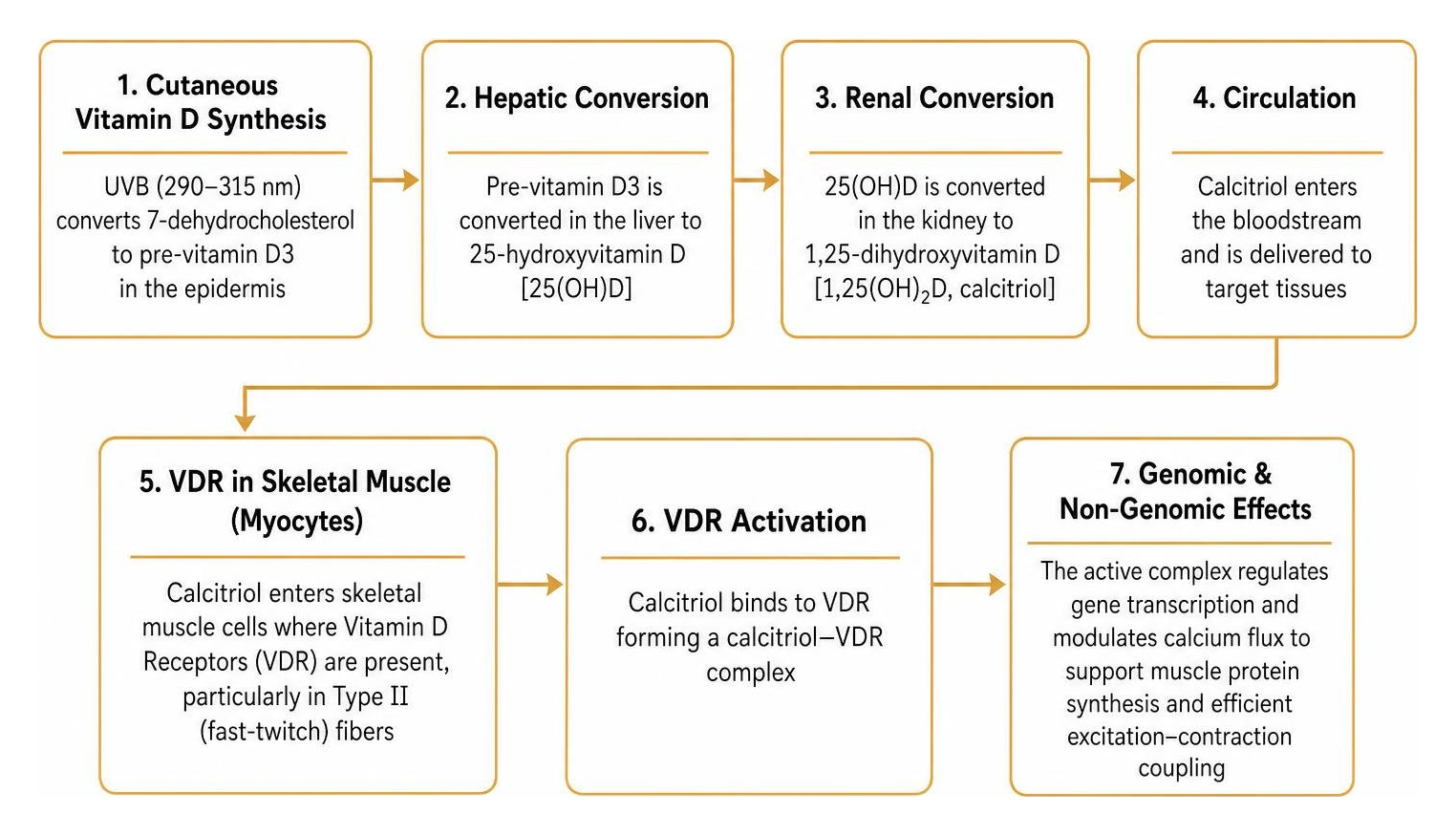
The physical training environment serves as a primary determinant of cutaneous vitamin D synthesis. Cutaneous production relies on solar UVB radiation within the 290–315 nm wavelength range. Enclosed facilities, standard indoor arena lighting, and glass windows completely block UVB wavelengths, preventing endogenous synthesis regardless of ambient daytime brightness.
Athletes participating in gymnastics, basketball, swimming, figure skating, and indoor track face heightened vulnerability to seasonal insufficiency. Even outdoor athletes frequently experience inadequate synthesis if training sessions occur primarily before 10:00 AM or after 4:00 PM, when the solar zenith angle causes the atmosphere to scatter UVB rays.
Ethnic Variations and Melanin Influence
Skin pigmentation significantly affects the rate of cutaneous vitamin D synthesis. Melanin functions as a natural optical filter, absorbing UVB photons and reducing the conversion of 7-dehydrocholesterol to pre-vitamin D3 in the epidermis.
Athletes with darker skin tones require up to five to ten times greater sunlight exposure to synthesize equivalent amounts of pre-vitamin D3 compared to lighter-skinned peers. Consequently, dark-skinned athletes living or training at latitudes above 35° North or South frequently present with baseline 25(OH)D concentrations in the deficient range during winter and spring months, making targeted nutritional monitoring an essential consideration.
The Biological Role of Vitamin D for Athlete Performance
Vitamin D operates as a pleiotropic secosteroid hormone rather than a standard dietary vitamin. Once converted into its biologically active hormonal form, 1,25-dihydroxyvitamin D [1,25(OH)2D, or calcitriol], it binds to nuclear Vitamin D Receptors (VDR) present in nearly every human tissue, including skeletal muscle myocytes, vascular endothelial cells, and immune cells (Cannell et al., 2009).

According to a clinical review on physical performance and musculoskeletal injuries, calcitriol exerts both genomic and non-genomic regulatory control (Yoon et al., 2021). Genomically, it modulates the transcription of over 1,000 genes involved in protein synthesis, cellular proliferation, and mitochondrial function. Non-genomically, it influences rapid transmembrane calcium flux across the sarcoplasmic reticulum, which is vital for efficient excitation-contraction coupling in working muscle fibers.
Impact of Vitamin D for Athlete Performance on Muscle Strength and Power
Skeletal muscle tissue expresses VDRs predominantly within Type II (fast-twitch) muscle fibers, which govern high-velocity, explosive force production. Adequate calcitriol signaling supports muscle protein synthesis and regulates intracellular phosphate and calcium kinetics necessary for optimal cross-bridge cycling between actin and myosin filaments.
When evaluating functional outcomes, a detailed meta-analysis on maximal strength and power observed that correcting a true clinical deficiency may support improvements in isometric force generation and vertical jump height (Sist et al., 2023). However, in athletes who already maintain sufficient baseline concentrations, supplemental vitamin D does not produce additional ergogenic gains in maximal strength or explosive power.
Evaluating Vitamin D for Athlete Performance in Aerobic and Endurance Capacity
In endurance disciplines, researchers have examined whether vitamin D status influences maximal oxygen uptake (VO2 max), cardiac remodeling, and peripheral oxygen extraction. Active vitamin D metabolites support erythropoiesis and modulate vascular endothelial nitric oxide production, which may influence oxygen delivery to active muscle beds.
A systematic review on elite athlete supplementation evaluated randomized controlled trials across competitive endurance cohorts and found modest, heterogeneous improvements in markers such as PWC-170 and VO2 max when correcting baseline insufficiency (Wyatt et al., 2024). While optimizing low status supports normal aerobic conditioning, supra-physiological dosing provides no competitive endurance advantage.
Musculoskeletal Integrity, Injury Prevention, and Immune Defense
Maintaining functional vitamin D status serves as a cornerstone for systemic resilience, structural durability, and immune regulation. Monitoring these markers alongside related performance biomarkers allows practitioners to assess systemic inflammation, parathyroid hormone (PTH) suppression, and musculoskeletal recovery status throughout intensive training cycles.
A broad meta-analysis on physical performance highlighted that maintaining sufficient serum 25(OH)D plays a vital protective role across diverse athletic populations (Farrokhyar et al., 2017).
Stress Fracture Risk and Bone Remodeling
Bone tissue undergoes constant microstructural remodeling in response to mechanical loading. Calcitriol enhances intestinal calcium and phosphorus absorption, ensuring adequate mineral substrate for osteoblast-mediated bone mineralization.
When serum 25(OH)D drops into insufficient ranges, parathyroid hormone levels rise, mobilizing calcium from the skeletal matrix to maintain serum calcium homeostasis. This secondary hyperparathyroidism elevates cortical bone porosity and impairs microstructural repair. In weight-bearing and repetitive-impact sports such as distance running, gymnastics, and military conditioning, maintaining adequate circulating 25(OH)D supports bone mineral density and helps mitigate the incidence of stress-related skeletal injuries.
Immune Health and Upper Respiratory Illness Reduction
Intense, prolonged athletic training can induce transient immunosuppression, leaving athletes susceptible to upper respiratory tract infections (URTI) that interrupt preparation. Vitamin D plays a key immunomodulatory role by regulating both innate and adaptive immune pathways.
Calcitriol stimulates circulating monocytes and neutrophils to synthesize cathelicidin and defensins, endogenous antimicrobial peptides that help neutralize viral and bacterial pathogens on mucosal surfaces. Furthermore, vitamin D helps balance pro-inflammatory cytokines (such as tumor necrosis factor-alpha, or TNF-α) with anti-inflammatory regulatory mediators, supporting immune defense and training availability through challenging winter schedules.
Optimizing Vitamin D Levels: Testing, Intake, and Nutrient Synergy
Achieving an optimal vitamin D profile requires a personalized, data-driven strategy rather than empirical guessing. Utilizing personalized biomarker analysis allows athletes to track baseline 25(OH)D concentrations and observe how their levels fluctuate in response to training volume, geographic location, and seasonal shifts.
Targeting functional sufficiency requires an understanding of how vitamin D interacts with essential co-factors:
Form / Co-Factor | Primary Biological Mechanism | Dietary & Supplemental Sources | Practical Athletic Role |
|---|---|---|---|
Vitamin D3 (Cholecalciferol) | Preferred substrate; converts efficiently to 25(OH)D in hepatocytes | Sunlight, fatty fish, egg yolks, D3 supplements | Raises circulating 25(OH)D more effectively than D2 |
Magnesium | Essential cofactor for 25-hydroxylase and 1α-hydroxylase enzymes | Leafy greens, pumpkin seeds, almonds, legumes | Activates vitamin D conversion and transport binding proteins |
Calcium | Works synergistically with calcitriol for bone mineralization | Dairy, fortified plant milks, leafy greens, tofu | Essential structural substrate for skeletal integrity |
Vitamin K2 (MK-7) | Activates osteocalcin; directs calcium into bone matrix | Natto, hard cheeses, fermented foods | Helps prevent soft tissue and arterial calcification |
Vitamin D3 Dosing and Safe Intake Thresholds
Oral supplementation with cholecalciferol (vitamin D3) is markedly more effective at elevating and sustaining circulating 25(OH)D levels than ergocalciferol (vitamin D2). For athletes presenting with documented insufficiency, daily maintenance intakes commonly range between 1,000 and 4,000 IU (25–100 mcg), adjusted for body composition, skin tone, and baseline lab values.
Because vitamin D is fat-soluble and stored in adipose tissue, excessive intake over extended periods can lead to toxicity. The established Tolerable Upper Intake Level (UL) for adults is 4,000 IU per day, though short-term higher intakes are sometimes administered under medical supervision to resolve acute deficiency. Unmonitored, megadose supplementation increases the risk of hypercalcemia, soft-tissue calcification, and renal strain, underscoring the importance of periodic blood testing.
Micronutrient Co-Factors: Magnesium and Calcium
Vitamin D metabolism relies heavily on enzymatic co-factors. All enzymes that metabolize vitamin D—including hepatic 25-hydroxylase and renal 1-alpha-hydroxylase—require bioavailable magnesium as an essential cofactor. If an athlete has inadequate magnesium intake, supplemental vitamin D may remain inactive or poorly converted.
Integrating comprehensive biomarker-based nutrition plans ensures that dietary calcium, magnesium, and vitamin K2 are balanced alongside vitamin D intake, supporting both skeletal mineralization and neuromuscular efficiency.
Frequently Asked Questions About Vitamin D for Athletes
What is the optimal vitamin D blood level for competitive athletes?
Standard medical guidelines from the Institute of Medicine (IOM) define general sufficiency as a serum 25(OH)D concentration of 20 ng/mL (50 nmol/L). However, sports endocrinology and athletic performance literature frequently suggest a target range of 30 to 50 ng/mL (75 to 125 nmol/L) to support optimal bone remodeling, immune surveillance, and muscle repair. Concentrations exceeding 100 ng/mL (250 nmol/L) provide no added physiological benefit and approach potential toxicity thresholds.
Can vitamin D supplementation directly increase sprinting speed?
Current research indicates that vitamin D supplementation does not directly increase maximal sprint velocity in well-trained athletes. A systematic review in football players examined sprinting and jump metrics across multiple randomized trials and concluded that while supplementation reliably increases circulating 25(OH)D, it produces no statistically significant improvements in sprint performance or linear speed.
How often should athletes test their vitamin D levels?
Athletes benefit most from testing serum 25(OH)D twice annually. The most insightful testing windows occur at the seasonal peak (late summer/early autumn) and the seasonal nadir (late winter/early spring). Utilizing a home blood test athletes service provides a convenient method to assess baseline values, evaluate dietary adjustments, and monitor trends without interrupting demanding training schedules.
Conclusion
Vitamin D plays an essential biological role in skeletal integrity, calcium homeostasis, and immune resilience. While research indicates that vitamin D does not function as a direct performance-enhancing stimulant for speed or endurance, avoiding and correcting deficiencies is vital for minimizing injury risk, preventing training disruptions, and supporting muscular function.
At Longevity Athlete, we provide precision-performance wellness consulting for disciplined competitors. Rather than relying on generic recommendations, our approach focuses on individualized, data-driven biomarker analysis to guide sustainable health and performance. Our Signature Plan offers a self-guided group program, while our Gold and Platinum Plans create individualized lifestyle programs designed to refine your nutrition, training adaptation, and recovery.
To evaluate your baseline status and develop a clear, personalized health plan, explore our comprehensive lab testing for athletes today.
References
Cannell JJ, Hollis BW, Sorenson MB, Taft TN, Anderson JJ. "Athletic performance and vitamin D.." Medicine and science in sports and exercise, 2009. PMID 19346976. de la Puente Yagüe M, Collado Yurrita L, Ciudad Cabañas MJ, Cuadrado Cenzual MA. "Role of Vitamin D in Athletes and Their Performance: Current Concepts and New Trends.." Nutrients, 2020. PMCID PMC7071499. Wyatt PB, Reiter CR, Satalich JR, O'Neill CN, Edge C, Cyrus JW, O'Connell RS, Vap AR. "Effects of Vitamin D Supplementation in Elite Athletes: A Systematic Review.." Orthopaedic journal of sports medicine, 2024. PMCID PMC10768611. Farrokhyar F, Sivakumar G, Savage K, Koziarz A, Jamshidi S, Ayeni OR, Peterson D, Bhandari M. "Effects of Vitamin D Supplementation on Serum 25-Hydroxyvitamin D Concentrations and Physical Performance in Athletes: A Systematic Review and Meta-analysis of Randomized Controlled Trials.." Sports medicine (Auckland, N.Z.), 2017. PMID 28577257. Sist M, Zou L, Galloway SDR, Rodriguez-Sanchez N. "Effects of vitamin D supplementation on maximal strength and power in athletes: a systematic review and meta-analysis of randomized controlled trials.." Frontiers in nutrition, 2023. PMCID PMC10570740. Yoon S, Kwon O, Kim J. "Vitamin D in athletes: focus on physical performance and musculoskeletal injuries.." Physical activity and nutrition, 2021. PMID 34315203.